Car rides with kids. How can we fix them?
Context of the Problematic
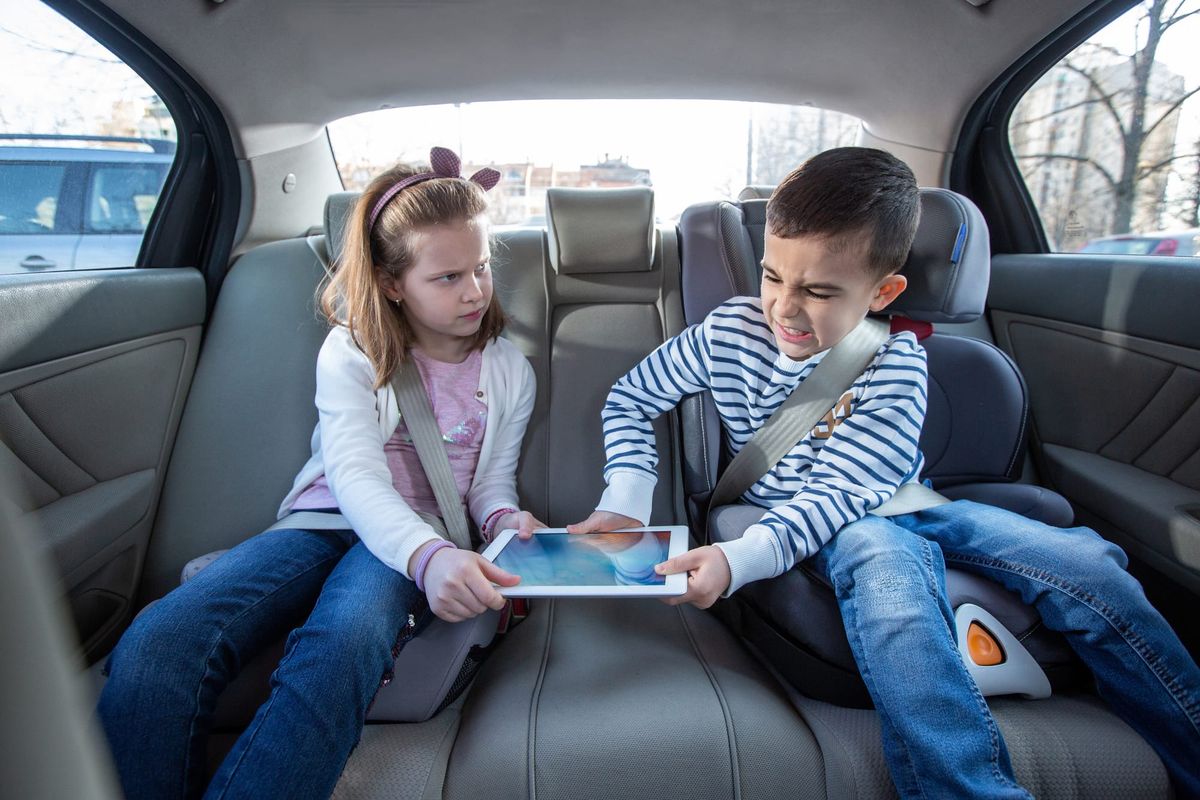
Think about the worst car ride you’ve ever had. Spilled drinks, missed stops, distracted driving, arguments, whining, and a whole cascade of vile memories may arise. If you are a parent you've probably experienced some or all of these while carting around your child on a long trip. The eternal phrase of “are we there yet” still rings across the world despite car design advancing tremendously over the 20th and 21st centuries. Many car rides are ruined due to children becoming restless in the backseat of cars. I was prompted to investigate long trips with kids gone wrong by Honda Motor Company. According to designers at Honda, a restless child may begin to fuss and ask for assistance from the driver, taking their eyes off the road and inducing stress. Alternatively, restless children may begin to fight with each other or attempt to take off their seatbelts. So, what can parents and designers do to solve this? First, let’s look at who’s at stake.
Shareholders
Any car OEM (original engine manufacturer) that manages to gain a reputation as the ultimate family car maker will gain a heavy advantage over the competition. My group and I visited a Honda dealership and spoke with veteran Honda salesman David Perzynski to learn about his insights on what customers are looking for. He highlighted that many customers that have families look primarily for comfort and safety for children. Additionally, he said that many customers buy Honda vehicles because they have personal experience of them being previously reliable and comfortable. Parents buying Hondas that inspire and comfort children could prompt those children to buy Hondas when they grow up. As such, features that calm down children and ensure they have a more pleasant ride are not only useful selling points on the dealership floor but can also ensure cross-generational involvement with Honda.
Another stakeholder are the parents as they are the primary purchasers and operators of Honda products. Additionally, they arguably have the most to gain from a more calm and less tense car drive. Fewer distractions means less missed stops, accidents, and lost hair from stress. To gain greater insight into what parents encounter while driving with children, I conducted interviews with parents. A parent of four mentioned that children becoming car sick was a major concern, citing activities that have them stare downwards as a major contributor. Additionally, a variety of activities are needed to placate children that become easily restless. This issue is compounded by having multiple children in the backseat, each of them having different needs and preferences. For example, one of their children could only be calmed by watching the animated movie Cars (2006). On a 17 hour car ride, this understandably upset the other three children who got irritated from hearing the phrase “Kachow!” countless times. Another parent, one with only one child, mentioned that a frightening environment caused a tantrum while the family was driving home. Specifically, a snowstorm scared the child who then began to cry, causing the parents in the front row to stress. The restlessness here could be attributed to both the new and frightening environment and the feedback loop of anxiety between the parents (who had to drive in the snow) and the child. Each of these disturbances in the backseat created a situation that the parent driving had to address. Features that take the pressure off of these parents to solve their children’s restlessness are thus of great interest while purchasing Honda vehicles.
Then there are the child passengers. Children have a plethora of needs unique to them that some car designers and even parents struggle to understand. Many children can become frustrated at being restrained by systems and interactions that they haven’t learned yet. The givens of long car trips such as interacting with infotainment systems, AC functions, and the use of a seatbelt can be confusing for children. Car designers need to consider what aspects of a car ride need to be taught to children down to the bones of how they want to interface with objects. For example, as said by designer Andrew Symk, “Think about the immediacy of the interaction. The use of a double tap (tap-tap) is a learned interaction”. Design insights aside, confusion over what to do in a given situation can create frustration that affects other passengers. For instance, in an interview with a father of two, he told a story about his family playing games while on a road trip. Him, his wife, and the son guessed what shape the clouds outside were meant to represent. However, the young daughter became frustrated when her answer was different from the others, causing a temper tantrum and forcing the family to go to a rest stop.
In addition, children also react to cars differently than adults. As said by psychologist Ruth Ogden, “a five-hour car journey may feel longer to a five-year-old than to a 50-year-old, simply because it is a greater proportion of the five-year-old’s life” (Ogden, 2022). The phrase “are we there yet” isn’t a means of annoying parents. It's a genuine question as many children don’t have a good handle on how long a long car ride is going to be. Additionally, children generally have less experience with emotional regulation, turning small derailments into big issues. A slight change in temperature can spiral into a tantrum or an argument with another child. Additionally, some children aren’t as effective at vocalizing or processing their needs. It falls on the parents to provide stops for food and restrooms. Although providing tools to combat restlessness and induce calm might not address every single issue that children face on long car rides, combating emotional stress and improving mental clarity can go a long way in making long car rides more enjoyable for children.
Research Insights
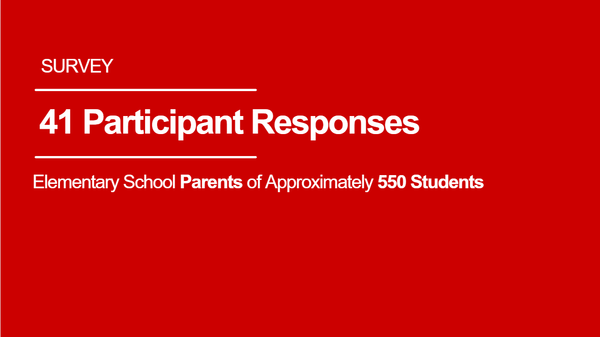
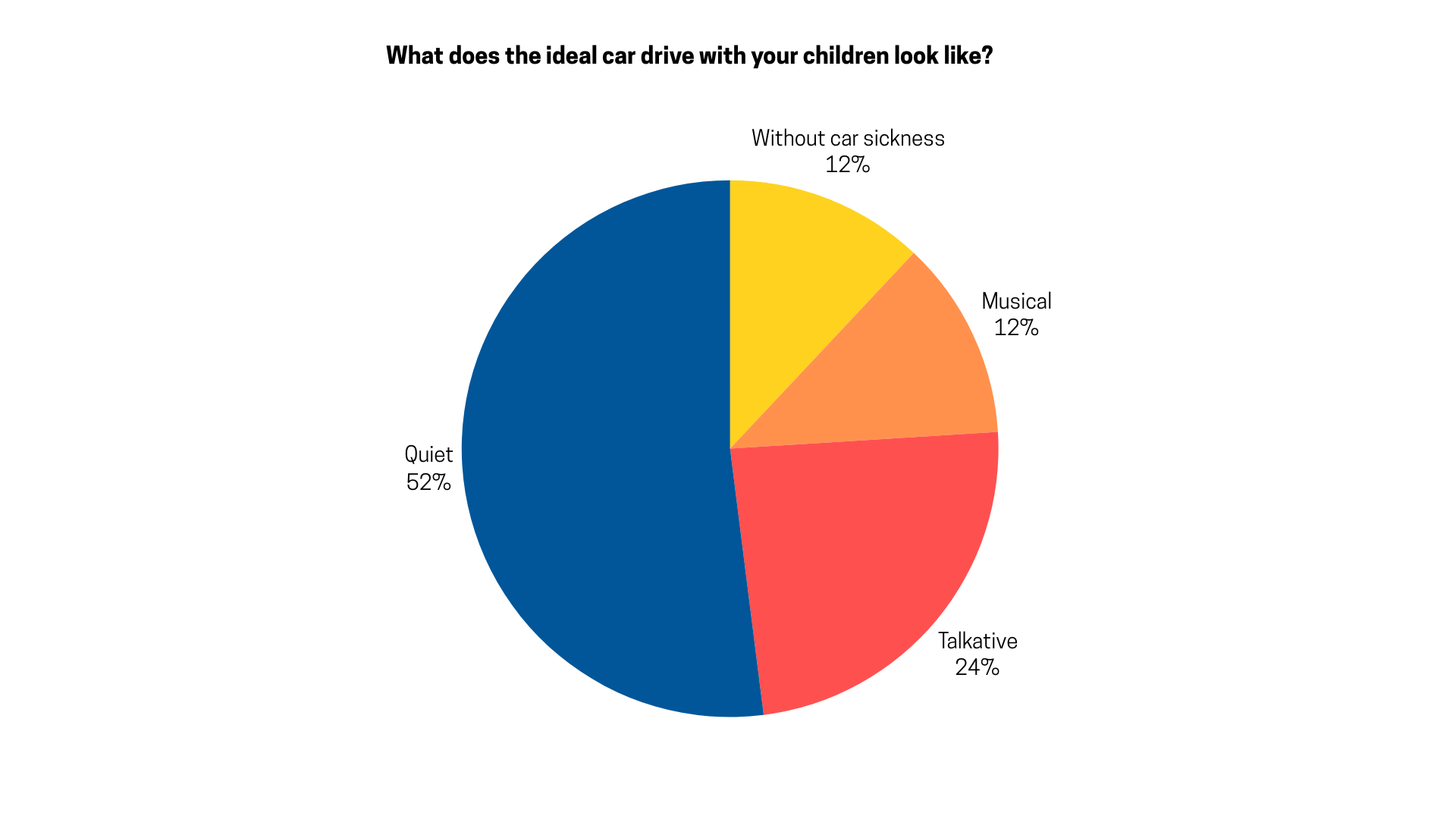
Another angle to consider with these stakeholders is how parents and children interact in the car. As previously mentioned, the parent driver is often solely responsible for taking care of and entertaining the child in the backseat. This takes the eyes of the driver off of the road, increasing the chances of an accident. From a survey of families that attend The River church in NYC, fifteen of the twenty-two parent respondents said that they talk or do mutual activities to calm down their children while in cars. However, parents and children often rely on each other for entertainment during long trips. From the same survey, nine of the twenty-two respondents mentioned that the ideal trip involved fun conversation or interaction between child and parent. Conversely, the other thirteen respondents answered that the ideal trip would have children being absorbed in another activity or relaxing quietly. For parents, children can act both as good company or detriments to a calm trip.
If a vehicle has more than one child in the backseat of a car, the tactics used to placate one may not work for both. The earlier example of the 17 hour “Cars” (2006) marathon has relevance here. Additionally, the same parent mentioned that with multiple children the need for headphones to isolate individual music players and game systems became mandatory. Another interview with a father of two said that one child would want to play mobile phone video games while the other would watch movies. A design solution that can either work for multiple children or be easily isolated to just one child would ensure that fights or disagreements don’t erupt.
Main Issues
From this research we can summarize the main issues facing parents and children in cars. One, disruptions in the backseat can heavily impact driving ability. This can drive a wedge between parents and children. Secondly, children lack tools to regulate their emotions or put the trip they are on in perspective. Finally, multiple children can further complicate car trips by increasing the number of unique needs and activities provided by parents. So, what areas can designers swoop in to make solutions?
First, creating a feature that teaches emotional regulation and self-soothing techniques could provide a long-term solution. As cited by Emily Lovino and others in "Teaching Simple Strategies to Foster Emotional Well-Being", “Self-soothing skills are important in school environments, helping children to respond to distressing situations (e.g., embarrassment or rejection and feelings of failure or incompetence) and return to learning and optimal levels of engagement with the environment (Cicchetti et al., 1991)” (Lovino, et al. 2021). Additionally, in a conversation with Honda employees, I learned that Honda itself has expressed an interest in fostering meditative techniques. However, the specific avenue they wish to investigate remains vague.
Conjecture Explorations
The teaching of self-soothing techniques would take the pressure off of the parents in the driver's seat to calm down the children. As for specific activities for self-soothing, I spoke with Master of Social Work student Hannah Seitz. She said that mindfulness activities such as observing nearby moving objects like cars or flies, watching their own breathing, and counting numbers can help to ground and calm children.
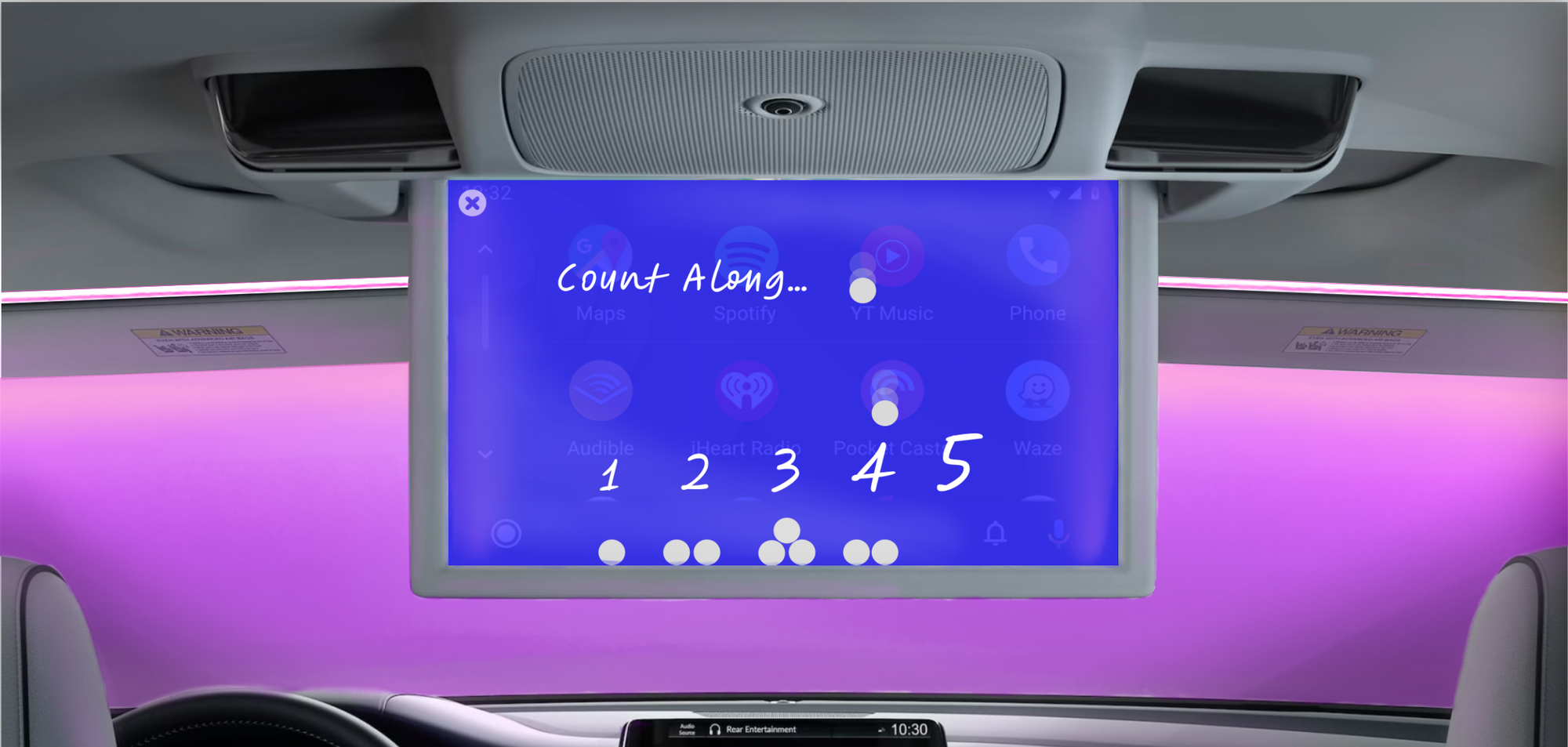
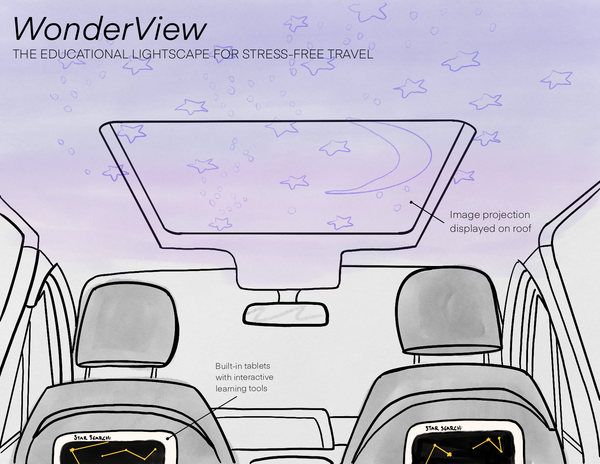
A feature such as the conjecture above could teach mindfulness techniques while children are in the backseat. It does this by displaying observation games that can be done in and out of the vehicle. Some examples include counting nearby objects and focusing on breathing. As these activities are easy to do and learn, the children that engage with this activity will be capable of self-soothing more effectively both in and out of the car. This lessens the likelihood of emotional outbursts, reducing stress for all parents during long drives.
Another strategy capable of reducing disruptions in the backseat would be art therapy. Though used mainly for conduct or defiance disorder in academic settings, it can be used generally to occupy children and offer an outlet or coping strategy (Bitonte et al, 2014). Providing a way for children to create art in the backseat without causing disruptions would be a great start for creating a calm car environment.
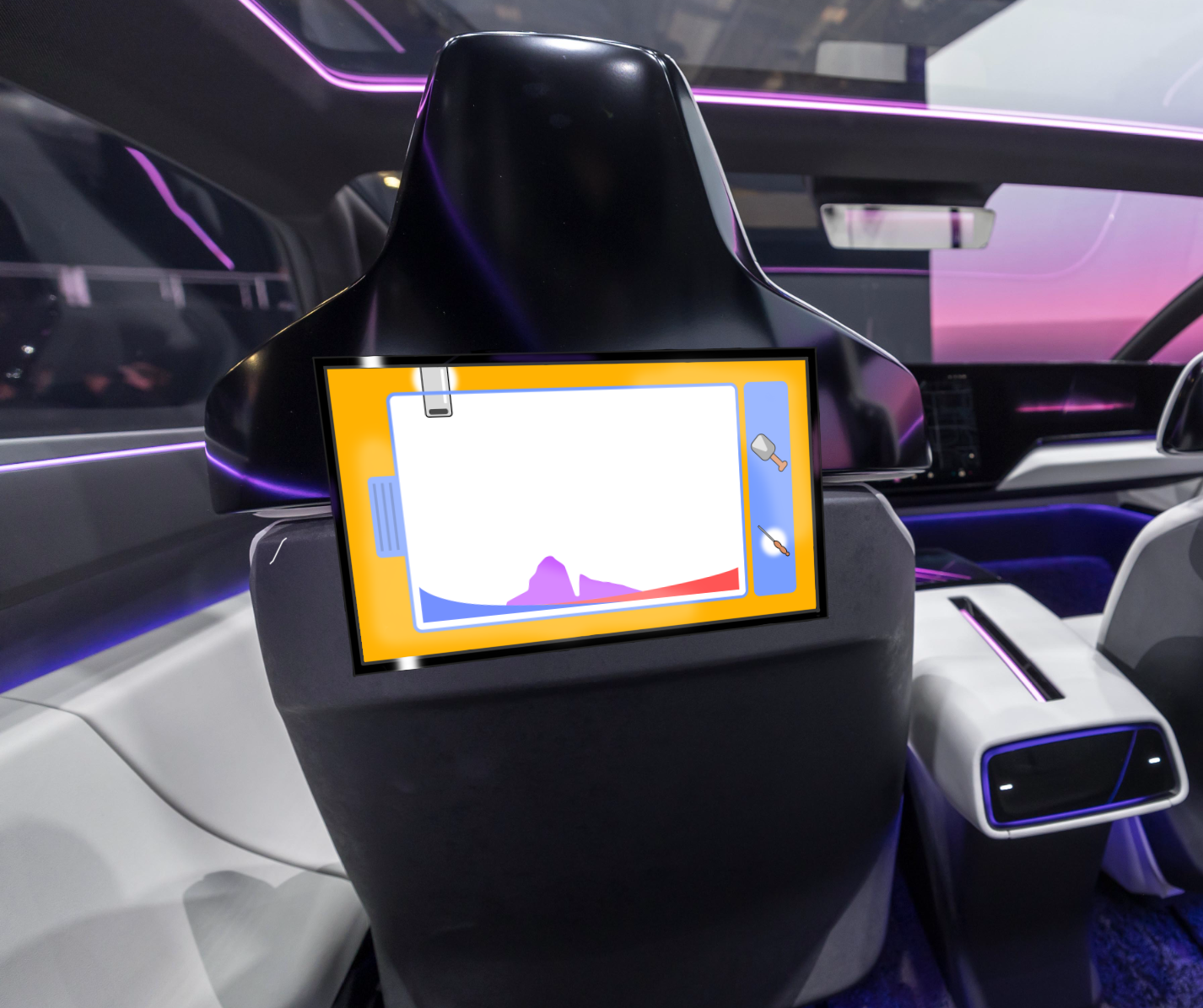
The conjecture above provides a medium of art that is both familiar and uniquely meditative. Evoking both the playground sand pit and the meditative qualities of sand art, the Sand Sifter Art Tool allows backseat passengers to creating and foster focus and patience. The tools provided are easy to understand but rudimentary, meaning that elaborate works require careful attention. The ideal end result is a more calm and focused backseat with an overall less stressful car ride.
Tackling direct conflict between the front and back rows of the car could also reduce the chances of trip disruptions. Clarifying the progress of a trip could reduce confusion and frustration for children as seen in the eternal phrase "are we there yet".
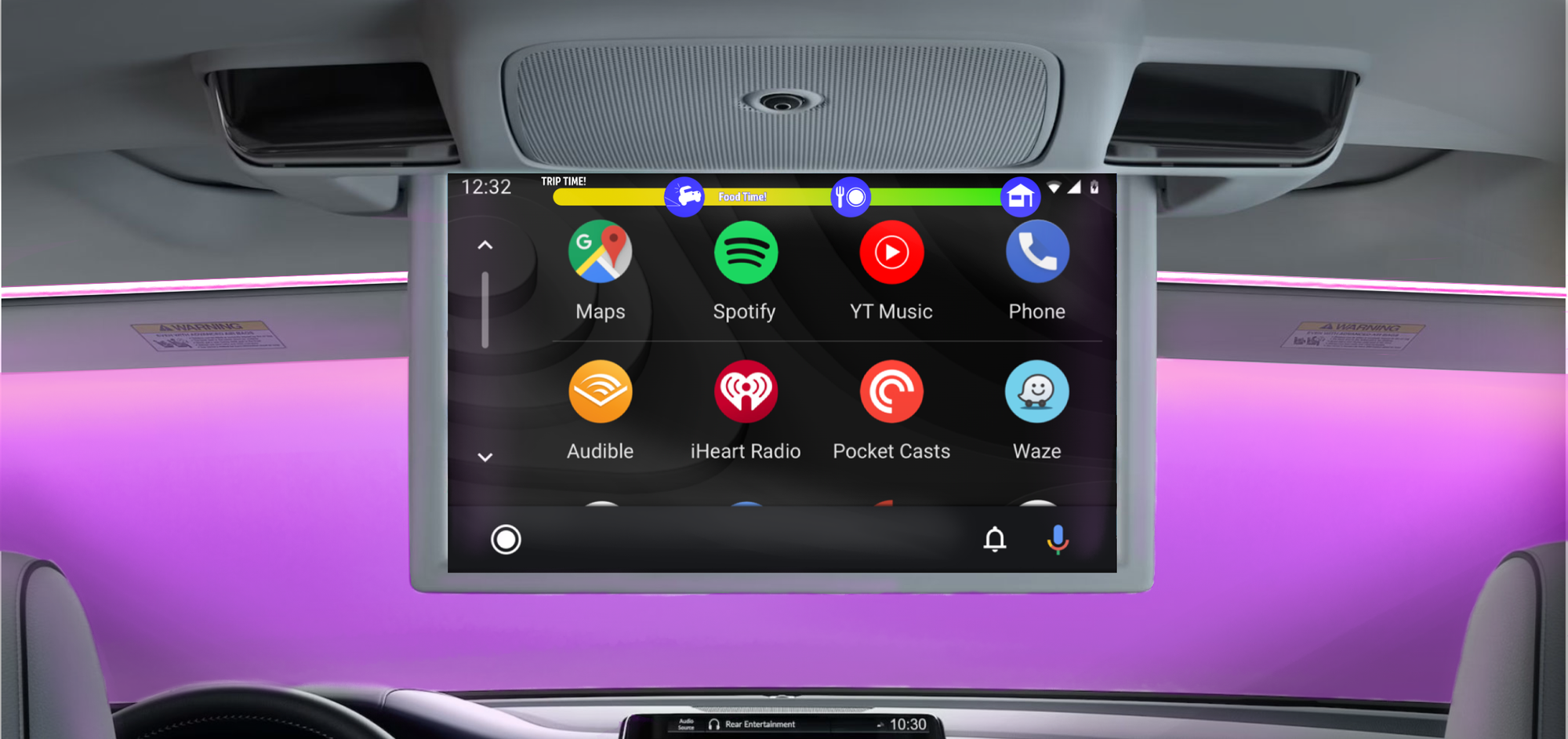
The Trip Timeline allows backseat passengers to view the overall progress of a trip and upcoming stops. This provides a clear visual of progress throughout a trip, aiming to reduce questions from the backseat and overall stress within the car.
Conclusion
By identifying the main issues faced by both parents and children we can glean many potential avenues to making a better car ride. Nonetheless, it is unlikely that any one solution will provide the answer to calming down every single child across hundreds of different car models, family structures, and environments. Features aimed at reducing the discomfort caused by disruptions for all parties in the car are a good start. However, the teaching of self-soothing techniques could be a further step towards making permanent positive changes in long car ride enjoyment.
References
Bitonte, Robert A & De Santo, Marisa. National Library of Medicine. 2014. "Art Therapy: An Underutilized, yet Effective Tool". https://pmc.ncbi.nlm.nih.gov/articles/PMC4253394/
didesign. N.D. Adobe Stock. https://stock.adobe.com/contributor/203809489/didesign?load_type=author&prev_url=detail
"How to take a screenshot on Android Auto". Lofi Alpaca. Youtube. 2025 https://www.youtube.com/watch?v=D3D2U1ZpyXE
Lovino, Emily A. & Koslouski, Jessica B. & Chafouleas, Sandra M. 2021. Frontiers in Psychology. "Teaching Simple Strategies to Foster Emotional Well-Being". https://www.frontiersin.org/journals/psychology/articles/10.3389/fpsyg.2021.772260/full
Ogden, Ruth. 2022. The Conversation. "‘Are we nearly there yet?’: why long car journeys are so excruciating for your kids". https://theconversation.com/are-we-nearly-there-yet-why-long-car-journeys-are-so-excruciating-for-your-kids-189347
Potts, Greg. Photo of Honda Saloon. Top Gear. 2024. https://www.topgear.com/car-news/concept/honda-0-saloon-and-0-suv-prototypes-preview-2026-production-cars
"Reasons to Make the 2019 Honda Odyessy Your Choice". Gunn Honda. 2019. https://www.gunnhonda.com/blogs/2496/reasons-to-make-the-2019-honda-odyssey-your-choice/
All original works in this article were done without the assistance of AI tools.