Op-ed: Reframing Recreation in Ohio's State Parks
Have you ever consciously thought about how your wholesome weekend fishing trip really impacts the environment? What about that little path off the main hiking trail leading to a viewpoint for the perfect photo-op–ever consider how the repeated use of these off-shoots harms fragile vegetation and wildlife? Whether we like to think about it or not, our outdoor recreation activities have negative implications on the environment. Even if you are careful not to litter or leave waste behind while enjoying the outdoors (a concept far too many people seemingly don't concern themselves with) high-impact recreation activities cause harm in ways that might not be immediately obvious but are unsustainable in the long run.
According to Heather Bokman, Sustainability Coordinator for the Ohio Department of Natural Resources (ODNR) Division of Parks and Watercraft, Ohio's state parks have historically prioritized recreation and visitor experience over conservation and sustainability efforts. However, with park visitation records increasing each year, the pressing need for conservation prioritization is becoming very clear. ODNR has invited my team of fellow industrial design capstone students at The Ohio State University (class of 2026) to explore how a balance between outdoor recreation and environmental conservation can be reached. Together, we aim to promote visitor enjoyment while protecting sensitive habitats and preserving natural resources for years to come.
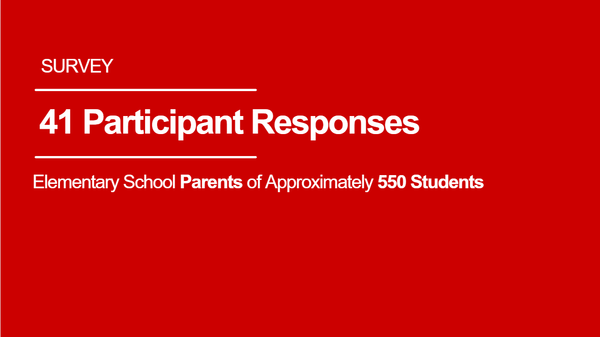
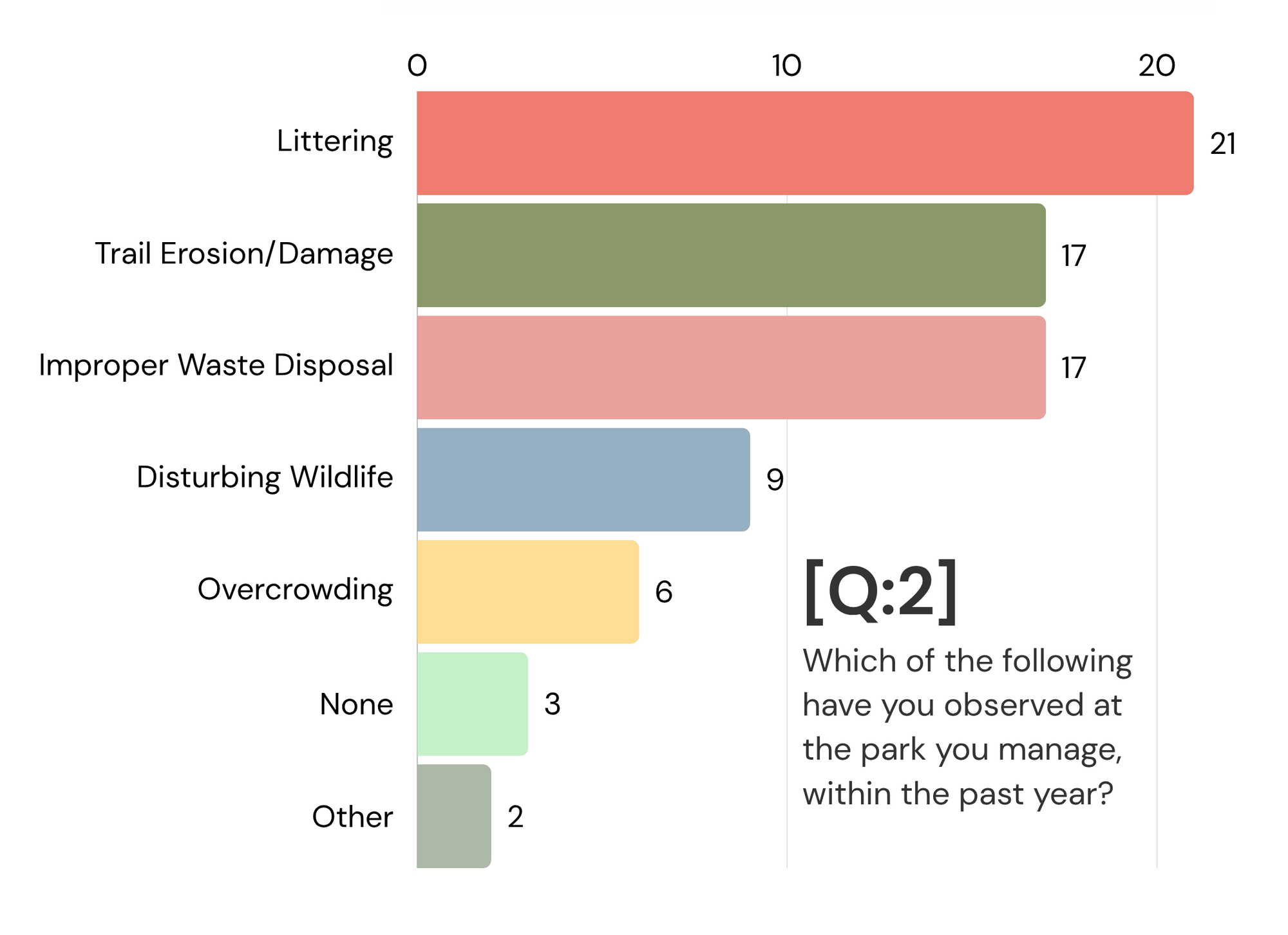
A survey conducted by my research team asked fifty-nine Ohio state park managers about trends they observe in high-impact visitor activity. Our respondents indicated that littering was the highest observed implication, with trail degradation and improper waste disposal tying for a close second (see Figure 1). The team of ODNR representatives consulting with my research team addressed similar implications frequently observed at Alum Creek State Park in Columbus, Ohio. Heather Bokman, along with Clean Marinas Coordinator, Tracey Coe, and Statewide Trails Administrator, Mark Allen, noted that areas with generally less litter are less likely to accumulate litter, while littering "hotspots" like the Alum Creek Beach tend to accumulate more litter.
This "monkey-see, monkey-do" behavior is corroborated by a testimony from Robert Cialdini, a psychology professor at Arizona State University, in the article "The Real Reason People Litter – And How You Can Help" from the Potomac Conservancy. Cialdini states that a person's decision to litter is largely dictated by their surrounding environmental cues, and that while positive attitudes toward nature can make a difference, conforming to the perceived social norm is the ultimate deciding factor (Potomac Conservancy, 2022).
Why are we producing so much litter to begin with? While conducting my research, I recorded evidence of what I call "party culture" through observation-based documentation and interviews with two state park employees, both of which are outlined in greater detail here. Crushed beer cans, cigarette butts, and other mind-altering substance paraphernalia was observed at each location I visited, and the testimonies from park employees indicated a general carelessness on behalf of visitors about their activities and the trash they leave behind (see Figure 2).
Perhaps we need to fight fire with fire. As a part of my secondary research, I looked into the Guerilla Girls, an anonymous activist group who unapologetically criticized prominent art galleries and museums throughout New York City for their damning lack of women and minority representation, causing quite a stir within the professional art world (Lesso, 2020). Their "guerilla tactics" inspired my proposition for a litter-prevention poster campaign that aims to educate audiences through the use of blatant imagery, accusatory language, and shock value (see Figure 3). You can read this article by Lesso (2020) for more information about the Guerilla Girls and get a detailed description of the poster campaign here.
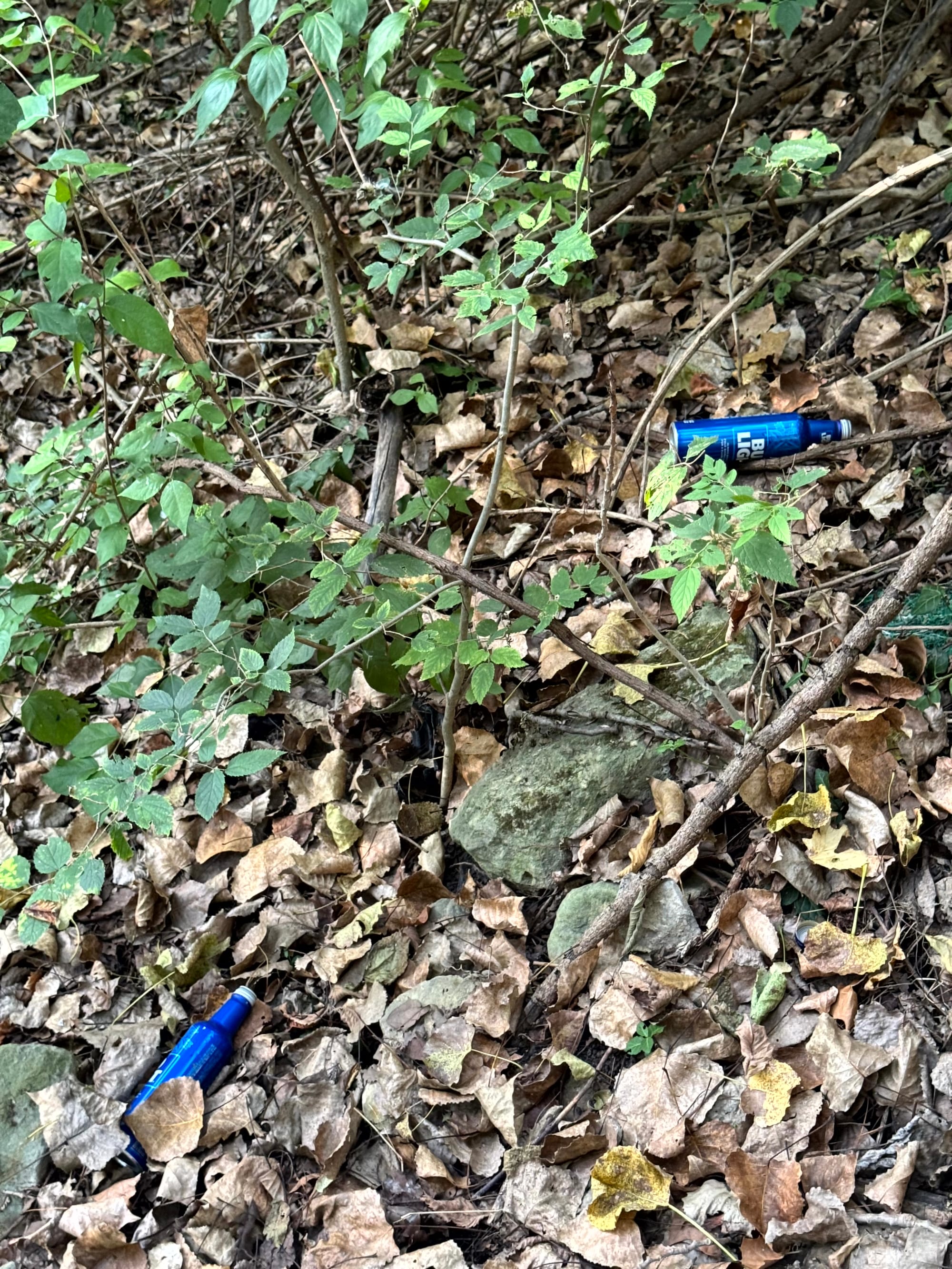
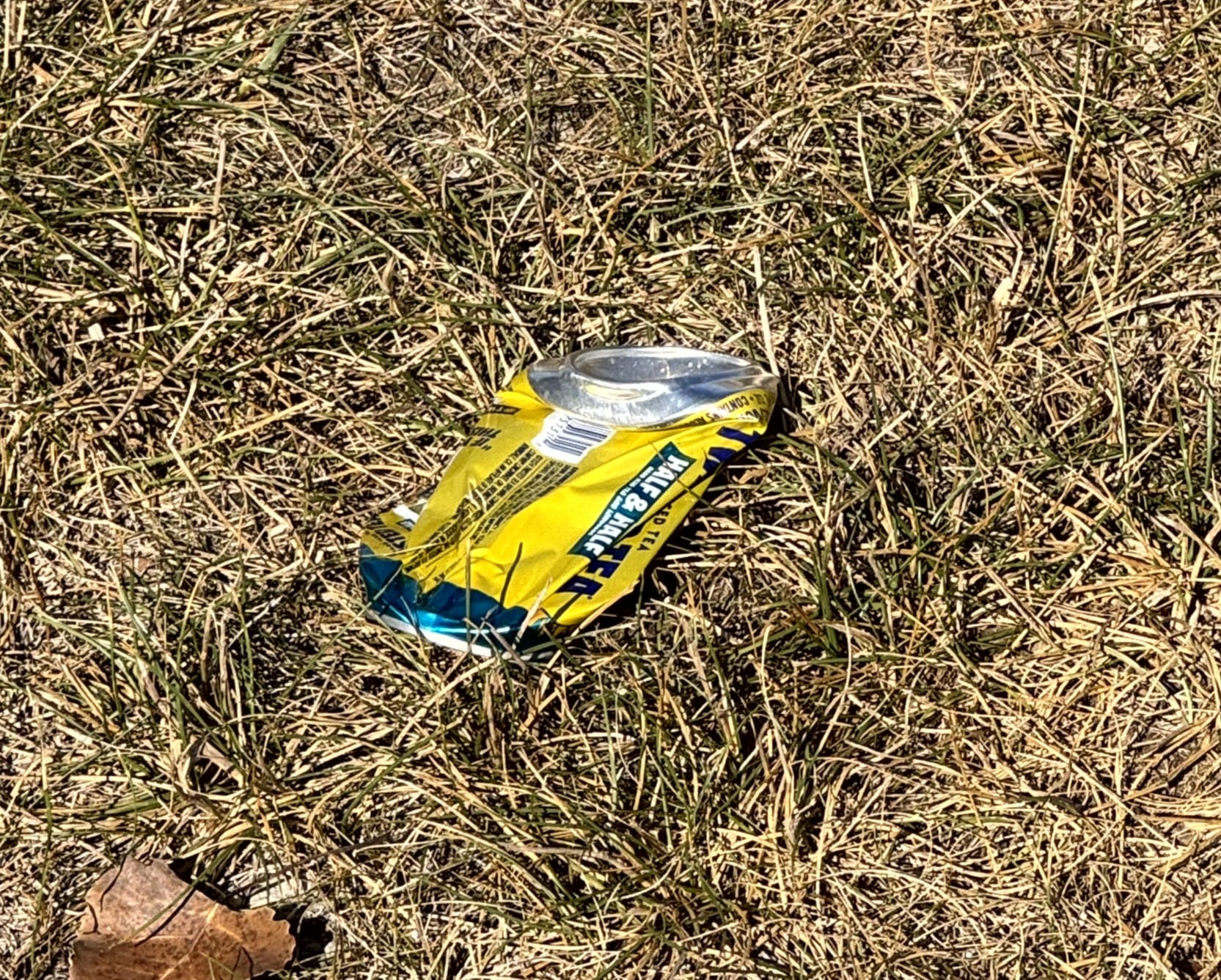
Figure 2: Beer cans documented in Tuttle Park along the Olentangy Trail in Columbus, Ohio (left) and crushed beer can along the shoreline of Sylvan Lake in Wolcottville, Indiana (right).
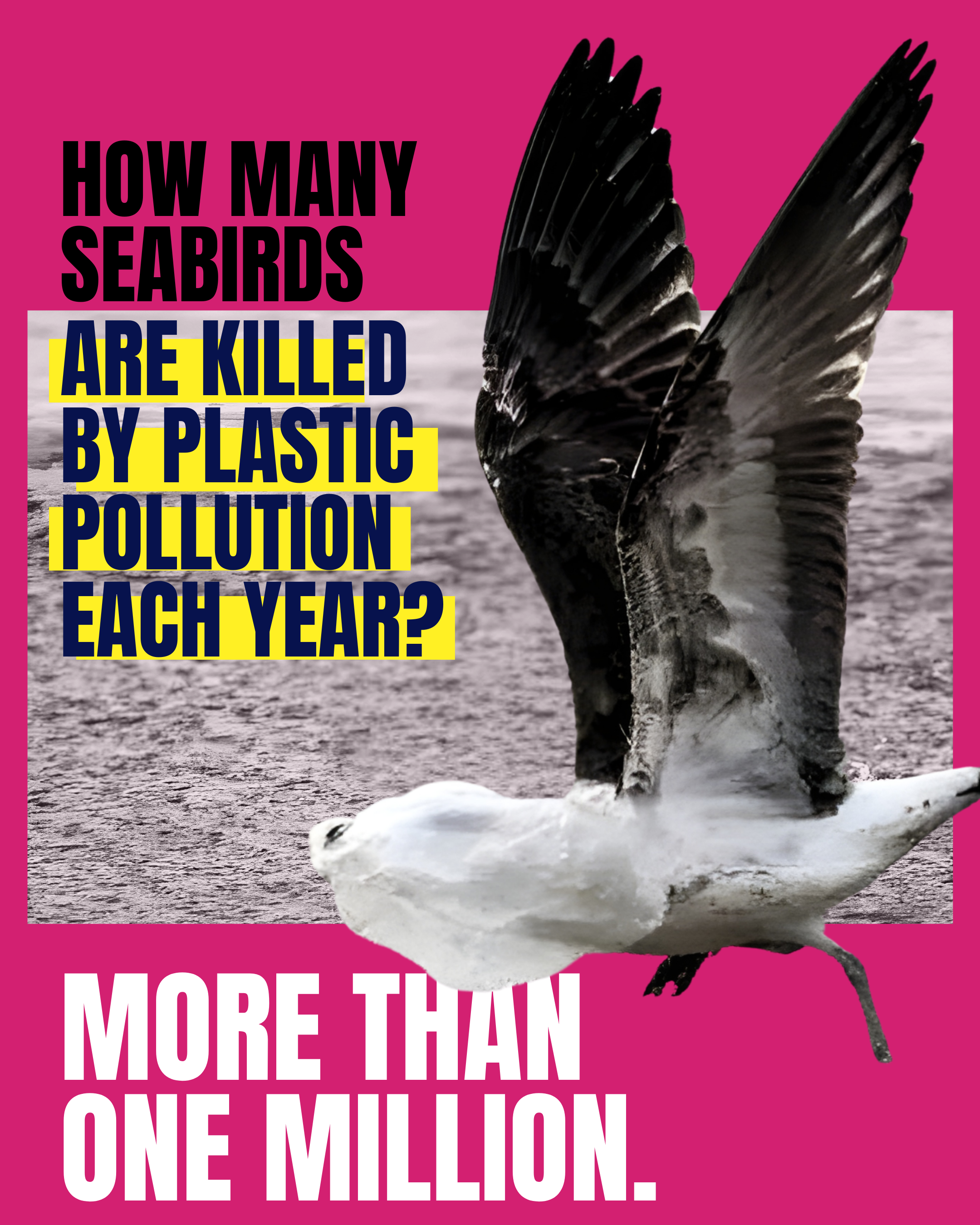
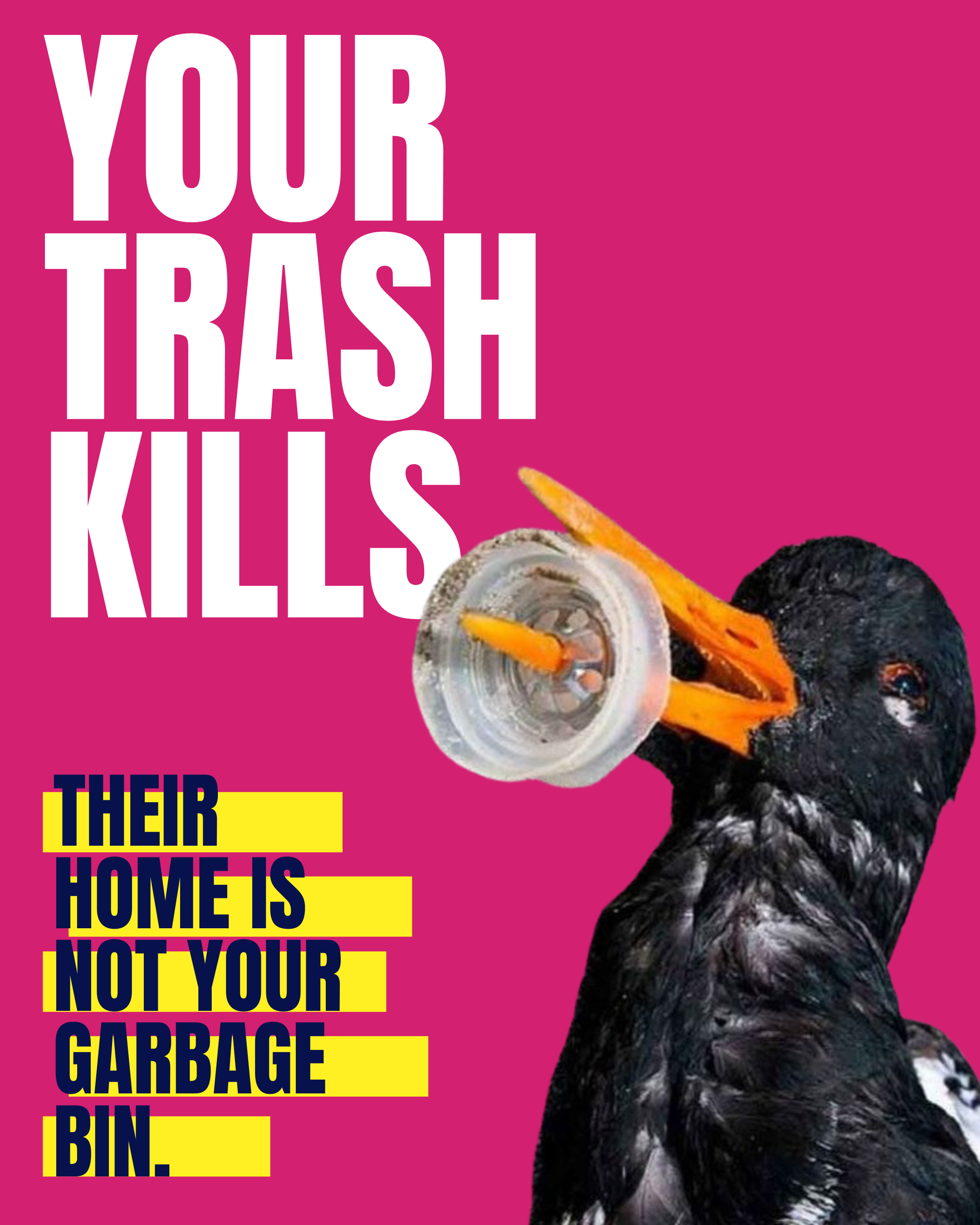
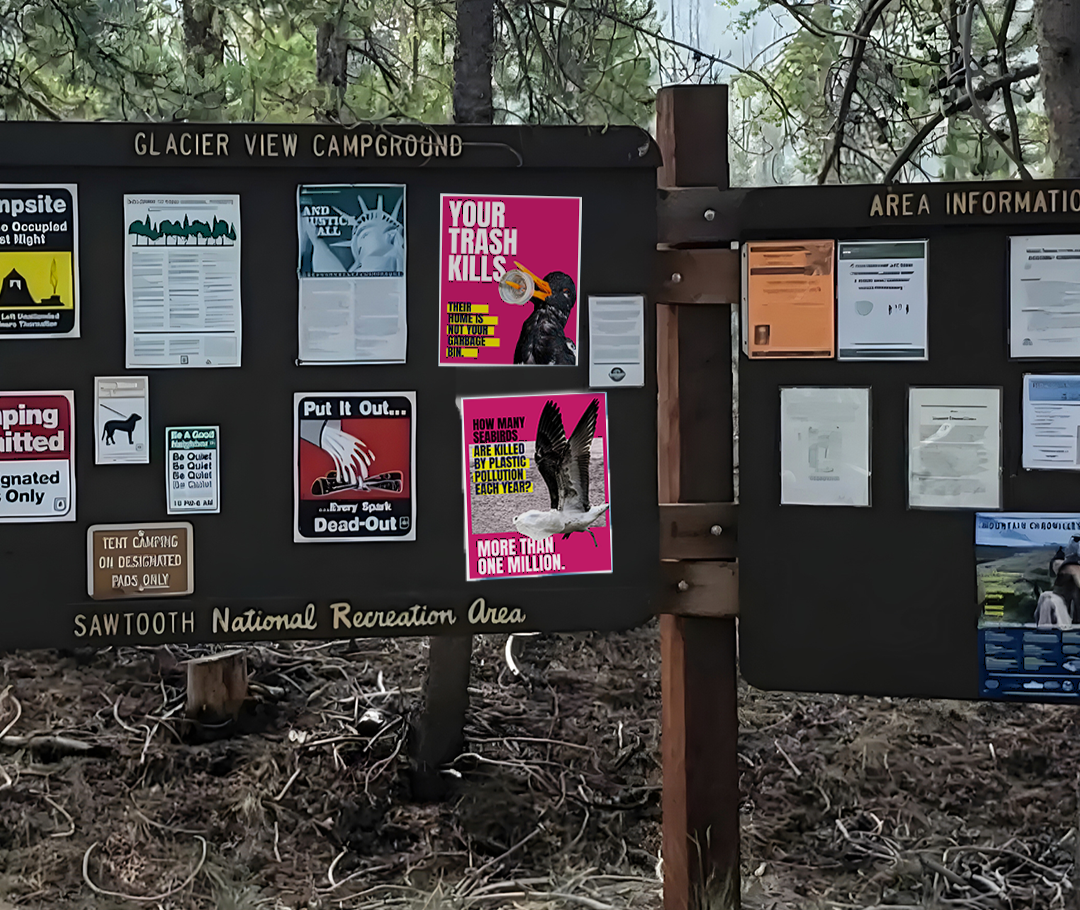
Figure 3: Visuals for "'Your Trash Kills' Poster Campaign".
Alongside party culture, high-impact recreation activities involving motorized vehicles comes into play. Despite the dangers of operating motorized vehicles while under the influence, seemingly "harmless" activities like watersports cause permanent damage to the landscape. I have witnessed a dramatic example of how artificial wake produced by boats leads to shoreline erosion at Dallas Lake in Wolcottville, Indiana. This location is a popular spot for wakeboarding, and has produced a world-renowned athlete in recent years, according to locals. However, the repeated splashing of waves onto the shoreline from speedboats has drowned surrounding tree roots, causing them to die and collapse along the lakeshore (see Figure 4).
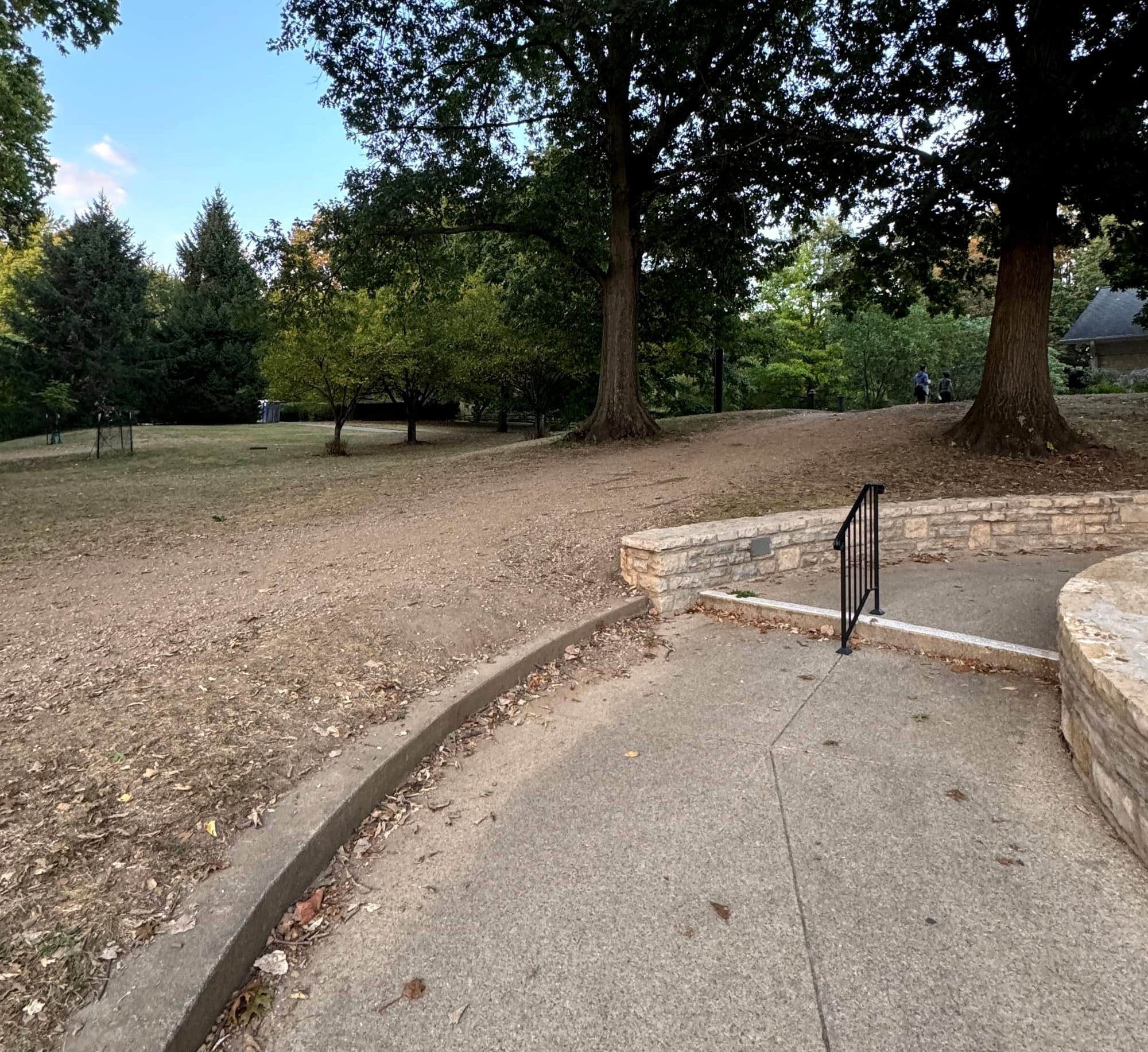
Another first-hand example of high-impact recreation involving off-trail hiking was documented at the Columbus Park of Roses, located within Whetstone Park in Columbus, Ohio. A large patch of compacted dirt devoid of vegetation indicates repeated foot traffic. Worth noting is that this grassless patch is directly adjacent to the designated concrete walking path, which has plenty of room for visitors to walk comfortably–even in groups–and leads to the exact same location as the dirt patch (see Figure 5).
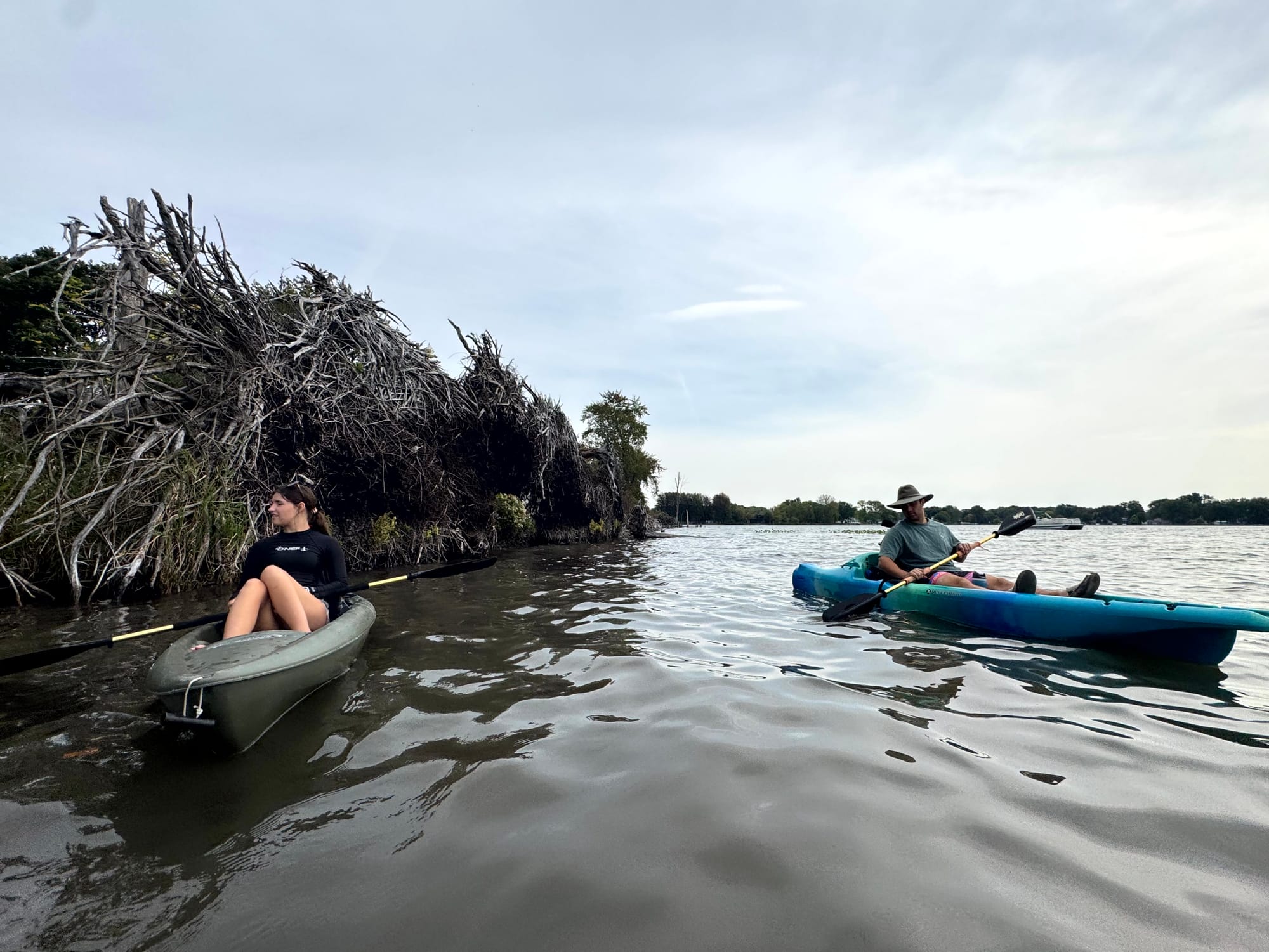
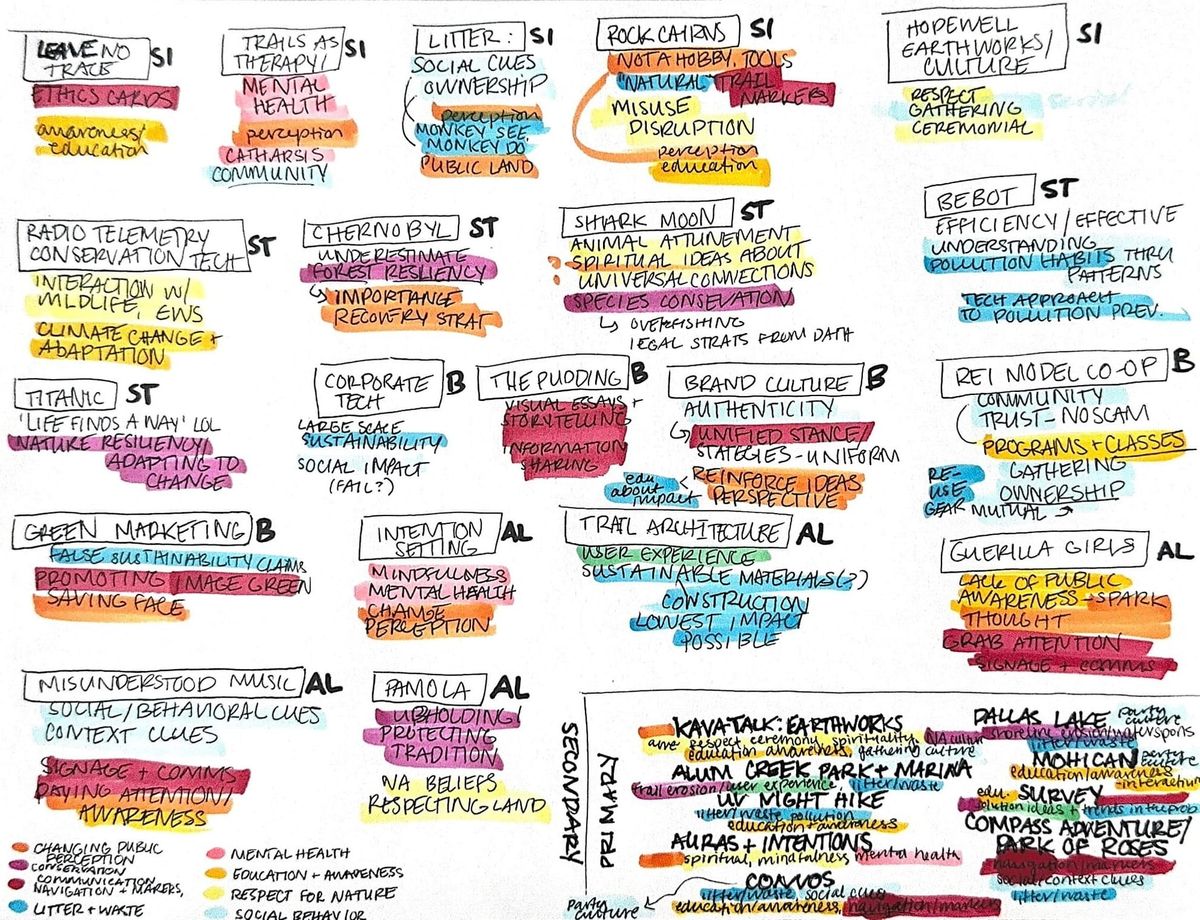
Based on the observations I have highlighted thus far, we can begin to identify a leading contributor to the problem posed by high-impact recreation: a lack of awareness for the negative implications of outdoor activities on behalf of park visitors, and a lack of education about the environment and why its conservation is of great importance. So, how do we educate people?
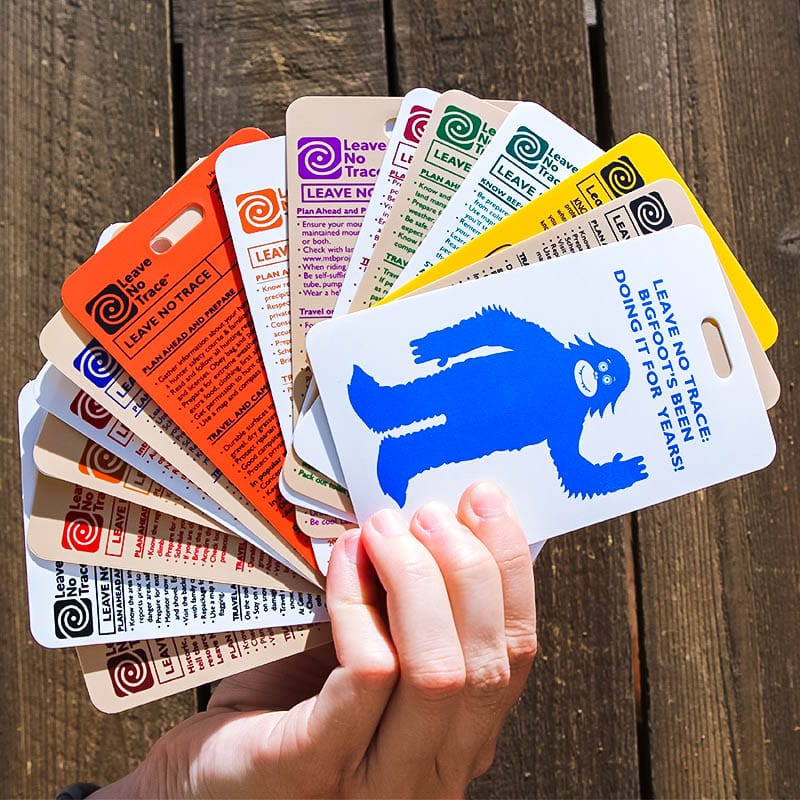
One example that prioritizes education and learning comes from Leave No Trace, a membership-based, nonprofit environmental protection organization that aims to inspire responsible recreation through science-based education (The Leave No Trace Story, 2025). They have created a handy quick-reference deck of "ethics cards" that summarize the Seven Principles of Leave No Trace to promote responsible outdoor practices. These are colorful, brief, and provide specific information covering a wide variety of outdoor activities (see Figure 6).
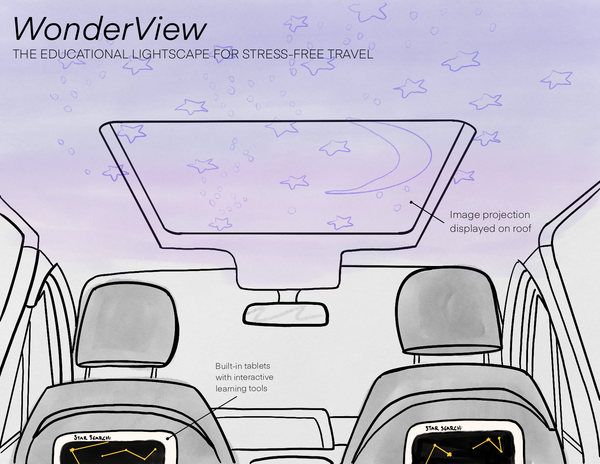
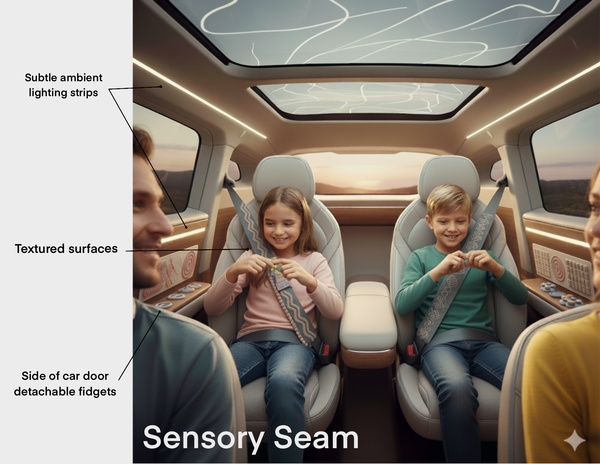
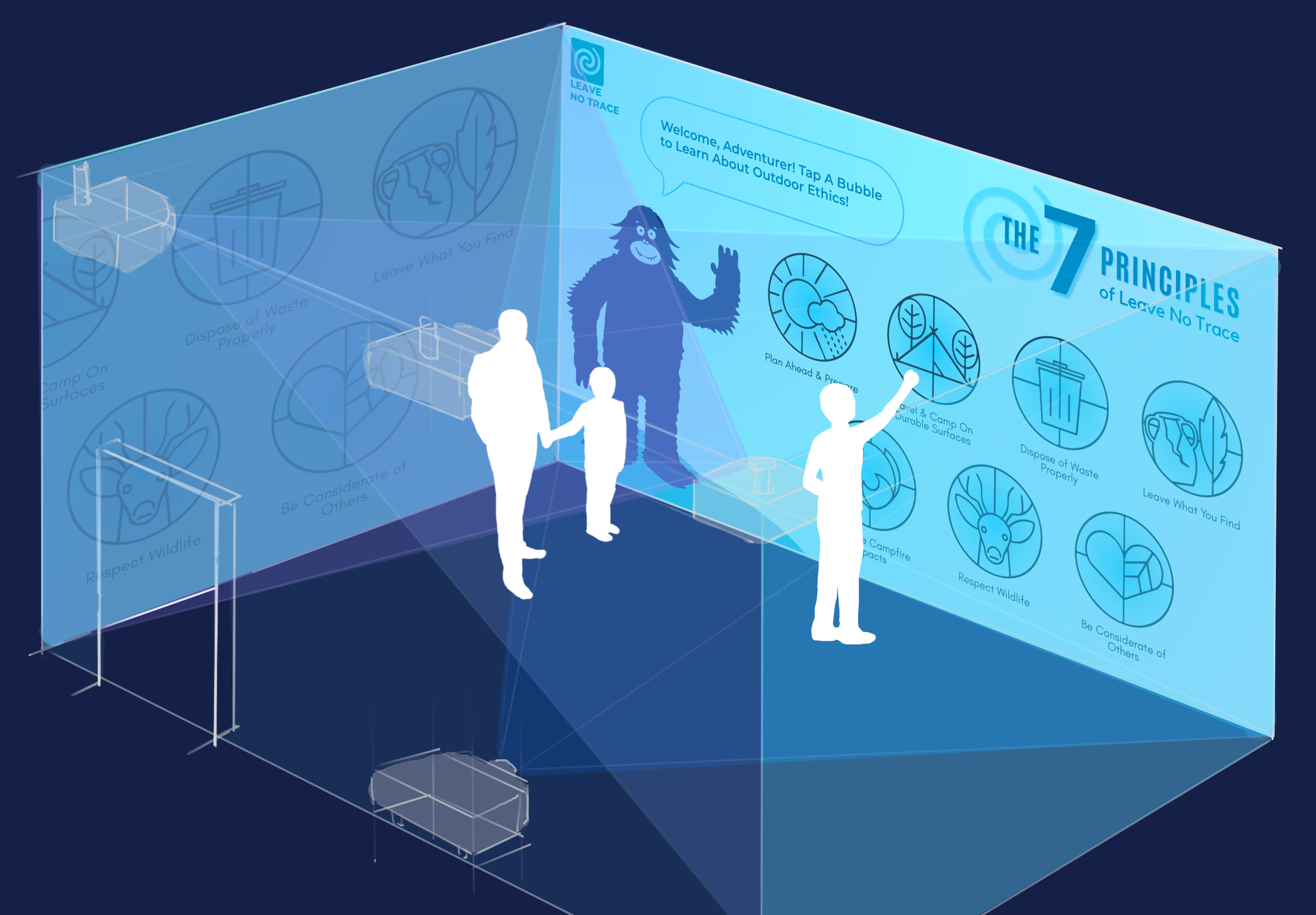
The information provided by the ethics cards could be incredibly effective in promoting education and awareness, but I would argue that we need to think more creatively about the mode of delivery. Perhaps we should explore ways to make the learning experience more memorable and meaningful in the form of an interactive installation that encourages deeper engagement with informational material by transforming it into an immersive, sensory experience (see Figure 7). You can read a more detailed description of my proposition here.
I've identified that part of the problem with high-impact recreation involves knowledge gaps about the environmental implications of outdoor activities and the importance of conservation, but this doesn't feel like the whole story. The evidence highlighting "party culture" and a sense of carelessness portrayed by those who litter and deviate from designated paths points to a lack of mindfulness on behalf of park visitors about their use of, and presence within, our parks and preserves. How do we begin to address this facet of the problem? Taking a look at past cultural practices and interpretations surrounding the natural world through the lens of Native American beliefs introduces a new perspective to our understanding of the problem space thus far.
Pursuing this interest area, I attended a "Kava Talk" which is a recurring event hosted by Casa Cacao, a coffee shop in Columbus, Ohio. Each event has a different theme, and guest speakers are invited to give a presentation on their area of expertise related to the topic and engage in Q&A with the audience. The talk I attended was about the Newark Earthworks, a series of ceremonial mounds built by the Hopewell, an ancient indigenous culture that once inhabited parts of Ohio. The speakers were two directors of the Great Circle Alliance, a nonprofit organization that offers programs "encouraging and amplifying the contemporary human voice in ancient monumental indigenous sites of Ohio" (Great Circle Alliance, 2022) like the Newark Earthworks, for instance (see Figure 8).
Speakers Belinda Gore and Marcus Boroughs described the nature of the earthworks as crucial sites for spiritual gathering (not burial mounds) amongst the Hopewell, highlighting how the various artifacts discovered here provide evidence of complex social connections and trade between other native groups across North America. The earthworks themselves are a structural feat, as they exhibit incredibly precise geometry that perfectly aligns with the moon's path across the skies of modern-day Newark, Ohio. Gore and Boroughs go on to explain how the Hopewell believed in three layers of reality: the sky above (representing order, perfection, and spirituality), the earth and seas below (representing the "chaotic potential" for life), and the plane of human existence sandwiched in-between. The earthworks were built as a reflection of the sky layer to mirror its orderly and spiritual attributes onto our plane of existence.
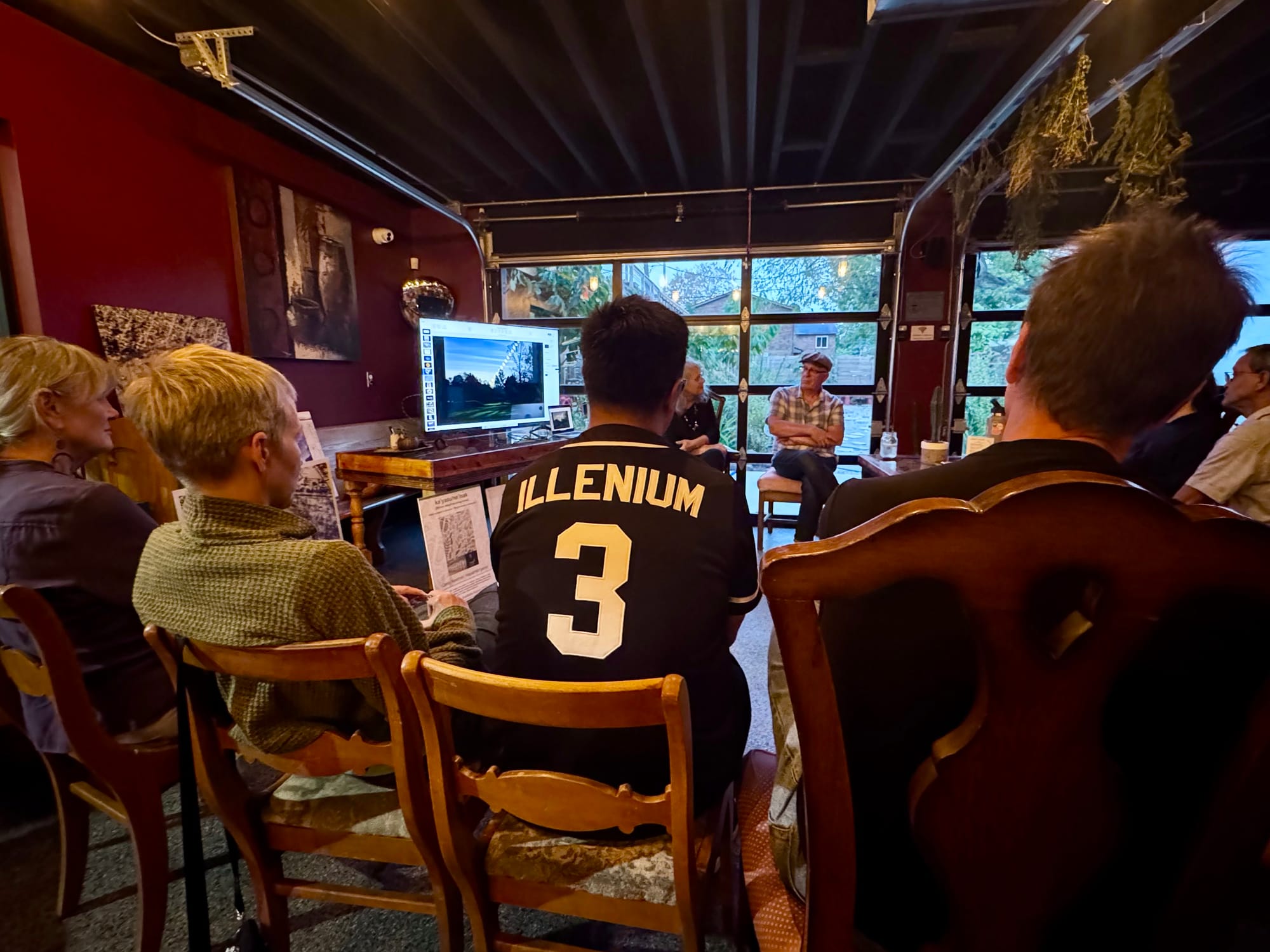
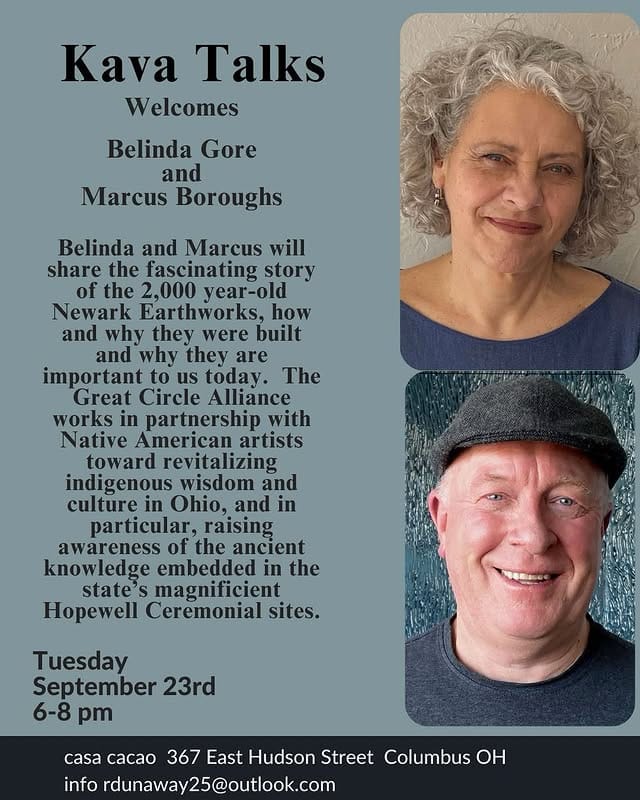
Figure 8: Photo taken during Marcus and Belinda's Kava Talk at Casa Cacao (left) and promotional flyer for the event (right).
Upon attending this event, I became fascinated by this perspective of spiritual gathering from Gore and Boroughs' talk on Hopewell culture and the earthworks. The idea of a sacred outdoor space for people to come together and appreciate nature is a powerful one that I believe has potential for ODNR to embrace and transform their visitors' experience. As I dove into the topic of mindfulness and more spiritual approaches to address the problem space, I came across several more mainstream mindfulness techniques, including the practice of "intention setting".
A blog post from Calm titled, "The Power of Setting Intentions & How to Set Mindful Ones" describes intention setting as "more than just a self-help trend...It's about cultivating a mindset that guides our actions, emotions, and thoughts toward a desired way of being". It goes on to explain how intentions differ from goals by avoiding the prescription of a specific outcome and instead encourages us to align our daily actions and decisions with what's most important to us–how we want to live (Calm Editorial Team, 2024).
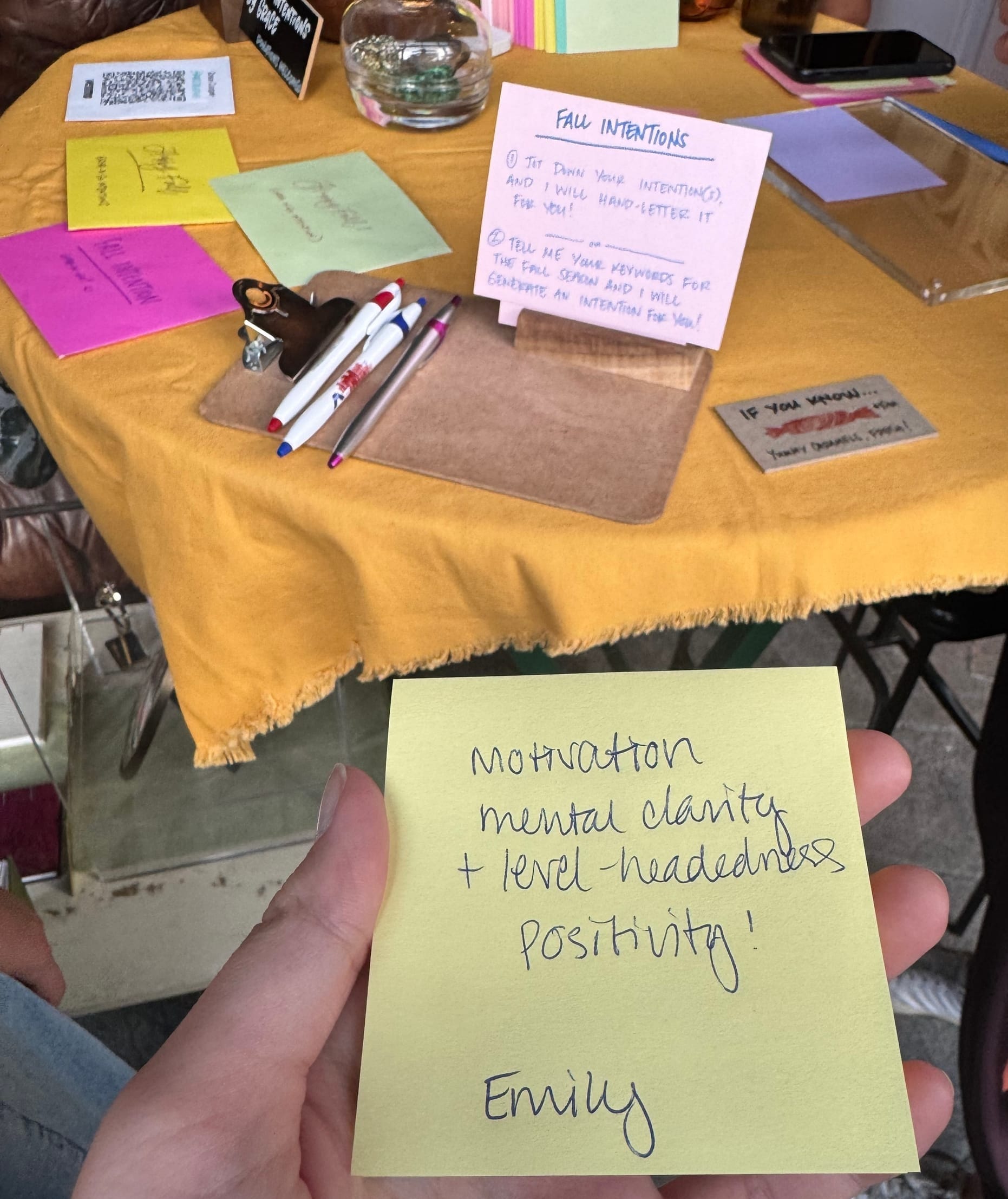
As a part of my exploration of this concept, I attended the "Autumn Equinox Gathering" at Antiques on High, a brewery in Columbus, Ohio. The event featured local shops and artists selling goods and services centered around spiritual themes and practices, including Tarot reading, aura reading, energy work, and intention setting. At this booth, patrons were invited to reflect on their intentions for the Autumn season and describe them on a piece of paper (see Figure 9). Then, artist Grace Hempstock (@grcooper on Instagram) transcribed them onto intention cards for patrons to take home.
I found this experience both fun and insightful–I gave myself a chance to think more critically about my personal priorities on a deeper level, about the person I want to be. While I understand that this concept is a bit "out there" for some, and those who are not already into spiritualism might not be open to these practices, my experience began to reveal the potential in using mindfulness practices to address harmful attitudes and behaviors within the problem space. Perhaps a mindfulness-based intervention could get people thinking more deeply about their outdoor activities, how they interact with nature, and their greater intentions for spending time outdoors.
The exploration of the problem space surrounding high-impact recreation makes one thing clear: we need to reframe how people think about our parks through strategies that promote a shift in public perception. This calls for solutions that encourage changes in behaviors and attitudes which dictate how people interact with our state parks, an effort that would ideally make human activities less impactful on the environment.
Efforts could include implementation of innovative education strategies on behalf of the Ohio Department of Natural Resources that reimagines learning experiences. Perhaps new programs or events that foster team building and a sense of community could promote stewardship amongst park-goers. There's potential in providing a more meaningful outdoor experience for park goers inspired by the Hopewell's gathering spaces and appreciation for nature. Integration of mindfulness exercises into park experiences could be another avenue for encouraging responsible outdoor recreation. No matter which direction we choose to take, the journey of finding a balance between conservation and recreation is one that we must embark on. While our public parks are meant for everyone to enjoy, these places should not be taken for granted, as they have been for decades.
References
Calm Editorial Team. (2024, February 13). The power of setting intentions & how to set mindful ones. Calm Blog. https://blog.calm.com/blog/setting-intentions
Great Circle Alliance. (2022). About GCA. https://greatcirclealliance.com/about-us/about-gca/
Leave No Trace. (2025). The Leave No Trace Story. https://lnt.org/why/
Leave No Trace. (2025). The 7 Principles. https://lnt.org/why/7-principles/
Lesso, R. (2020, August 6). The Guerrilla Girls: Using Art to Stage a Revolution. The Collector. https://www.thecollector.com/guerrilla-girls/
Potomac Conservancy. (2022, May 5). The real reason people litter – and how you can help. Potomac Conservancy. https://potomac.org/blog/2020/2/1/why-people-litter