PET-art: Turning Plastic Waste into Art
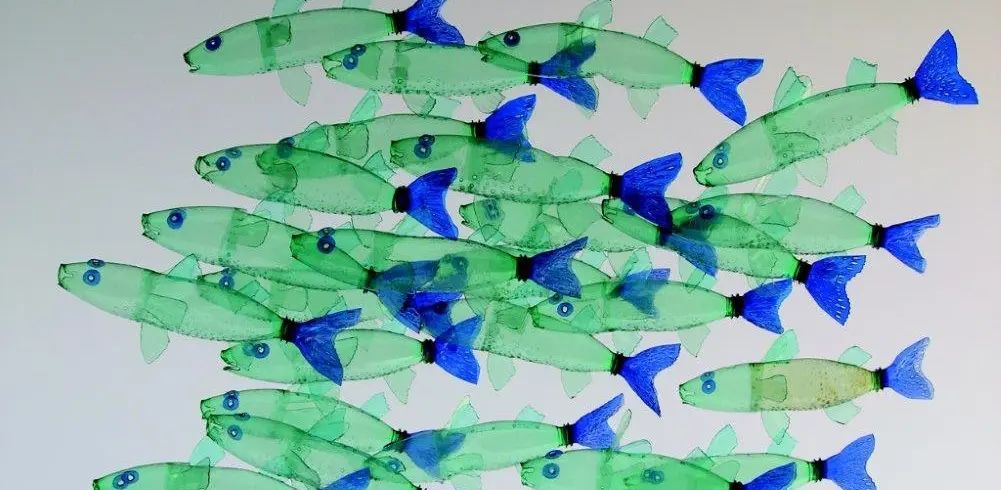
Many artists are trying to tackle the waste issue by using it as material in their pieces. Artist Veronika Richterova uses PET bottles that she collects to then heat and mold the bottles into her visions, creating a value to the once discarded material.
The problems related to the use (and abuse) of plastic are well known. While experts warn that, at this rate, by 2050 there will be more plastic than fish in the sea, some people have found a way to reuse the offending material in a very creative way. Indeed, better: making something beautiful out of it. It is done by the Czech artist Veronika Richterovà. Let’s discover her creations (Anastasi, 2020).
“PET-art” is how the artist defines her works. PET is the abbreviation of polyethylene terephthalate, the material of which plastic bottles are mainly composed. Since 2004, Veronika has travelled to over 76 countries and collected thousands of bottles that she has turned into pieces of display art. Indeed, there have been many exhibitions in which she has participated, both individually and together with other contemporary artists. Her brilliant intuition was to realize that the heated plastic becomes moldable and any shape can be obtained (Anastasi, 2020).
“The principle is very simple: every PET bottle tends to become smaller when heated. However, in my experience, it is difficult to adjust the process since the different types of bottles are of different quality and their behaviour is often unpredictable. The work is always full of adventures, the final sculpture is usually the result of many experiments. The biggest advantage is that there is a lot of free material all over the world. I have a special house full of bottles that I find, which is my ‘treasure’ where I can go to choose what I want to work with” (Anastasi, 2020).
Not only does the use of PET as a medium help reduce waste and supply cost, it provides a new avenue for creativity and the development of technical craft.
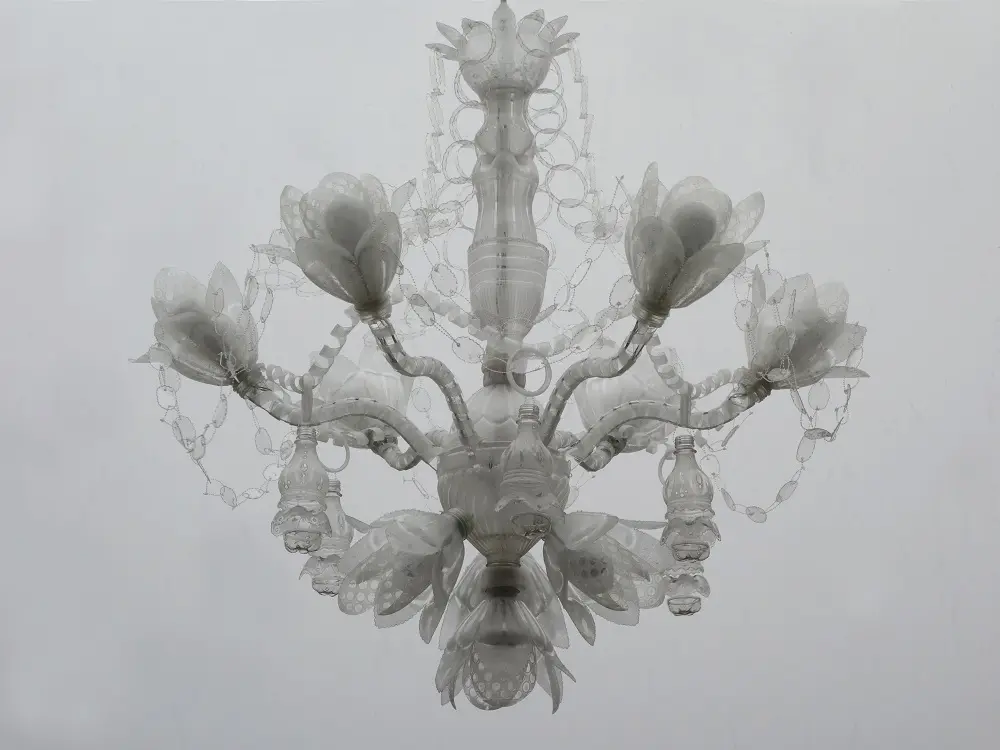
Born as a visual experiment, it has become a real mission. Cut, heat and shape. What? Several sculptures, but we show you in particular one of the most surprising collections of Richterovà. It’s called “Pet Luminaries” and consists of a series of chandeliers made by recycling plastic bottles collected around the world. Elaborate compositions, with a retro taste, almost regal as some works recall the great chandeliers of the 18th and 19th century ballrooms (Anastasi, 2020).
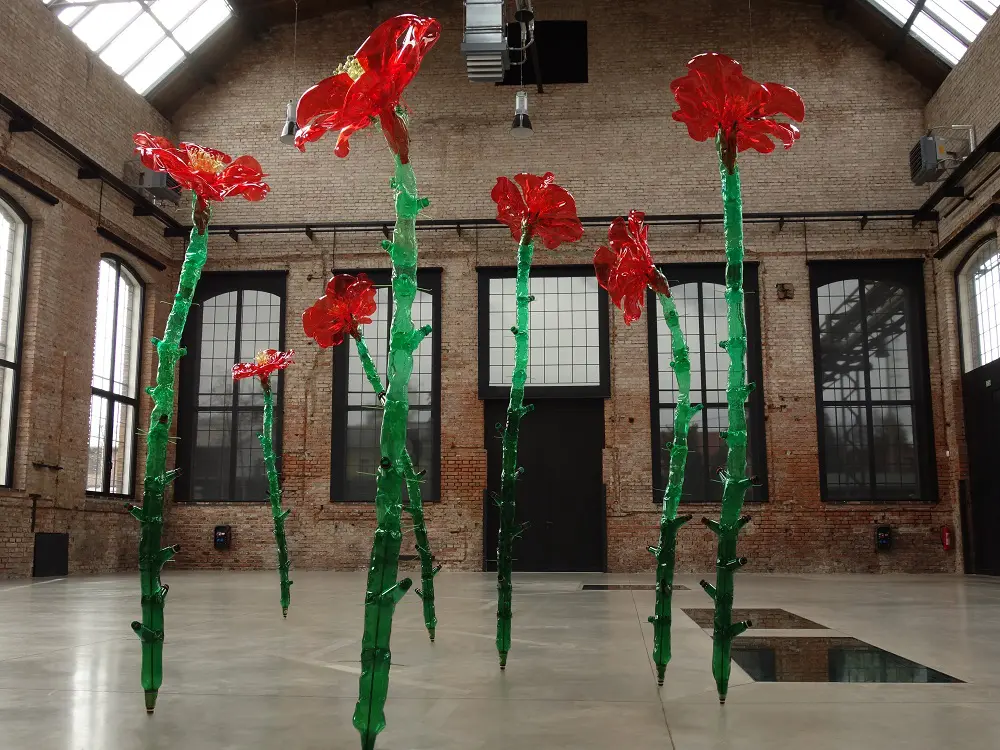
By collecting and reusing bottles from fates in the landfills, Veronika is able to show just the many ways that the material is still useful. By creating more exhibit pieces like the roses, or intimate pieces like the chandelier she shows how a seemingly single use item can live on beautifully. It creates an opportunity for designers to consider those discarded materials for another purpose than their initial.
Reference.
Anastasi, L. (2020, May 22). Pet-art: Turning plastic waste into art. Ecobnb. https://ecobnb.com/blog/2019/06/pet-art-plastic-bottles/