Teaching Recycling to the Masses

Polymers are generally categorized into two groups: thermoplastics and thermosets. The defining characteristic between these two types of polymers are how individual monomer chains are bonded to each other.
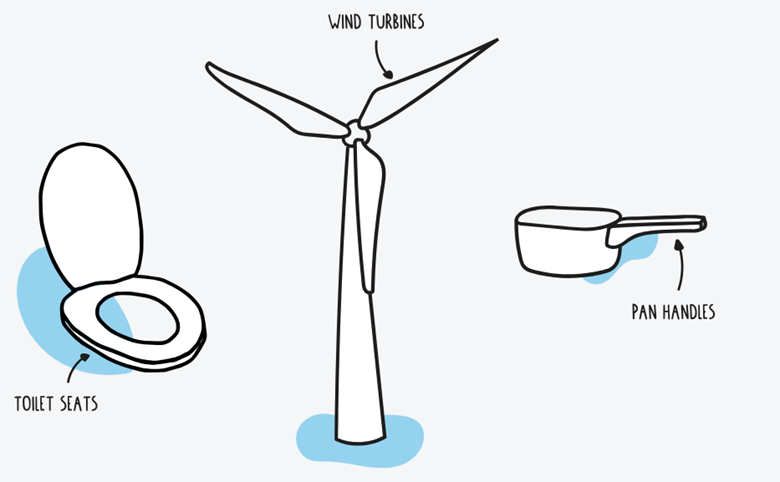
Thermoset plastics contain polymers that cross-link together and create an irreversible bond, meaning they can’t be remelted - once they take shape, they will be solidified forever. Think of Thermoset as bread: once bread is made, if you try to heat it, it just burns. None of these plastics can be recycled. Some examples of thermoset plastics are...(Precious Plastic, n.d).
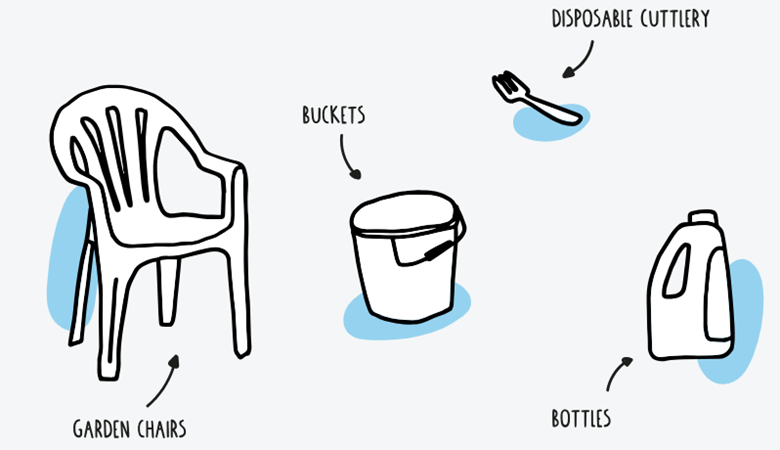
Thermoplastics is a plastic polymer which becomes soft when heated and hard when cooled. Thermoplastic materials can be cooled and heated several times: when they are heated, they melt to a liquid and when they cool they become hard. Think of Thermoplastics as butter: it can be heated and cooled many times, it just melts and sets again. Examples of thermoplastics...
Thermosets, which feature cross-linking monomers, are synthesized once in a permanent bond. They cannot be melted down, and burn off toxic gas. Thermoplastics on the other hand, feature monomer chains bonded with weaker forces which allow them to be heated, melted, and cooled several times.
Thankfully, 80% of plastics in the world are thermoplastics meaning they can be recycled and transformed. Thermoplastics (which we will just refer to as plastic) are divided into further subcategories depending on their structure and properties, and can be recognized by their name or number that should be usually printed or embossed somewhere on your products.
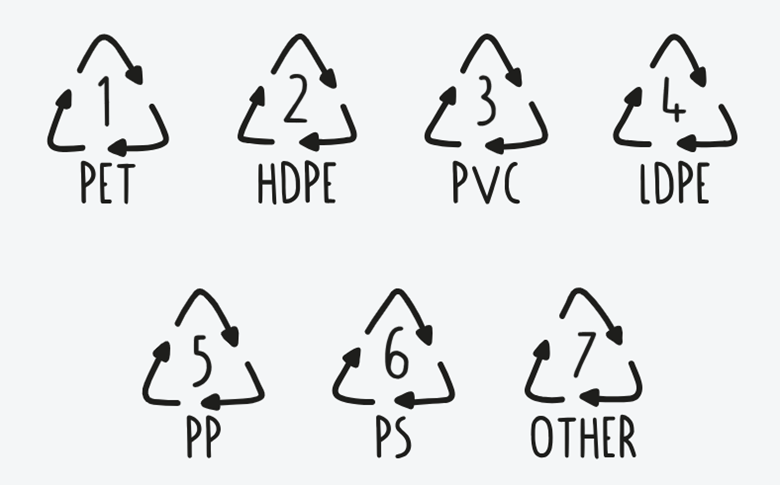
The Local Loops team is primarily interested in thermoplastics, since they are the more appropriate polymer category to be used in a circular economy. Marble Plastics manufactures their products using HDPE (plastic #2), and Polystyrene (plastic #6).
HDPE is often used for food and drink containers, as well as milk bottles, motor oil, shampoo bottles, soap bottles, detergents, bleaches, toys and bottle caps. Products of this plastic types are often easier to collect sorted and clean. HDPE works very well with Precious Plastic machines and is great to start with!
PS is most commonly known as Styrofoam, but also appears in many more products. PS can be recycled, but not efficiently - recycling it takes a lot of energy which means that few places accept it. Disposable coffee cups, plastic food boxes, plastic cutlery and packing foam are made from PS - it works very well with Precious Plastic. It is one of the more toxic plastic types (so special attention please!), but at the same time offers great aesthetic and haptic properties as it is comparable with glass and can be polished.
HDPE is great for food and low-mechanical applications such as toys and containers. PS is great for storage and packaging but degrades with UV exposure. Both materials are relatively cheap and easy to machine. Since the NDC focusses on outdoor installations, the Local Loops team will have a preference to be using HDPE as much as possible.
References
Precious Plastic. (n.d.). Plastic basics. Retrieved from https://community.preciousplastic.com/academy/plastic/basics