Primary Research
For my primary research I conducted several methods, including: observation, experience mapping, and interviews.
Observation
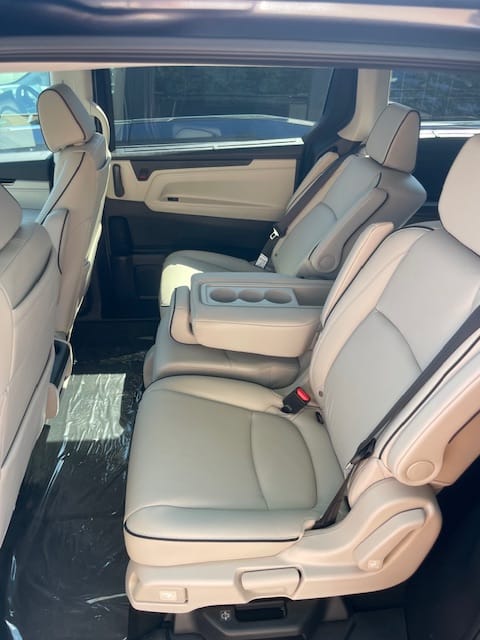
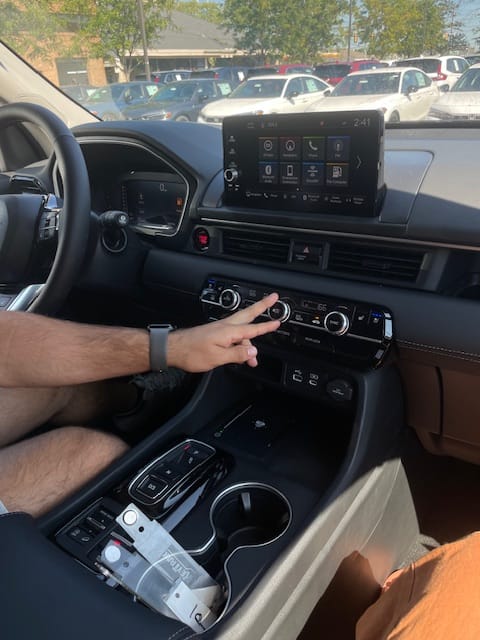
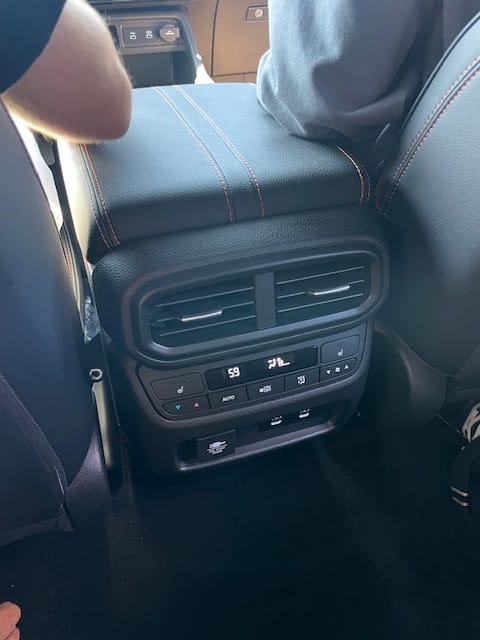
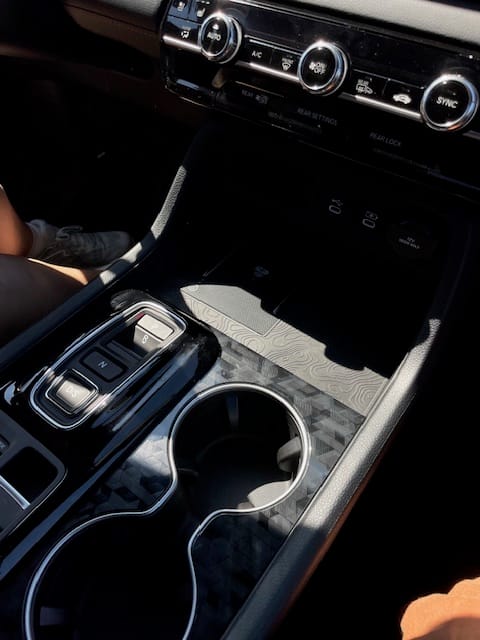
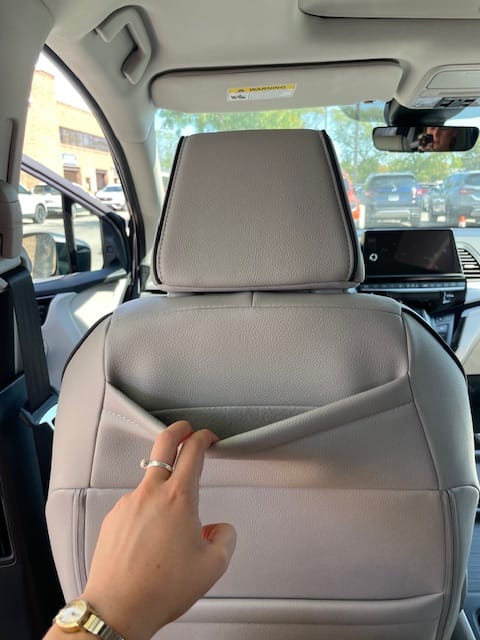
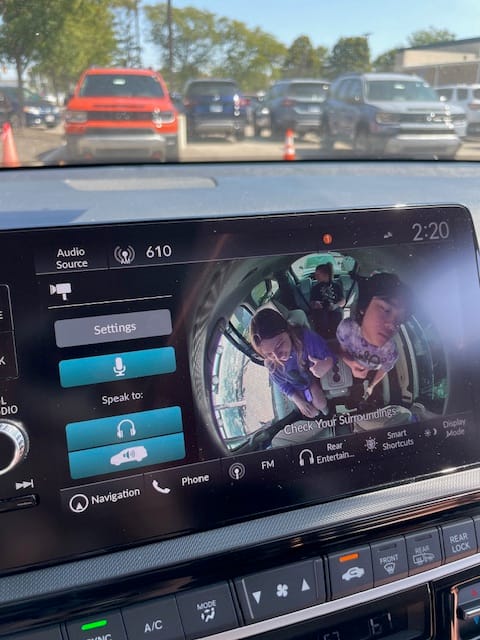
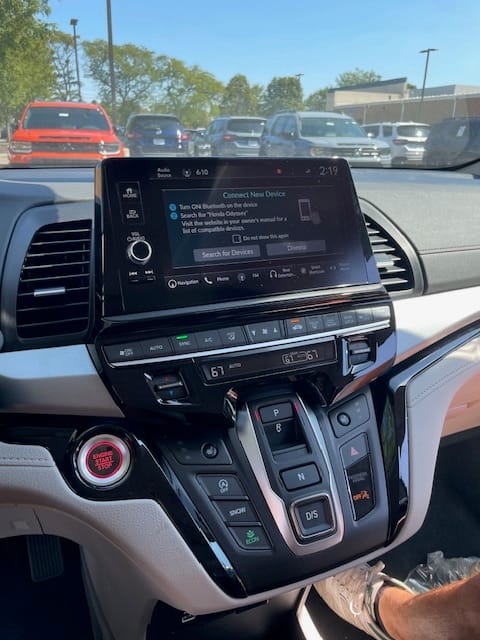
Honda Dealership / Photography by Francesca Knoetgen
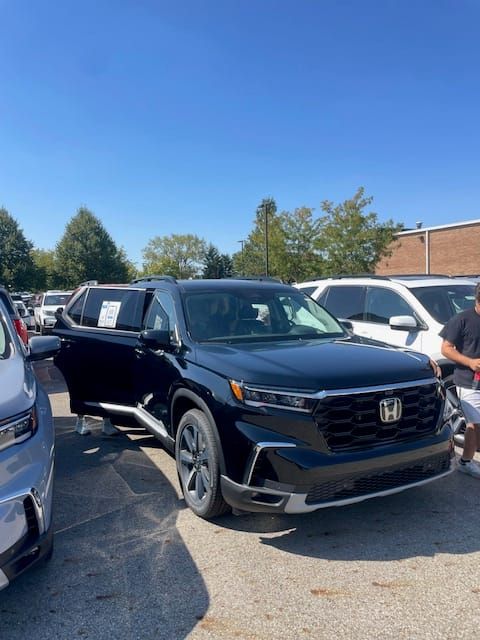
The images above document a visit to a Honda dealership, where my group and I explored the features currently offered in Honda vehicles. In the Pilot, Passport, and Odyssey, we tested climate control and airflow settings, reclining and adjustable seating, storage capacity, speaker performance, overall comfort, and more. What stood out most were the newer technological capabilities; such as the overhead backseat camera, which provided the driver with a panoramic view, and the speaker system that projected voices from the front to the back. Additional noteworthy details included elevated backseat pouches designed to hold tablets and phones at eye level, as well as visually appealing patterns and subtle textural elements, particularly in the Passport’s center console. This early exposure to Honda’s existing features helped establish a baseline for my research, highlighting both strengths to build on and opportunities to expand creatively, especially in the realm of ambiance.
Experience Mapping
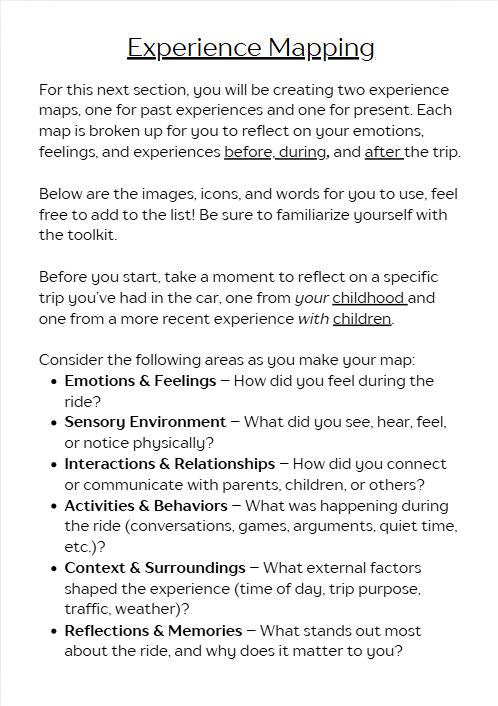
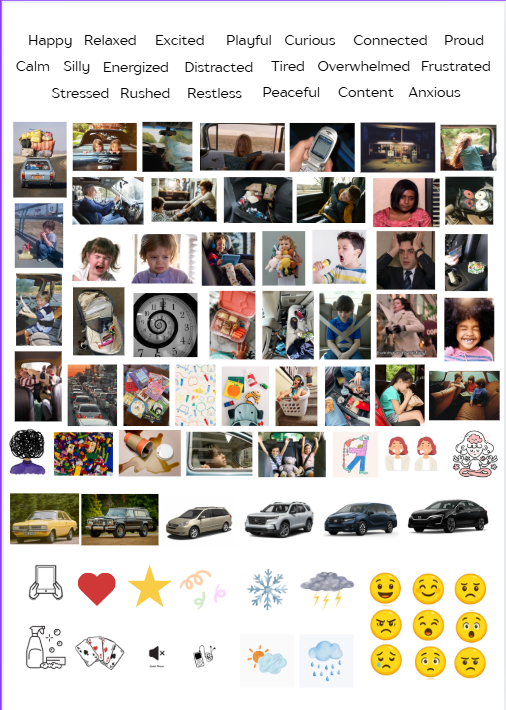
Directions and Toolkit for Experience Map Activity
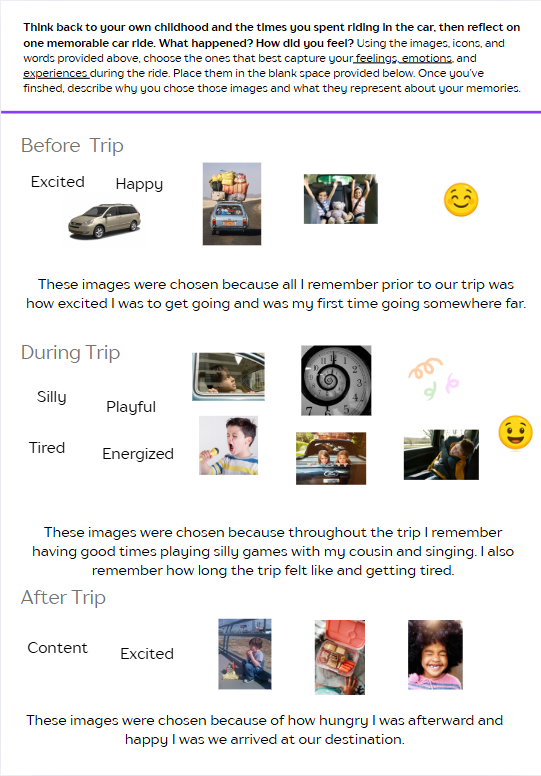
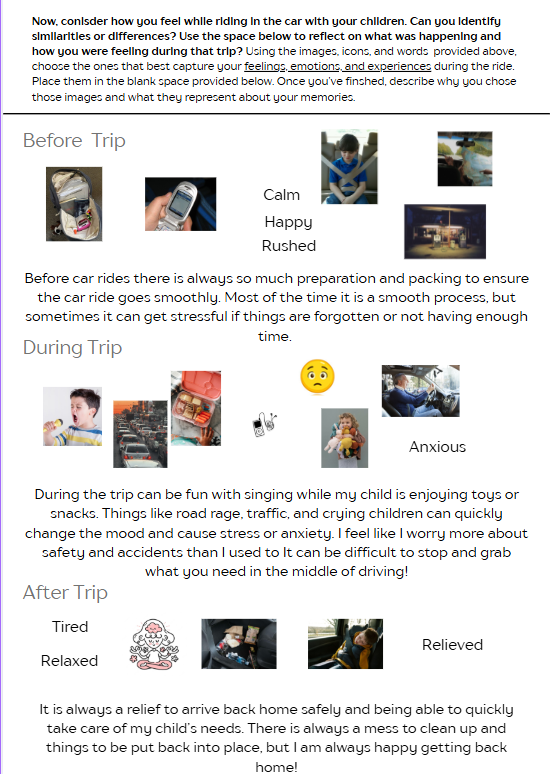
Example of participants response to Experience Mapping activity
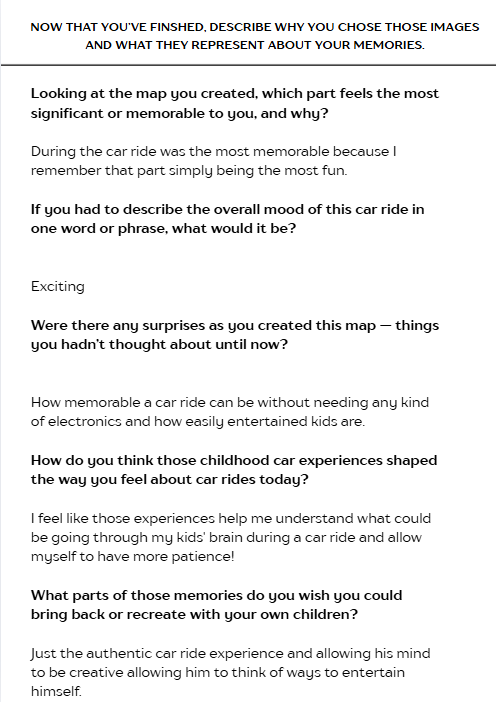
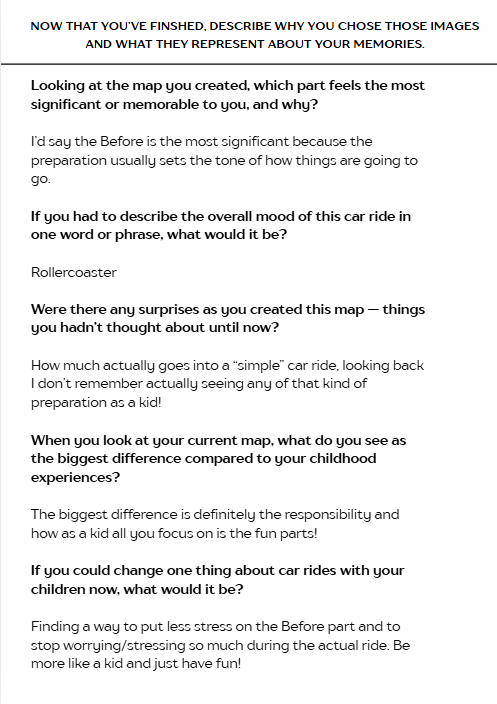
Example of participants response to questions section of Experience Mapping activity
This activity guided participants in creating an experience map that asked them to reflect on two car rides: one from their childhood as a passenger, and one from a recent experience as a driver with children. Using a toolkit of images, icons, and words, participants mapped how they felt before, during, and after each ride. I shared the activity with four individuals of varying backgrounds caring for children: a mother of two, a mother of one, a grandfather with custody of two, and a babysitter of two.
While diverse, their responses revealed similar points of consensus. Childhood car rides were remembered fondly, often associated with excitement, joy, connection, and playfulness. However, their reflections as adults painted a different picture; one shaped by responsibility, stress, and safety concerns. Several noted the importance of preparation before a trip, as this set the tone for the ride. Participants caring for two or more children reported added complications, from sibling arguments to competing needs, which made balancing the drive more challenging.
Interestingly, despite these challenges, most participants did not view tablets as a solution and preferred not to provide them during rides. Instead, they encouraged children to engage in more productive, educational activities. Noting their own childhood experiences, where boredom often became a space for imagination and adaptation.
The experience maps revealed a clear shift in how car rides are perceived. While childhood memories were tied to joy, connection, and playfulness, adult reflections emphasized stress, responsibility, and safety. This contrast highlights how the role of “driver” fundamentally reshapes the experience, placing greater weight on preparation and management of children’s needs. Notably, parents and caregivers resisted defaulting to tablets as a solution, instead preferring activities that foster creativity and learning. This suggests that opportunities for design lie in balancing stress reduction for adults with engaging, developmentally supportive experiences for children.
This analysis draws on original material from participant experience maps (~40%), the author’s synthesis and interpretation of survey findings (~45%), and AI assistance (~15%) in editing, restructuring, and refining clarity. All interpretations remain the responsibility of the author.
Interview
To finish off my primary research, I conducted three interviews with parents and guardians, asking anywhere from ten to twenty questions per session. My interviews revealed both common challenges and unique coping strategies, highlighting that car rides with children can be emotionally complex, shaped by stressors, sensory input, engagement, and organization.
Example of Questions Asked:
- Walk me through a typical car ride with your children, from getting ready to arriving at your destination. What frustrates or overwhelms you in that process? What could be made better?
- Do you notice differences in how each of your children responds to car rides? If so, how do you balance their different needs?
- How have your experiences of driving with your kids changed as they’ve gotten older?
- Imagine the “ideal” family car ride; what would it look, sound, and feel like for you and your children?
- How do you balance their need for stimulation (to stay entertained) and your need for calm while driving?
- What are the biggest unmet needs you notice your children have in the car (movement, comfort, focus, emotional needs)?
- Pretend you’re your child for a moment, sitting in the back seat during a long car ride: what would you want most to feel happy and occupied? Now switch back to yourself as the driver: how does that need fit with your own?
Across my three interviews, I noticed that sibling conflicts consistently emerged as a major stressor, creating tension that parents have to manage while keeping the drive safe. A common challenge across participants was the inability to physically intervene with children in the back seat. Yet, each parent experienced car rides differently: Participant 1 viewed short trips as valuable quality time with their children, Participant 2 described the transition into the car as chaotic and stressful, and Participant 3 highlighted physical discomforts as a source of irritation. Participant 2 also shared how she uses the car intentionally for emotional co-regulation, teaching her children calming techniques like deep breathing, whereas Participant 3 noted moments of overstimulation when fights escalated.
When diving into the role of ambiance, sensory factors played a huge role in shaping the in-car atmosphere. Music can both calm and provoke conflict, while temperature issues (like hot interiors, seats, or scratchy seatbelt clips) cause discomfort. Comfort items, such as stuffed animals and blankets, were universally appreciated. Participants also suggested unmet sensory needs; recommending ambient or projected lighting for children afraid of the dark, and additional control centers or a mobile app that allows backseat passengers to select music preferences.
Keeping children engaged was another priority for all parents. Drawing, conversation, storytelling, and creative tablet use were common strategies to balance stimulation and calm. Non-passive activities were emphasized, with voice assistants mentioned as potential tools to support learning and reduce parental burden. Finally, organization and cleanliness were closely tied to parental well-being. All three participants highlighted the importance of accessible, modular storage and easy-to-clean surfaces.
Reflecting on these interviews, it became clear that emotional, sensory, and physical factors are deeply intertwined in car rides. Families value connection and engagement but also face recurring stressors that thoughtful design could address. These insights suggest opportunities for creating individualized sensory control, encouraging creative engagement, and designing organized, functional spaces that support both children and parents.
This section is based on original interview data I conducted with three participants (~50%), my synthesis and framing of the findings (~25%), and AI-assisted editing and refinement for flow, clarity, and structure (~25%). All interpretations remain the responsibility of the author.
References.
Grammarly. (n.d.). https://app.grammarly.com/