Recycling in textile art: Five artists
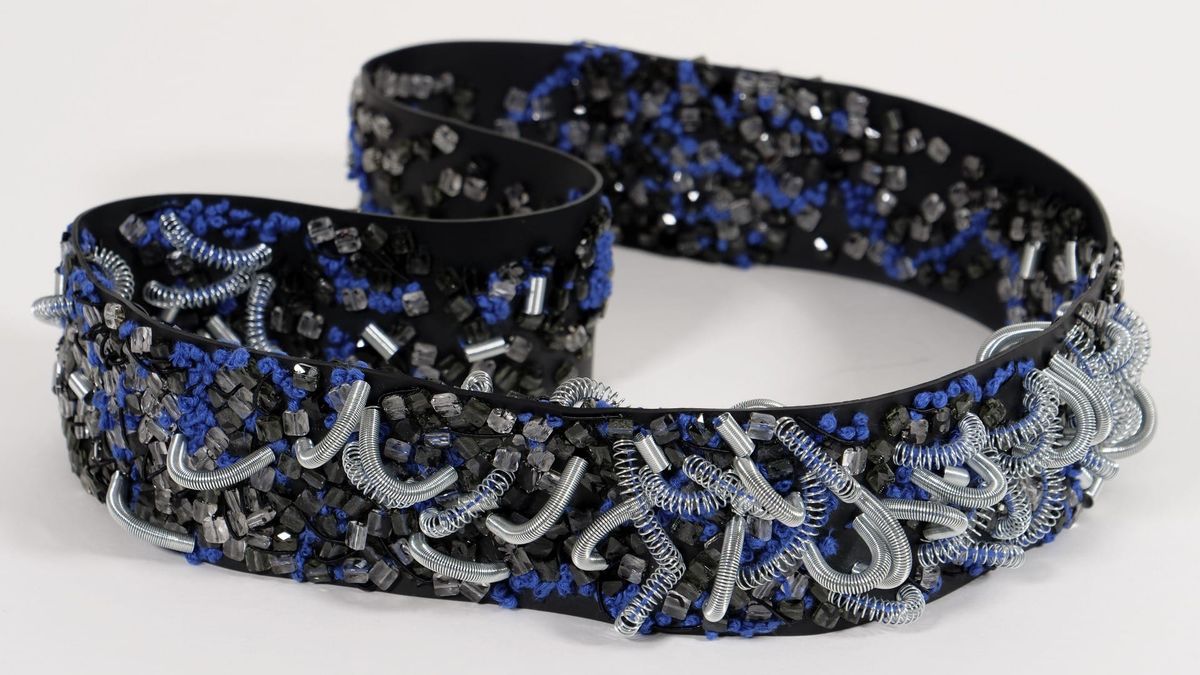
Sequins, beads, and other embellishments on clothing are usually made out of plastic sheets and then punched or rolled to prepare for being sewed onto the fabric. This artist however is going against the grain when it comes to traditional beading in her embroidery and sourcing her own out of found materials.
Elnaz Yazdani first began using found objects and unusual materials during her degree course. She was given a brief called ‘the alchemy of cloth’ which led to her fascination with alchemists and the transformation of materials. She became obsessed with turning ‘the mundane’ into ‘the magnificent’ through stitching. She often finds inspiration and beauty in a range of unconventional materials, and she loves using them in her embroidery projects (Carson, 2024).
Elnaz collects materials from a wide range of places and is always looking for new and alternative supplies. She especially sources waste cutoffs from local factories and manufacturing companies. And she’s developed a good relationship with a car parts supplier, who offers her waste items too small for them to use and otherwise destined for landfill. Her local scrap store is also a favourite source of materials (Carson, 2024).
Finding those relationships and material sources are pivotal in reducing what ends up in landfills. This also demonstrates the building of relationships within the community that are pivotal to circularity.
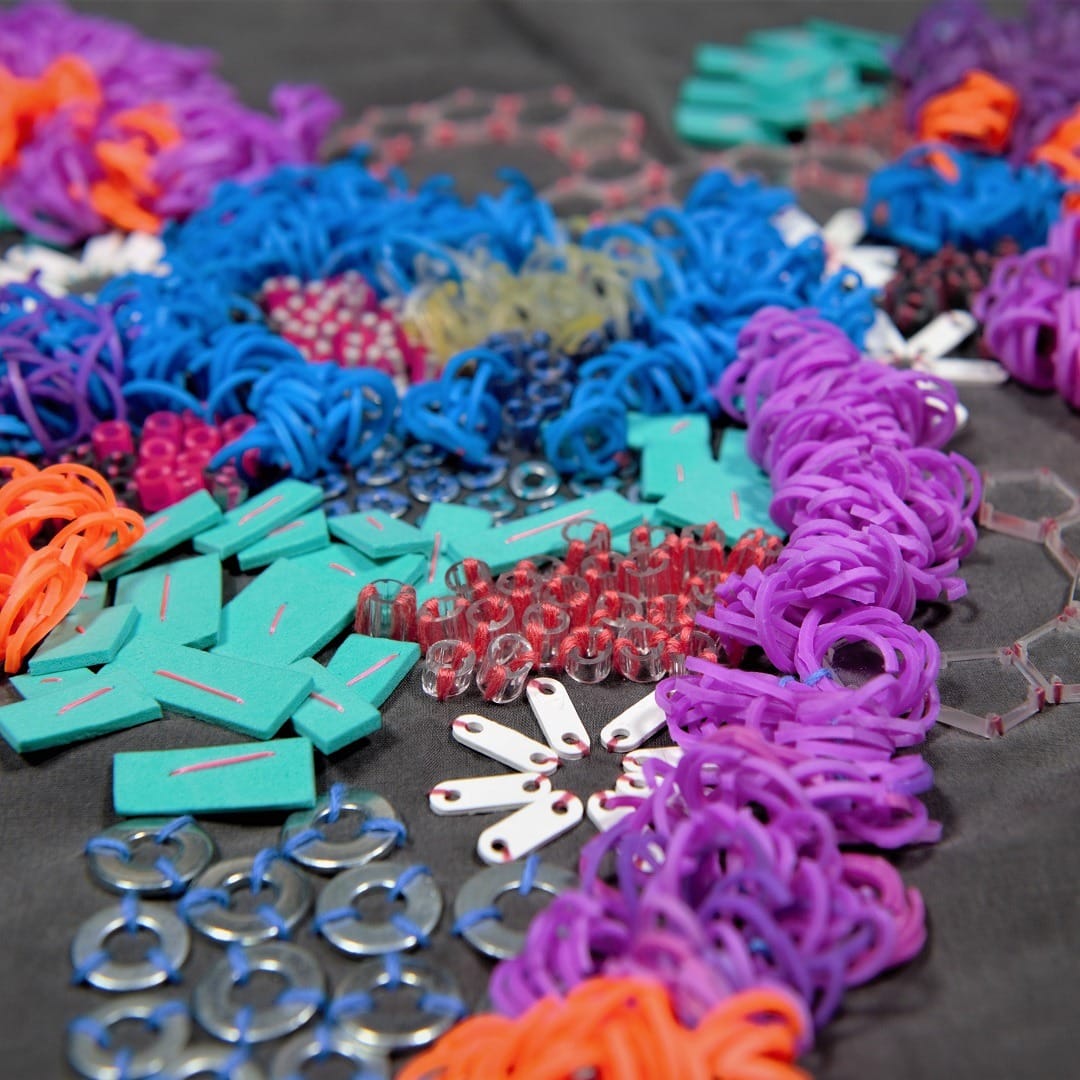
During pandemic lockdowns, Elnaz’s obsession with found and unusual materials grew. Of course, she had more time to explore ideas and sort through items collected over time. But the lockdowns also encouraged her to look around her own home and repurpose household waste materials, such as old stationary, game parts or broken wires (Carson, 2024).
Elnaz also likes to encourage her students to challenge their notions of a bead in embroidery. She invites them to reflect upon the nature of beads and where they can be sourced. Then she asks if they could make their own beads. What materials would they use? Would they choose something hollow, cut something up, or break something down? (Carson, 2024)
Since beading is usually small plastic pieces to begin with, it makes sense for Elnaz to find an abundance of options within discarded plastic to alter it in whatever way she envisions it to fit onto her works. It's inspiring to see what can be done with waste pieces that would normally get lost in the shuffle of a trash heap. The topic of recycled art pieces and their value come to mind- does the fact that the materials were once trash reduce the "value" or increase it? It is important to teach the next generation those scavenging and processing skills to produce materials. By teaching students how to turn trash into a resource it is laying the groundwork for future generations attitudes and practices on reusing items. Which in turn increases the chances for circularity.
Reference
Carson, M. (2024, September 12). Recycling in textile art: Five artists. TextileArtist. https://www.textileartist.org/recycling-in-textile-art/