Revolutionary chemical recycling process adds big value to ‘junk’ plastic waste
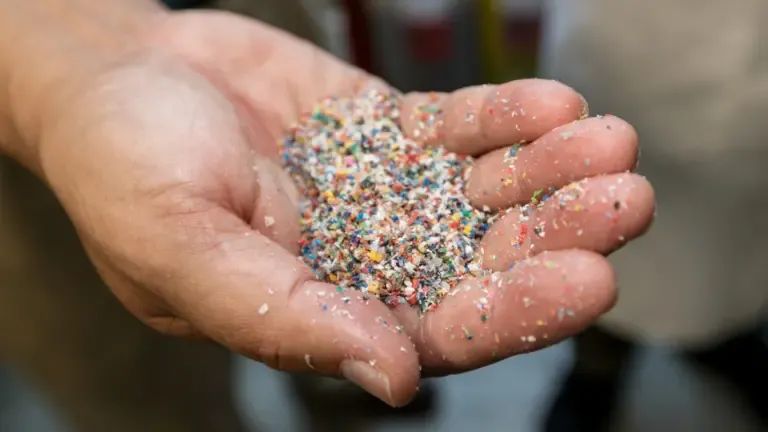
My special interest is focusing on the future of recycling. This article looks at the innovative techniques that are forming to potentially solve the pollution and material toll that is accumulating with the lack of plastic recycling. Researchers from Wisconsin are processing plastics to hopefully turn them into higher valued chemicals.
Although many Americans dutifully deposit their plastic trash into the appropriate bins each week, much of that material, including flexible films, multilayer materials and a lot of colored plastics are not recyclable using conventional mechanical recycling methods. In the end, only about 9% of plastic in the U.S. is ever reused. Equally discouraging, the products made from recycled plastic typically are low-value, meaning the high costs of recycling don’t necessarily yield great returns (Daley, 2023).
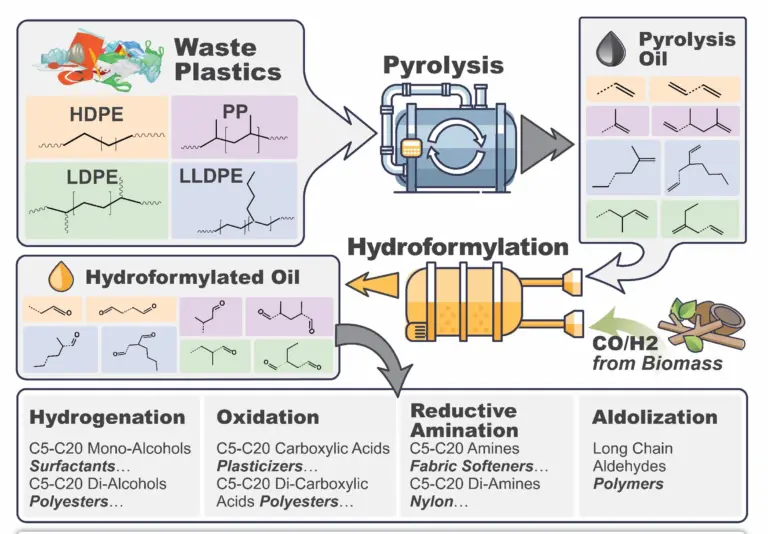
With a new technique, however, University of Wisconsin-Madison chemical engineers can turn waste plastic into high-value chemicals. The method relies on two chemical processes—pyrolysis and hydroformylation—which ultimately increase the economic incentives for plastic recycling and open the door to recycling new types of plastic (Daley, 2023).
The economic factor has been the main road block in the recycling efforts thus far as research has shown. Companies would much rather just proceed with current raw materials for production than take the time, energy, and cost to work with a recycled material. I wonder if the new opportunities with different plastics would entice more engagement from companies.
The world is swimming in plastic waste—in some cases literally—with few options for recycling much of that material. One emerging method is pyrolysis, in which plastics are heated to high temperatures in an oxygen-free environment. The result is pyrolysis oil, a liquid mix of various compounds. Pyrolysis oil contains large amounts of olefins—a class of simple hydrocarbons that are the central building blocks of today’s chemicals and polymers, including various types of polyesters, surfactants, alcohols and carboxylic acids (Daley, 2023).
In current energy-intensive processes like steam cracking, chemical manufacturers produce olefins by subjecting petroleum to extreme high heat and pressure. In their new process, the UW-Madison team recovers olefins in the pyrolysis oil and then uses them in a much less energy-intensive chemical process called homogenous hydroformylation catalysis. The process converts olefins into aldehydes, which can then be further reduced into important industrial alcohols (Daley, 2023).
The recycling industry could adopt the process soon; in recent years, at least 10 large chemical companies have built or announced plans for facilities to produce pyrolysis oils from waste plastics. Many of them run the pyrolysis oil through steam crackers to produce low-value compounds. The new chemical recycling technique could provide a more sustainable and lucrative way to use those oils (Daley, 2023).
By taking waste and turning it into oil that is useful in many applications, I agree with the researchers that in the coming years more industries will become interested in this process. The fact that they've been able to produce the same oil as the facilities that use traditional steam cracking methods, but for less energy and money seems like enough of a motivator. With any recycling facility and inflow of materials, I wonder what the infrastructure would would look like and if it would similarly run into the same issues that current recycling centers face.
Reference.
Daley, J. (2023, August 10). Revolutionary Chemical Recycling Process adds big value to “junk” plastic waste. College of Engineering - University of Wisconsin-Madison. https://engineering.wisc.edu/news/revolutionary-chemical-recycling-process-adds-big-value-to-junk-plastic-waste/