Robots detect and collect litter in marine environments

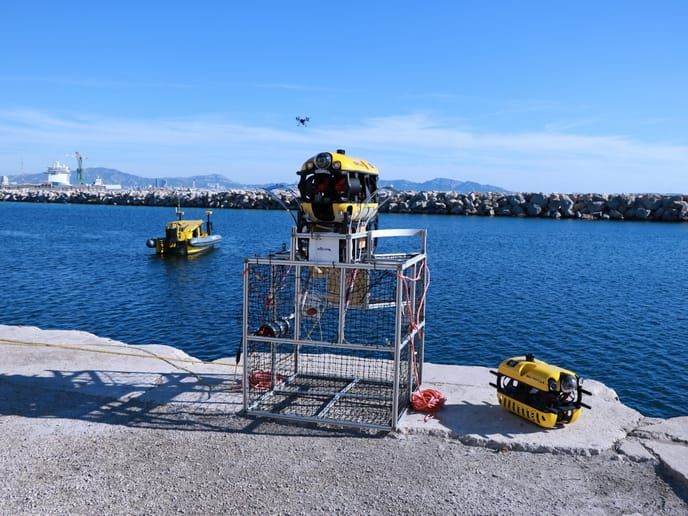
A big question I have at the start of my project is how waste can be collected for recycling purposes. This article looks at an innovative technology that works in a marine environment to collect litter. I am curious to explore its capabilities and limitations.
Multiple robots coordinate to collect trash from the bottom of the sea. Aerial and underwater robots scan the water for litter using image and acoustic sensors. A surface vehicle is the hub of the operation, with underwater units and drones tethered to the hub. Tethering enables better communication and addresses the power and computation needs of the robots. (CORDIS)
These are unmanned robots that scan for debris on the ocean floor. The drones work together from the hub to reach parts of the ocean floor that people cannot easily go.
While the goals and processes envisioned by SeaClear are easy to comprehend, achieving success with autonomous robots is much more difficult and requires the application of AI. In particular, training robots to accurately identify(opens in new window) litter and to avoid misidentifying living organisms is a critical matter. Complicating this endeavour is the fact that some forms of litter, such as a cinderblock on the seafloor, become rich habitats and should not be removed. The SeaClear team seeks an 80 % success rate in litter identification coupled with a 90 % success rate in litter collection. (CORDIS)
The cinderblocks mentioned above are an interesting outlier in the process. What should quantify as waste or litter? There may be times when nature has already begun to reclaim trash. It will be an important source of dialogue to consider how much waste management should disrupt local wildlife and their habitat for the goal of a cleaner earth.
A follow-up project, SeaClear2.0, has already kicked off. This second project is focusing on trash collection in deeper, darker waters. It will also endeavour to pick up larger debris by equipping the surface robot with a grapple. The follow-up project will include surface litter collection and efforts to raise public awareness and reduce litter input. To learn more about SeaClear2.0 please visit https://www.seaclear2.eu/(opens in new window). SeaClear has made great strides in collecting litter from the seafloor. According to project coordinator Bart De Schutter: “The consortium aims to introduce the litter-cleanup system to the market, making it accessible for public authorities, coastal organisations, NGOs, tourist resorts and any other businesses that may find this solution beneficial.” (CORDIS)
This is a groundbreaking piece of technology. It is exciting to hear its wide range of implementations. As it works to keep the oceans clean, I notice another step needed in the process. Something needs to be done with the litter collected by these robots, and this is a problem space my capstone could consider how to fill.
The project’s endeavours are making the seas a safer, cleaner place for industry, recreation and marine life. (CORDIS)
CORDIS, cordis.europa.eu. “Robots Detect and Collect Litter in Marine Environments.” CORDIS, 21 Aug. 2023, cordis.europa.eu/article/id/445678-robots-detect-and-collect-litter-in-marine-environments.