
Rock Climbing Gyms: a Booming Business
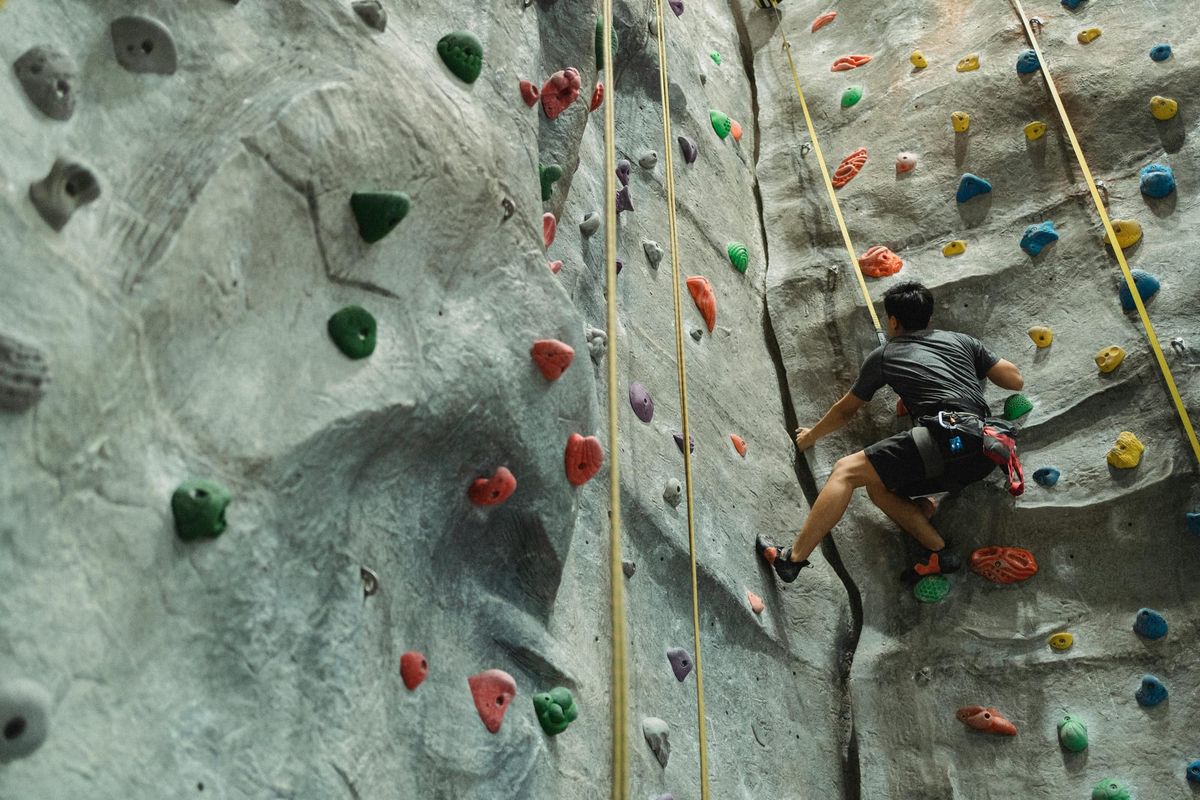
Rock climbing is a recreational activity that, though historical outdoors, has become more popular than ever in an indoor context (Long, 2024). The following article addresses the business of rock climbing and its implications for outdoor recreation of the same type.
Excerpts from Long (2024):
[Rock climbing] began as a primitive, outdoor sport in the 1800s, used mainly as a means of exploration. Only hemp ropes and wooden pegs insured daring alpinists, who often relied on their own physical strength for safety hundreds of feet above the ground.
And while the feats of early adventurers are still admired around the world, the sport has changed drastically from what it once was. Climbers learned to use anchors for increased safety. Daredevils began making world news with their bold accomplishments, turning rock climbing into a global activity.
In 1968, an early climbing wall opened at the University of Leeds in England as a means of controlled, indoor training. The first climbing walls were less of a spectacle than they are today. Rocks taken from the outdoors were drilled to a wooden board only a few meters above the ground.
From these beginnings, rock climbing – whether it’s indoor or outdoor – has turned into a multi-billion dollar industry. Today’s indoor climbing gyms are multifaceted organizations, often offering yoga classes, social and activity rooms, plastic rock walls and yes, actual gyms.
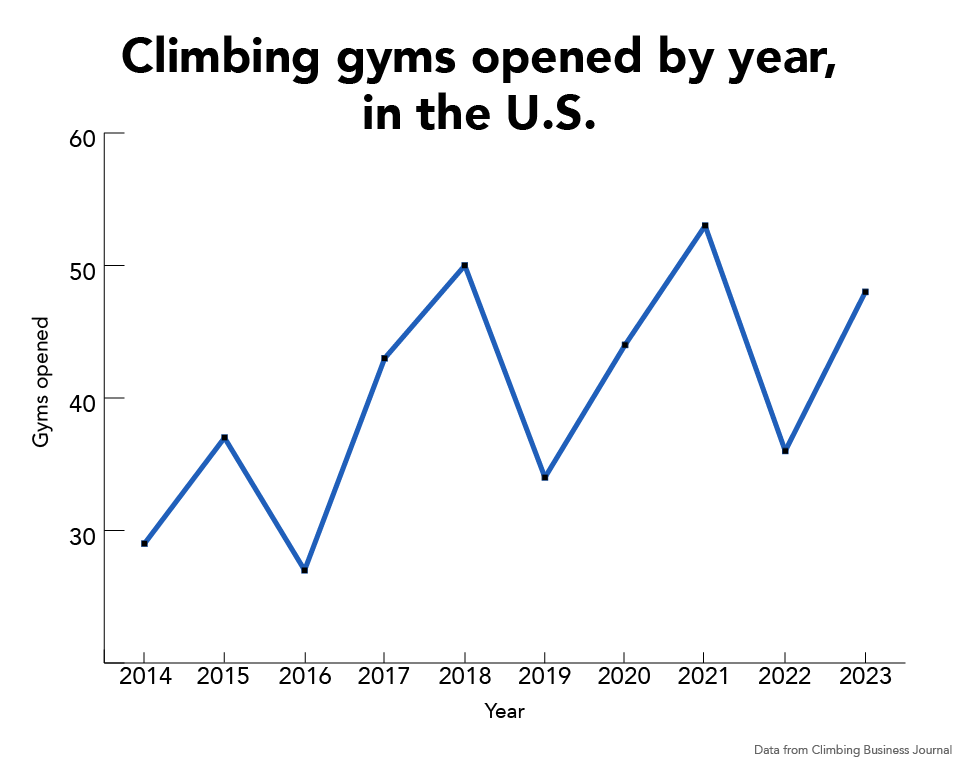
According to the Climbing Business Journal, at the end of 2023, a total of 622 climbing gyms were open in the United States, compared to 353 gyms in 2014. That’s a 76% increase in less than a decade.
The average annual revenue per climbing gym is around $974,337, according to a 2023 report from Gitnux – a “clear indication the rock climbing industry is thriving.” And the activity still has more room to grow.
When it opened in 2007, the Triangle Rock Club, known in the Raleigh-Durham area simply as the TRC, was a dedicated climbing gym located in Morrisville. As indoor climbing grew, the organization’s business model adapted.
The original location has since expanded, garnishing its older version with a set of 55-foot climbing walls, a fitness space, a yoga studio, private conference rooms, cardio machines and a Wi-Fi-supplied lounge. Four more TRC sites with similar features have opened in North Carolina and Virginia since 2013.
The cost of an individual membership to the TRC is $95 per month, which includes access to all of the organization’s rock walls in North Carolina and Virginia.
The business now has thousands of members. But while commercialized climbing has provided a greater means of access to the sport, it has impacted its outdoor counterpart.
“As far as number of people, you get into issues, especially outdoors. Obviously indoors they want everybody to come – you’re paying for it,” Douglas Houghton, a North Carolina climber of 49 years, said. “Outdoors, you’re dealing with land managers and they’ll see the impact.”
And as the indoor climbing industry expands, a growing number of thrill seekers want to take on the walls outside, aggravating this effect.
For example, several rock faces, including some in western North Carolina, are closed yearly to protect peregrine falcons, previously endangered birds of prey that usually nest on tall, vertical surfaces. Outdoor climbers may disturb nesting pairs, who will abandon their site and not return until the following year.
“You know, instead of 20 climbers a week showing, there are hundreds of climbers per week, and each one of those climbers has an impact on the environment,” Houghton said. “That’s something we’re seeing more and more, is closures due to impact on the environment.”
Nature is also much less controlled, Mahoney, a northern Piedmont board representative for the Carolina Climbers Coalition, said. Rising numbers of indoor climbers transitioning to outdoor areas could increase the number of unsafe things that can occur at any accessible cliff.
Mahoney said many gyms only require climbers to know how to clip into their harnesses, as many safety practices are automated for liability purposes. Meanwhile, outdoor climbers are required to know how to build anchors, tie a variety of knots and look for falling rocks.
Outdoor rock climbing accounts for approximately 30 deaths per year. This past October, a student from the University of Georgia died after falling 90 feet while climbing outside in Alabama. Another college student fell to his death while climbing in Central Oregon in July 2023.
“There’s not the mentorship there used to be,” Houghton said. “When we started climbing, you climbed with somebody that knew what they were doing, and then nowadays people depend on the gyms more and I think a lot maybe aren’t quite getting as much education about safety before they go outside.”
It seems that the significant rise in popularity of indoor rock climbing gyms also has significant implications for outdoor recreation. As more people become interested in rock climbing, so too do many of those people move to outdoor spaces looking to enjoy the sport in that way. For parks that are already experiencing a high level of impact from hiking and biking, like the ODNR state parks, this poses an extra challenge. Even many long term, avid hikers and bikers are unaware of low-impact and ‘leave no trace‘ practices. The question I’m left with is what kind of attitude these climbers who are used to having full control over their space in an indoor environment will bring to natural environments, where even the smallest action from a single individual can have detrimental repercussions for the plant life and wildlife that occupy that environment. Because of the high price of membership of these rock climbing gyms, as well, it’s more than likely the demographics of rock climbers are those used to the privilege of having a sense of ownership over their space. I wonder about the demographics of the average state parks visitor. Finding that out will likely help inform the attitude/techniques used in any informational/educational signage that might be a part of my capstone project.
References.
CBJ Press Release Service. (2025, April 23). Are climbing gyms profitable?: Impact explores the profitability of climbing gyms. Climbing Business Journal. https://climbingbusinessjournal.com/are-climbing-gyms-profitable-impact-explores-the-profitability-of-climbing-gyms/
Long, S. (2024, May 6). The Indoor Climbing Industry is Booming, but the Transition Has Changed the Sport. UNC Media Hub. https://mediahub.unc.edu/climbings-indoor-to-outdoor-transition/
No generative AI was used in the creation of this post.