Sacred Geometry:Yantras
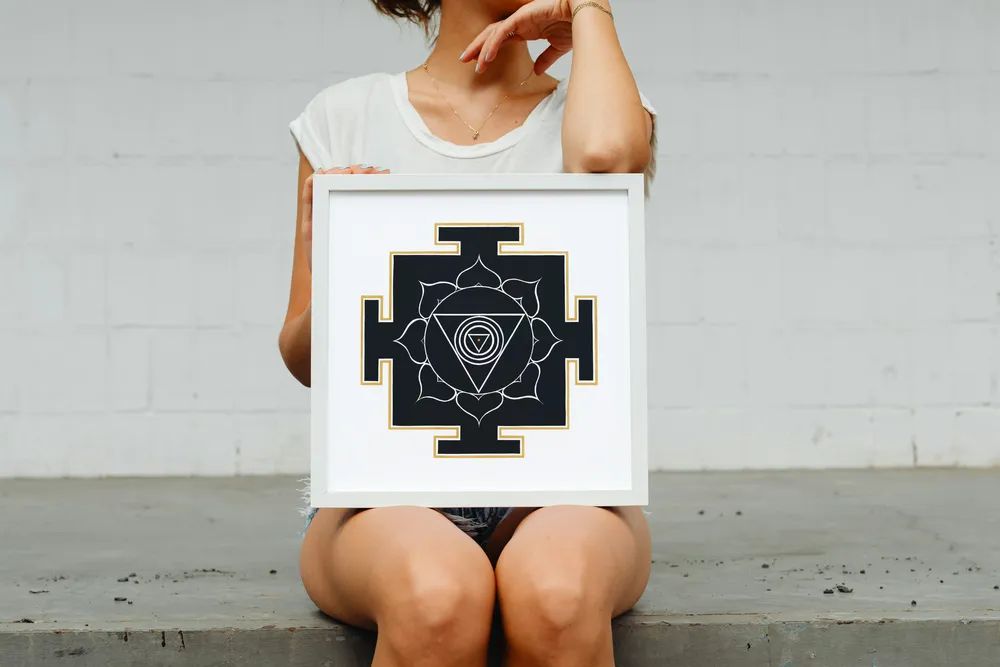
This article introduces the concept of yantras which is very foreign to me. These are geometric diagrams used as visual tools for meditation and concentration. The article explains that a yantra acts as a guide and a reflection for the mind. It helps a person to shift their attention from the world around them to their inner thoughts. The idea that precise visual patterns can help still a restless mind and serve as a focal point for concentration is a unique perspective for my project. This also offers non digital approach to managing boredom and restlessness. Some shapes the article talks about are Circles, Central dot(Bindu), Squares, Triangles and Trinities. Circles represent unity and expansion, the central dot or Bindu is the focal point for meditation. Squares are often found on the outer edges of a yantra and triangles represent opposing forces(Masculine (upward-pointing) and feminine (downward-pointing) energies). This suggests a design solution that could integrate subtle geometric patterns into the car's interior possibly providing a visual anchor for a child to focus on or it could also be a physical object that they can hold. How might I be able to use these Geometric shapes in a subtle way to calm and help backseat drivers get into a meditative mood unconsciously.
Does this sound familiar? “I’m enjoying meditation, and the breath awareness and mantra I’m using are helpful, but I’m visually oriented. Is there some sort of visual framework I could weave into my practice that would help me stay focused?” (Sovik, 2025).
This is not an unusual question, but it can be difficult to answer. If we were gathering techniques from many traditions and piecing them together, we could make use of all sorts of images: thangkas from Tibetan Buddhism, classical Christian icons, paintings of the chakras, images of favorite deities, or even candles. We might visualize a tranquil beach, a forest glade, or a serene Himalayan retreat. These are precisely the sorts of inspiring images that we use to decorate our homes and meditation rooms. But randomly bringing these images into meditation is not very helpful, and may even be disruptive (Sovik, 2025).
The archetypal number three, meanwhile, is signified in the yantra system by the shape of a triangle. The three points forming the angles of the triangle stand for any number of trinities, such as beginning, middle, and end; subject, object, and means of knowing; Brahma, Vishnu, and Shiva; past, present, and future; earth, sky, and heaven; or doer, action, and means of performing action (Sovik, 2025).
When you sit for meditation in any of the cross-legged poses, you can see triangular shapes in your own body. The two knees and the base of the spine create a triangular base, and the whole body forms an upward-pointing triangle as well. A more elaborate analysis of the upward triangular shapes of the body portrays it as a tetrahedron, a four-sided geometric solid (Sovik, 2025).
I think the concept of Yantra is very interesting but now I'm curious if there are other shapes and visuals that can help make you into a more peaceful mood unconsciously.
Reference.
Sovik (2025). Sacred Geometry: Yantras for Meditation. Yoga International. https://yogainternational.com/article/view/sacred-geometry-yantras-for-meditation
This passage draws on Yoga International’s “Sacred Geometry: Yantras for Meditation” (~45%) as the original source, integrates the author’s reflections and design applications connecting yantras and backseat experiences (~35%), and includes AI assistance in synthesizing the article’s key concepts, refining phrasing, and framing implications for child-centered design (~20%). All interpretations remain the responsibility of the author.