Super Mario as a Framework for Understanding Psychological Principles
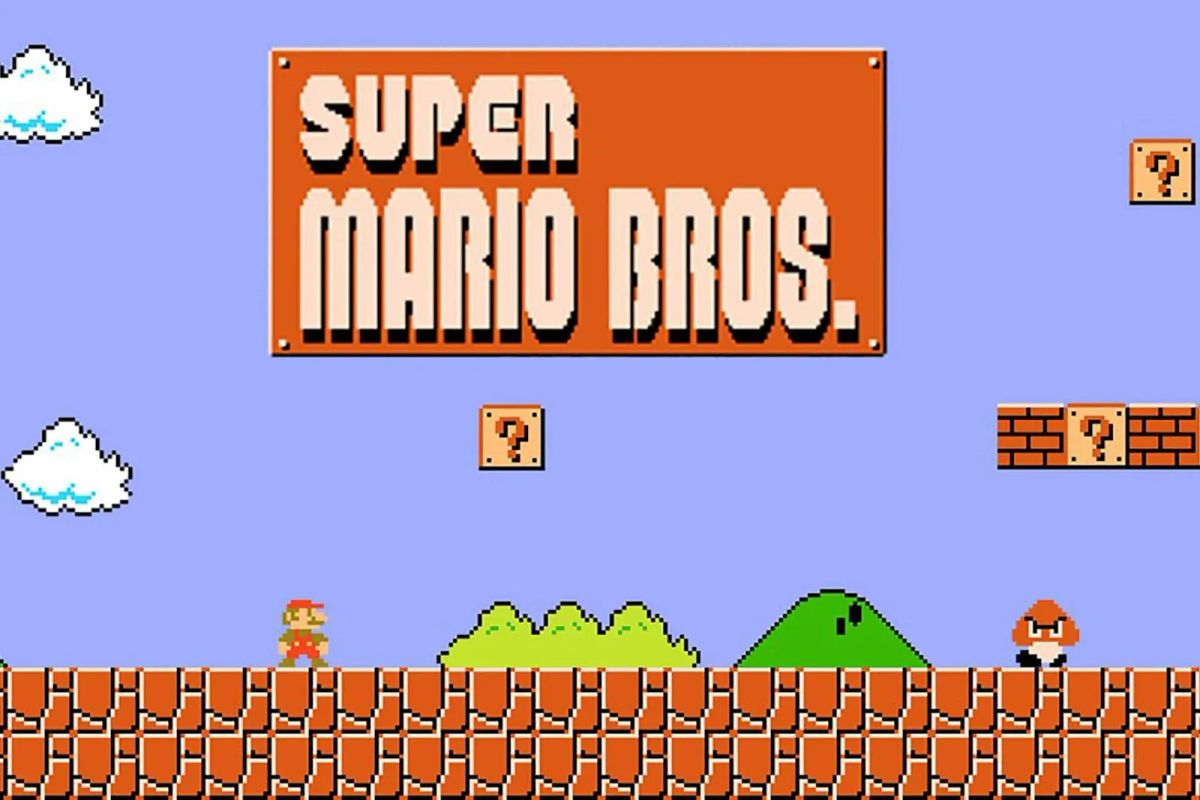
Super Mario Bros. is one of the most recognizable games of all time, but it is far more than rescuing the princess from Bowser and jumping on top of goombas. While it is just a game it does offer an insight on the perception of how people view challenges. [i'm featuring this article by this person becuaselaskdf;lkasjdfa]
The challenging tasks in the colourful Mushroom Kingdom to rescue the beautiful princess, Peach, is the basic premise of one of the greatest games in the industry’s history.
Apart from being an amazing source of entertainment, games like Mario taught some crucial skills to the kids.
One such aspect of the game was recently highlighted by a Twitter user. The user shared two images that looked like screen grabs from the game. In the first image, Mario is going through one of the hurdles in the game – blocks arranged on top of one another with each vertical block bigger than the previous one. The other image shows another hurdle, but in this one, instead of a vertical arrangement of blocks, there is just one block floating in the air. (Staff B, 2022).
"Mario games teach us that even if something is essentially the same, psychologically it can be completely different. This example is very easy to understand." pic.twitter.com/XNxCNt9vfM
— Cheesemeister (@Cheesemeister3k) July 14, 2022
While this article is very short and has nothing to do with banking or the financial goals of the public, it presents an interesting framing of how simple changes can alter the perception of how difficult or easy a goal may be, even if they are virtually the same. In the picture above, we are able to see that there are two practically identical jumps that the players are faced with. However, there is a common perception that the image without the supporting blocks is a much harder jump to complete. Users perceive the leap that has the support blocks under it as easier and tend to fail less than the jump without the support.
The only difference between the two hurdles was the blocks under the topmost one. The second hurdle had none, which made it look harder than the first hurdle.
This is a great example why I'm so fascinated w/ game design & the effect it has on players' reasoning/reaction. If something as simple as a perception change affects approach to something with little consequence, the implication for design in moral situations in games seems huge. (citation)
This same concept of small visual framing changes and design changes can be applied to the challenges of banking and achieving financial goals.
Taking those same goals that people are already being faced with and shifting how they break up or perceive these challenges could help with not giving up and meeting their goals. If the goals that users have are structured to be poorly supported or too challenging, they may be hesitant to start or continually progress towards their goals.
References.
Staff, B. (2022, July 16). Super mario teaches us an important lesson in psychology, here’s how. News18. https://www.news18.com/news/buzz/super-mario-teaches-us-an-important-lesson-in-psychology-heres-how-5566873.html
Ai was not used in this article