Tailoring Financial Futures
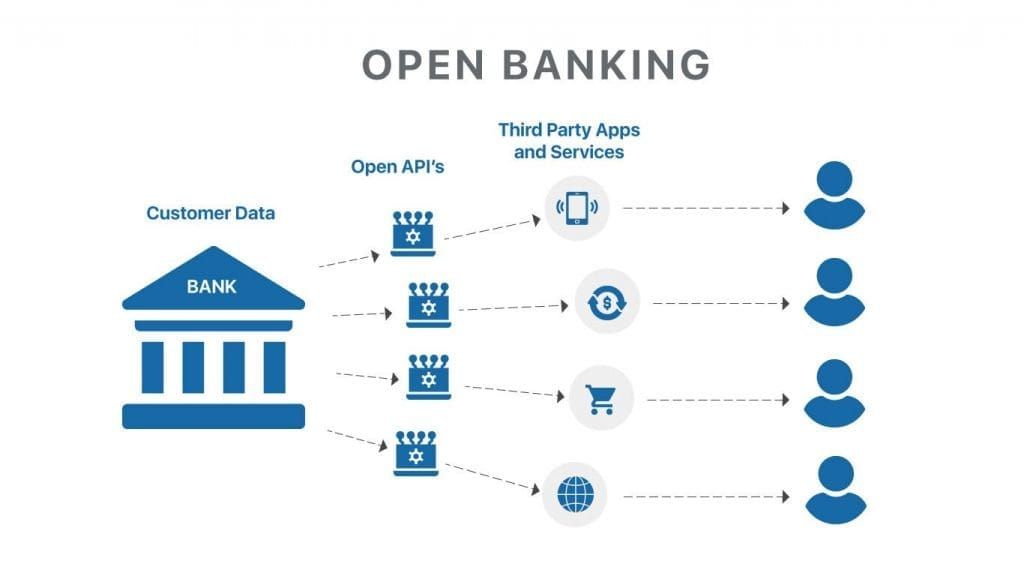
“Open banking application programming interfaces (APIs) provide third-party providers with secure access to customer financial data and transactional capabilities. This architecture allows fintech firms to develop services such as balance aggregation, automated transfers, personalized financial recommendations, and cross-border remittances. In the Korean case, four dominant models emerged: (1) simple fund transfer, (2) simple payment, (3) remittance, and (4) asset management. Asset management applications are particularly transformative because they aggregate multiple accounts into a unified interface, providing consumers with insights into income, spending, and savings. By analyzing transaction histories and account balances, APIs enable personalized nudges and automated goal-setting features that help users save for future objectives such as retirement, education, or housing. Importantly, fintech firms operating on open banking infrastructure are not burdened by the costs of maintaining a traditional branch network, allowing them to focus resources on customer experience and innovation. This reduces barriers to financial participation, especially for younger consumers accustomed to mobile-first interactions.
Moreover, the API ecosystem fosters rapid product development, enabling niche solutions like round-up savings, AI-driven budgeting, and cash-flow-based credit scoring. However, challenges remain in terms of data privacy, cybersecurity, and equitable access. Without careful governance, the very openness that allows innovation could undermine trust in the financial system. Thus, sustainable open banking requires both technical innovation and institutional safeguards that align consumer protection with industry growth” (Lee et al., 2022).
As we progress further into the future new business models can influence different industries and banking is not immune form this change. One of the ways that users financial futures are currently being reshaped is through open banking APIs business models. APIs are allowing for fintech firms to create financial services that are tailored to the users needs and goals. These companies are allowing for people to translate there current daily financial behaviors into a long-term savings plan and shift their behavior to help them hit their financial goals. However these companies do have more risk with data privacy.
The integration of what makes these apps so attractive to users native within their current banking apps can create a more engaged and loyal user base. Online banking apps have to go further then just the basic features that many of them currently offer, allowing for users to tailor their financial futures to be personalized to them.
References:
Lee, J., Kim, H., Park, S., & Choi, Y. (2022). New sustainable fintech business models created by open application programming interface technology: A case study of Korea’s open banking API platform. Sustainability, 16(16), 7187. https://doi.org/10.3390/su16167187
Ai was not used in the creation of this article