The Hidden Cost of Group Travel: Designing for Trust, Not Just Transactions (Op-Ed)

Overview
Despite Gen Z’s low income compared to other generations, they travel frequently (Pitrelli, 2023). Rather than waiting until they have high-paying jobs or savings to travel, they make travel fit into their existing budgets. A survey of 4,000 Gen Z students found that 76% consider financial costs their greatest travel concern, while about half said they expect financial help from their parents (Pitrelli, 2023). This leads me to speculate that within Gen Z travel groups, some people might have stricter budget restraints, while others may be more flexible because they have help from their parents. This makes me wonder how mismatched budgets between travel group members can lead to financial stress and challenges. A survey of over 700 adults who have traveled with friends in the past 5 years (Axelton 2025) has found that Gen Z’s biggest group travel financial stressors and challenges include:
- Unexpected costs that arise during the trip
- Feeling pressure to spend more than they are comfortable with
- Splitting costs fairly when people have different spending habits
- Worrying that their budgets are too low or high compared to their friends
- Agreeing on splurge vs. save priorities
- Discussing money openly without awkwardness
- People over/underspending
Gen Z's top reasons for traveling are to relax, escape from reality, and spend time with the people they care about (Pitrelli, 2023). Financial challenges, such as those listed above, can turn vacationing with friends – something meant to be relaxing and enjoyable – into something exceedingly stressful. I believe that the process of dealing with money when traveling with groups can and should be redesigned to make group travel what it is meant to be – relaxing, enjoyable, and stress-free.
Secondary Research
Research has shown that Gen Z’s top 2 priorities include relationships and health & well-being (EduBirdie, 2024). Science has also shown that group travel and group financial discussions deepen relationships, leading to improved mental and physical health in the long term (Sholes-Douglas, 2025). People may overlook group travel and financial discussions as methods of nurturing their top priorities, such as their relationships and health. However, long-lasting relationships are built upon having a supportive community, shared experiences, rituals, and traditions (Nettleship, 2025). Group gatherings, events, and trips create a sense of camaraderie between people, which leads to deep, meaningful friendships and improved health & well-being.
Discussing financial challenges and goals with others has also been known to deepen connections and improve well-being (Sippy, 2024). Vicobas (Village Community Banks) are popular banking models in sub-Saharan Africa where finances are owned and managed by their own members. Vicobas are built upon trust and communication. One Vicoba member explains that “a unique bond is formed between members of community banks…by learning about each other’s financial goals…they become involved in each other’s lives beyond money” (Sippy, 2024). The groups gather regularly not only to manage their finances but also to discuss their goals and provide moral support for one another. The moral support and camaraderie formed between community banking members lead to deepened connections and improved mental & physical health.
From researching Vicobas, I saw an opportunity to explore how elements of community banking systems can be integrated into the digital banking space to deepen connections. One way this could be done is by creating a digital platform where users can post their financial goals to a social feed. Users would be encouraged to like and comment on each other’s posts and connect via direct message. This social forum would allow people to connect, bond, and support each other through their financial goals. Click here to read more about this concept.
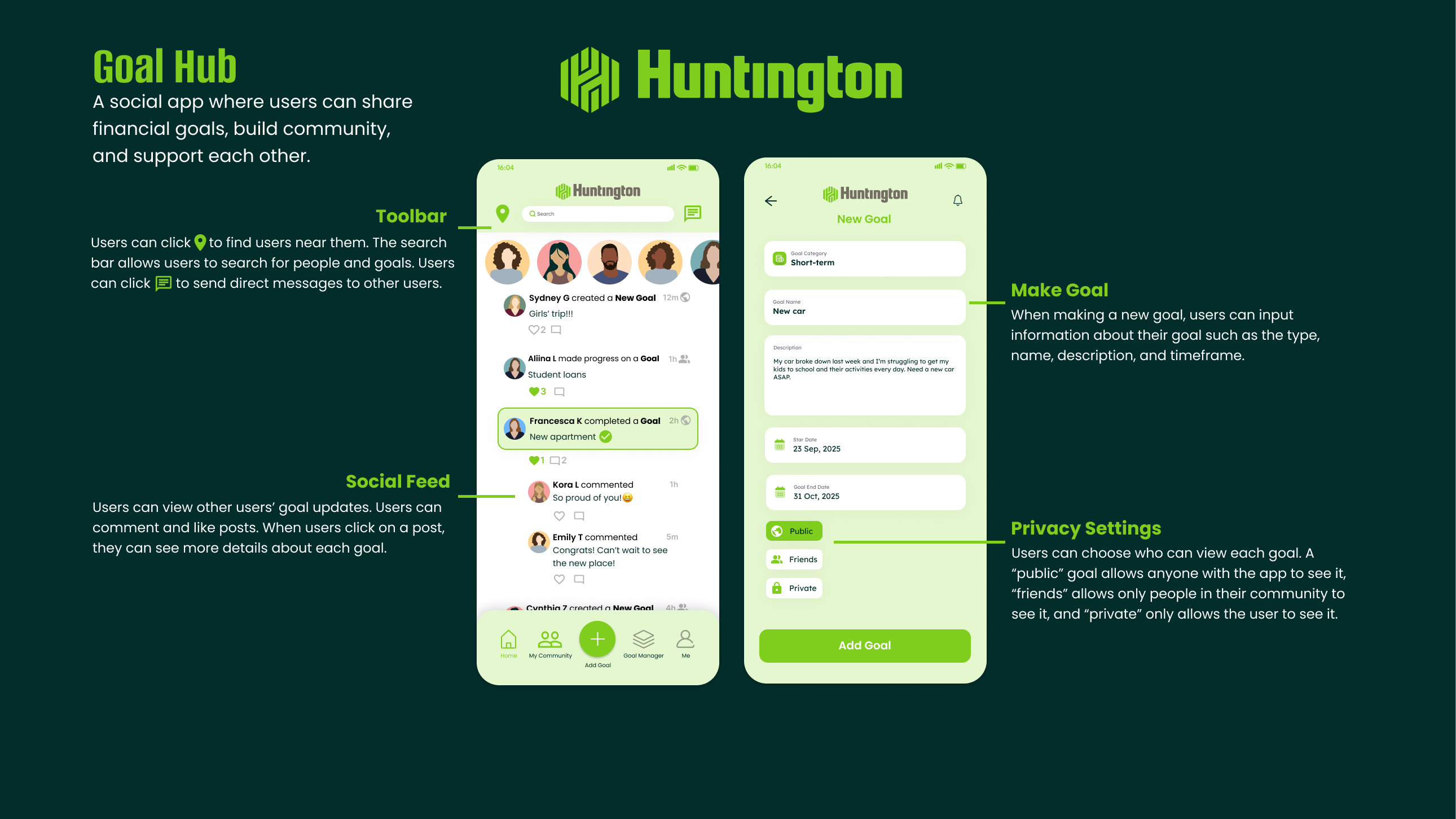
Other features of the app should be explored further. What can users do besides post, like, and comment? How can banking be incorporated into this app? What can be added to promote deep connections between users and communities?
Understanding how trust is built and how relationships are deepened is crucial for designing a group traveling and banking system: Group experiences lead to camaraderie, which leads to deepened connections, which lead to improved mental & physical health.
Group travel and community banking are powerful means to deepen relationships and improve health & well-being. In my opinion, the current methods for managing group finances are impersonal, logistic-focused platforms that neglect the importance of camaraderie, trust, and mutual support, which are essential for building lasting bonds.
Currently, there is a design gap. We must recognize that group financial management is about more than pure calculation, but is actually an opportunity to deliberately foster shared goals, open communication, and mutual support that nurtures our relationships.
Primary Research
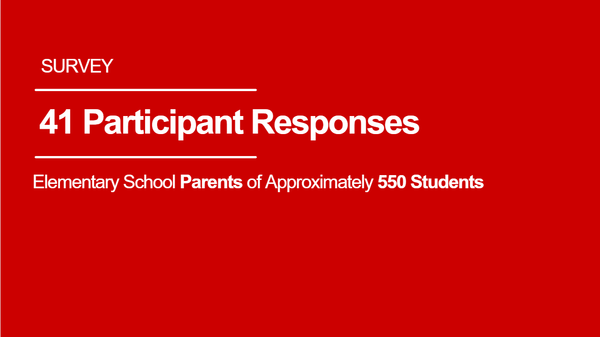
I created a survey to help me better understand the behaviors, preferences, and challenges relating to group travel. Since Gen Z prioritizes relationships, and group travel builds relationships, I wanted my sample group to include people who prioritize relationships. I chose to recruit senior members of a specific sorority at Ohio State University whose values include creating long-lasting relationships built upon honesty, trust, and loyalty. Through my survey results, I found that some of the most prominent challenges with planning relate to different activity preferences and unequal planning efforts. I also found that the most prominent challenges relating to money include:
- Different budgets
- Different spending priorities
- Ensuring everyone pays their share
- Getting reimbursed
- Unexpected costs
- Keeping track of shared expenses
- Deciding whose card is charged
- Feeling pressure to spend more
- Tension or awkwardness around money
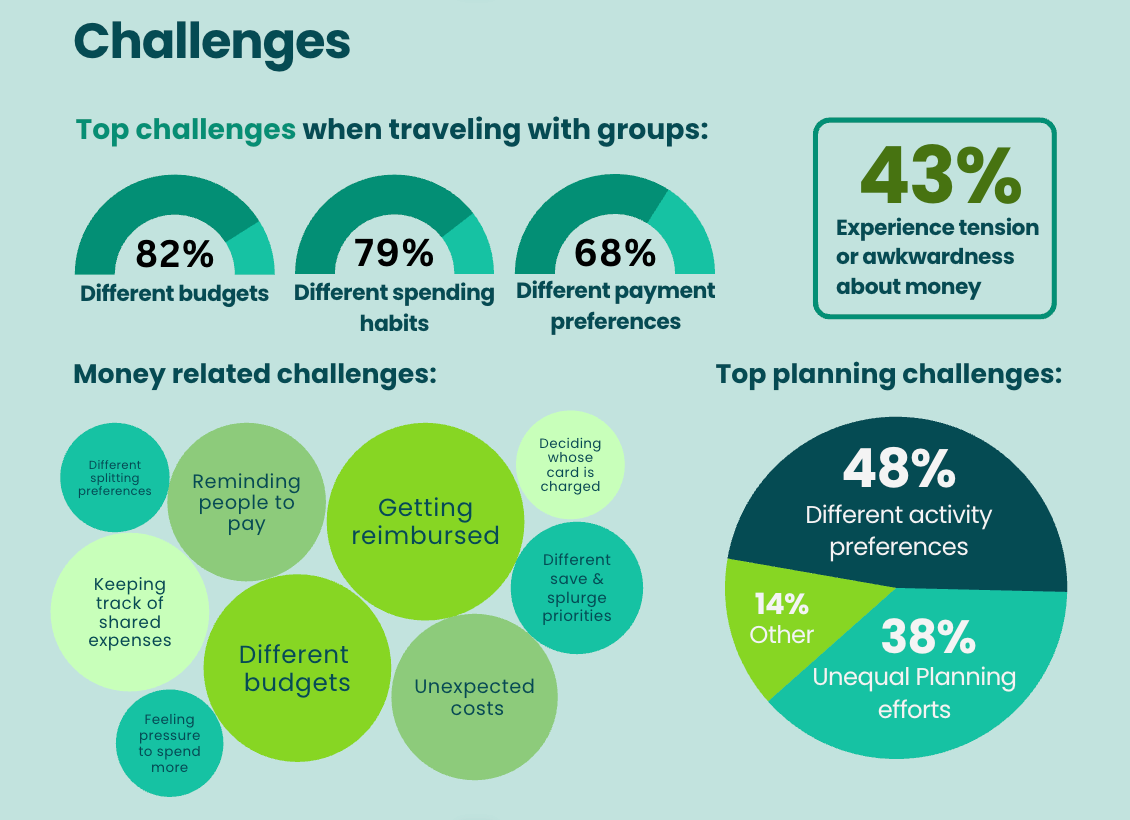
To explore the group traveling process from beginning to end more in a qualitative way, I conducted experience mapping and interviewing sessions with 6 of my survey participants. After analyzing their responses, I created a journey map including the most common experiences, actions, touchpoints, emotions, and pain points relating to the financial aspects of group travel.
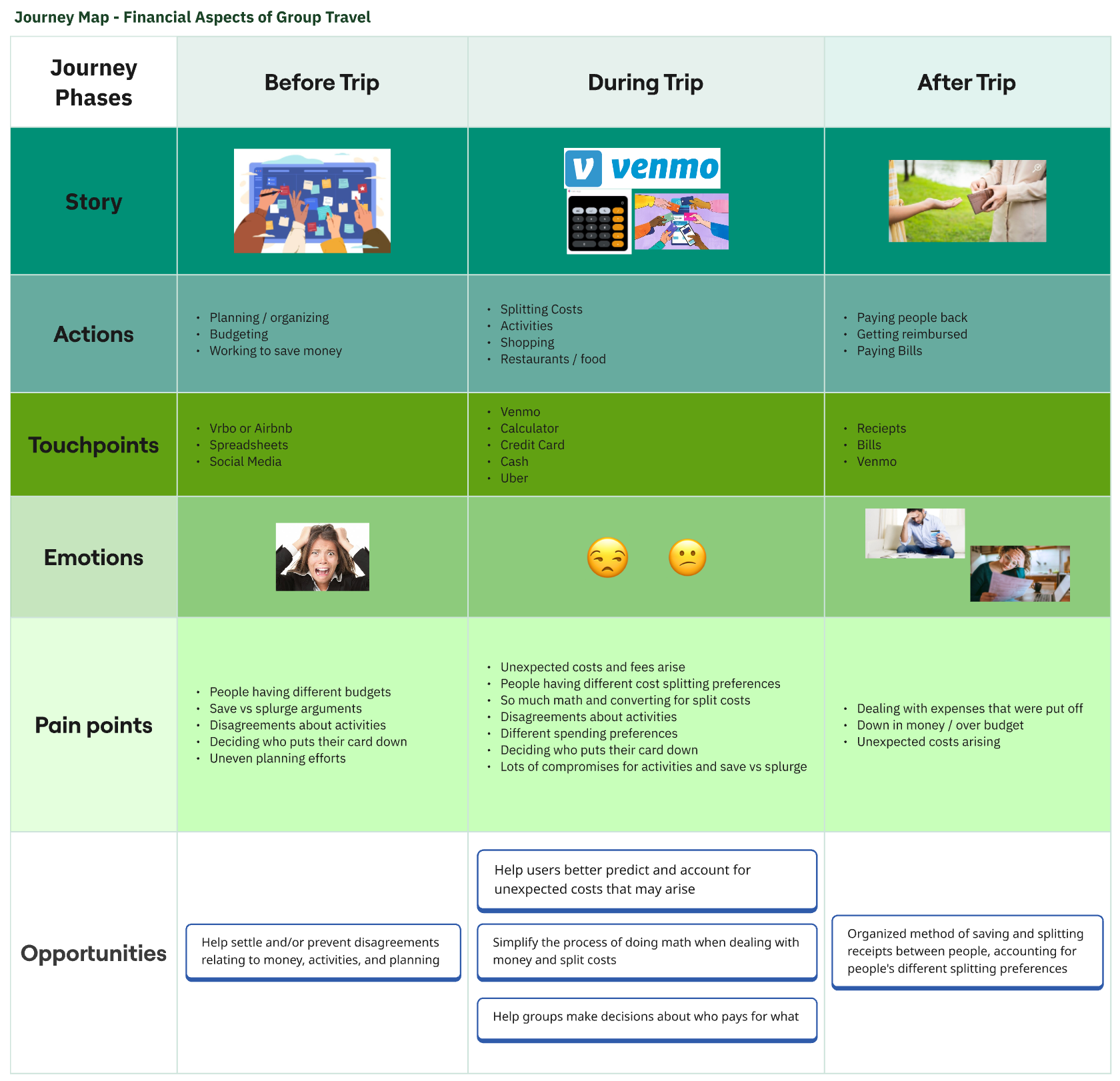
Based on participants’ responses, the top pain points people experience within each phase of the group traveling process are:
Before Trip (planning phase):
- People having different budgets
- Save vs splurge disagreements
- Activity disagreements
- Deciding who puts their card down
- Unequal planning efforts between group members
During Trip:
- Unexpected costs and fees arising
- People having different cost-splitting preferences
- Lots of math and converting to split costs
- Activity disagreements
- Different spending preferences
- Deciding who puts their card down
After Trip:
- Dealing with expenses that were put off
- Making sure everyone gets reimbursed
- Down in money / went over budget
- Unexpected costs added up
From these pain points, I identified opportunities I can explore when designing a system for finances and group travel. For the planning phase, one opportunity to explore is a method for settling or preventing disagreements relating to money, activities, and planning. One way this could be done is through a mobile app that allows each member of a group to indicate their spending and activity preferences. The group members could take an anonymous survey, and A.I. would analyze the responses and suggest spending budgets for the group, based on each person’s preferences. This system would eliminate a lot of disagreements regarding planning. Click here to read more about this concept.
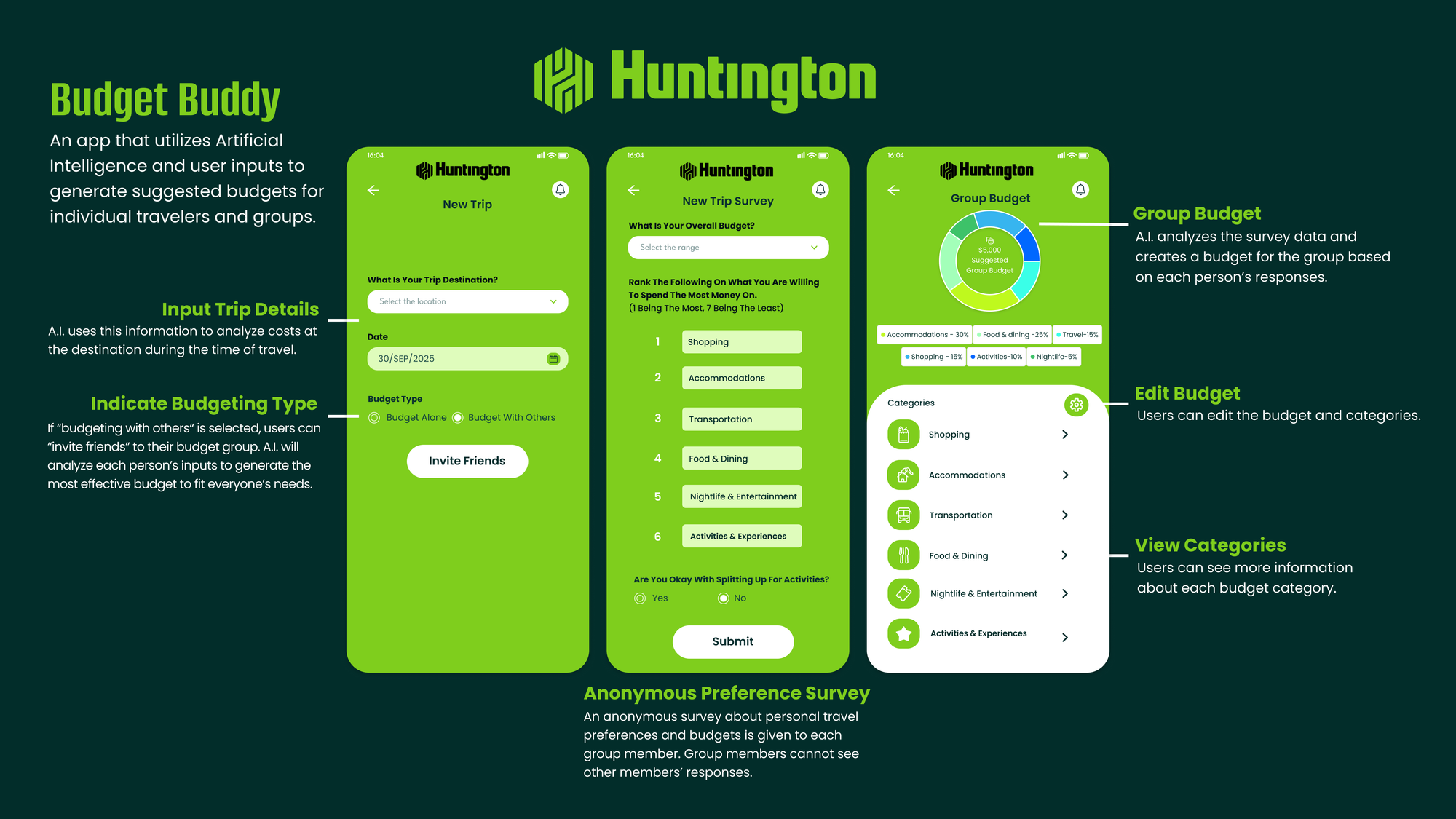
Certain aspects of this concept should be considered and explored further. What if users do not want to budget with their group? Can group members who don’t bank with Huntington use the system? Is their access to features limited? How can users track expenses when traveling?
Another opportunity I can explore is a system that helps groups save and split costs for their trips in a collaborative way. This system could allow friends to pool money together and manage shared expenses collectively. Within the app, users could create savings goals with their groups. Since managing money and financial goals with others leads to deepened connections, this app would be a relationship-building tool for dealing with money in groups. This system would allow groups to save, keep track of shared expenses, keep track of who paid, and calculate who owes what. Click here to read more about this concept.
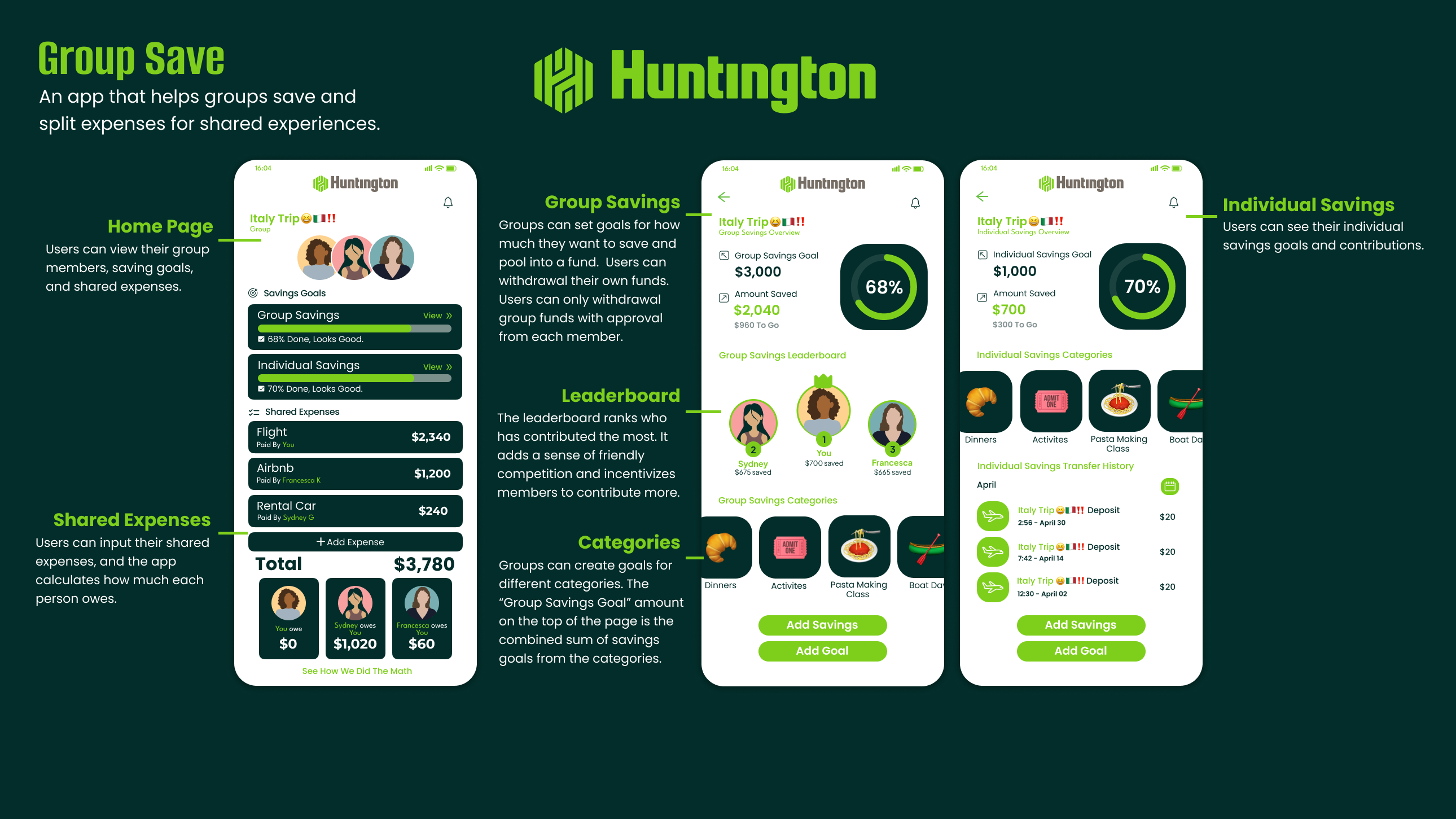
There are a lot more areas to explore around this concept, such as where the money goes. Does the money go to individual accounts or pool into a joint account? How might payments work?
Conclusion
Gen Z’s commitment to traveling, despite low incomes, shows just how high a priority travel is to them. Gen Z’s love for travel is directly linked to the value they place on shared experiences and deepening friendships. However, research shows just how flawed the current methods for managing group finances are. The current systems induce stress, tension, and awkwardness, directly contradicting the reasons people choose to travel together: to relax, escape, and deepen their bonds. When the acts of planning, budgeting, and tracking expenses become major pain points, the vacation, intended as a relationship-nurturing experience, instead becomes a source of conflict.
The core problem lies in the design of current group financial tools. These tools are purely logistic-focused platforms that treat collaborative money management as impersonal calculation. They don’t consider relationships or group members’ mismatched priorities. Existing tools fail to acknowledge group financial management as an opportunity to build trust, communication, and support systems. The experiences of community banking models are testimonies to how discussing financial goals strengthens connections and improves well-being. Group finance can and should be designed as a tool for relationship building.
Some of the pain points identified in my primary research—arguments caused by differing budgets & spending preferences, pressure to overspend, and tension when discussing money—can not be solved by purely logistic-focused systems. These pain points reveal the need for systems that proactively mediate disagreements and foster community.
Ultimately, the next steps are not just to create a better app, but to design a better way for people to interact when planning and managing shared expenses. Rather than viewing group finance as solely transactional and logistical, we must begin to view it as a means to nurture connections and improve well-being. By designing systems meant to foster trust, open communication, and shared goals, we can ensure that group travel lives up to its intended purpose: a relaxing, enjoyable, and stress-free channel to deepen the relationships that Gen Z values most.
References.
Axelton, K. (2025, July 11). Friends, Fun and Finances: Experian Survey Explores How Travelers Handle Group Vacation Costs. Experian. https://www.experian.com/blogs/ask-experian/survey-financial-stress-of-traveling-with-friends/
EduBirdie. (2024, February 6). Wealth, work and happiness: The life goals of Gen Z. EduBirdie. https://edubirdie.com/blog/life-goals-of-gen-z
Nettleship, J. (2025, April 1). What Do Sororities Do? Sorority Choices. https://www.sororitychoices.com/blog/what-do-sororities-do
Pitrelli, M. (2023, April 16). Gen Zs Don't Have a Lot of Money, But They're Traveling Anyway. CNBC. https://www.cnbc.com/2023/04/17/gen-z-travel-trends-travel-often-save-money-and-seek-adventure-.html
Rear, J. (2025, April 4). The 10 most irritating habits of restaurant diners these days. Good Food. https://www.smh.com.au/goodfood/eating-out/the-10-most-irritating-habits-of-restaurant-diners-these-days-20250403-p5lowq.html
Sippy, P. (2024). Shared Interest. RSA Journal, 170(4(5599)), 42–45. https://www.jstor.org/stable/48831912
Sholes-Douglas, A. (2025, February 24). Embracing the Science of Sisterhood: A Lifeline for Midlife Women. Dr. Arianna. https://drarianna.com/2025/02/24/embracing-science-of-sisterhood-midlife-women/
A.I. was used to help me conceptualize ideas, but the words are all my own.