The Next Frontier of Calm- How the Back Seat is Shaping Young Minds

Long car rides have historically been moments of family friction, sibling bickering, and prolonged boredom. In a partner sponsored project with Honda, I dive into existing, emerging, and conceptual approaches to calm and relaxation through science, tech, arts, lifestyle, and specialty fields to better frame what the relaxing experience of tomorrow's back seat might be. In an increasingly digital age, Back seat youths are turning to hours of screen time to cope, but do we really want the future of road trips to be doom scrolling and disconnection?
What if we reimagine the back seat to be a space for calm, curiosity, and growth?
Modern generations are already facing unprecedented levels of anxiety, depression, and disconnection from themselves and others. If we are serious about designing a world that fosters connection, resilience, and self-care, we must begin embedding wellness into the everyday spaces we inhabit. And what better place to start than the back seat of the car — a transitional space that has the potential to shape not just how we travel, but how we care for ourselves along the way.
In the research I have done so far, I’ve explored a wide range of calming practices, products, and behaviors that could shape the future of the back seat experience. While each approach offers valuable insight, some stand out as particularly transformative. Here are some of the key insights from the secondary research phase:
Secondary Takeaways:
When you look at the arts and lifestyle section of my study, you start to see that transportation is more than just getting from point A to point B. The journey is not isolative, your social framework is up for negotiation and your frame of self can go through change based on friction, joy, and emotional development through regulation and reflection. Today, most of us resort to isolation as a coping mechanism for travel. Packing lists may often include headphones, mobile devices, and plenty of digital content to keep ourselves or our youths distracted, content, and quiet.
Think about how much time we spend on average in transit... 20 minutes twice a day for school pick up and drop off? 15 more minutes for sports pick up and drop off twice a week? What about family trips? 10, 12, 18 hours driving to see a landmark, family member, or holiday vacation? And all that time being spent in seats that leave you stiff, limited positive stimulation, and spatial confinement amongst others.
Thinking about the back seat as an opportunity space for growth and development, we then can evaluate business, tech, and specialty categories to further inform potential approaches to redesigning this space.
The business section establishes that the wellness space is a wide market and has been developing rapidly in the past decade. Specifically within the automotive industry, partnerships such as Lincoln x Calm are prime examples of market space for wellness within the transportation industry.
From there, the science and tech industry provides insights into how technology is evolving and possible ways that these emerging technologies could be applied in the transit spaces.
Finally, the special interest category comes around to show how some forms of games and digital pets are said to be calming to users. This brings us back to the potential social development of the back seat/ transitional periods by suggesting that maybe using digital companions as a tool for captivating youth engagement could be productive and regulatory for user mindfulness.
We are seeing that development does not stop just because we need to "kill time" until we get there. But how do we make self development more accessible and immersive for back seat passengers?
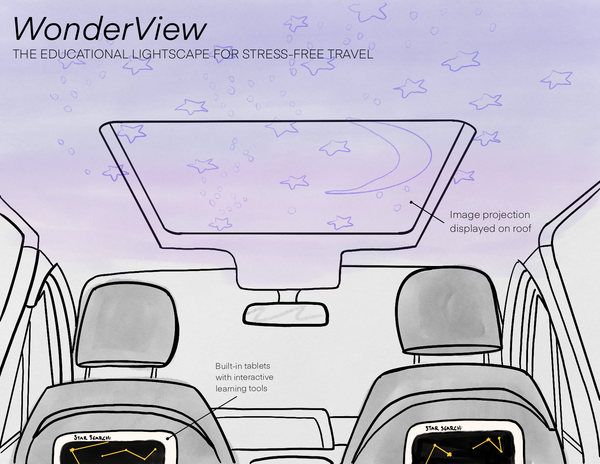
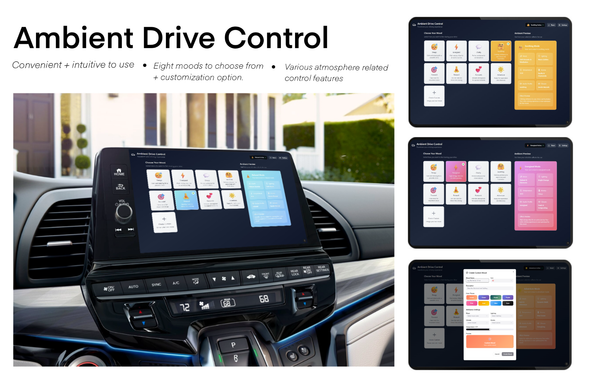
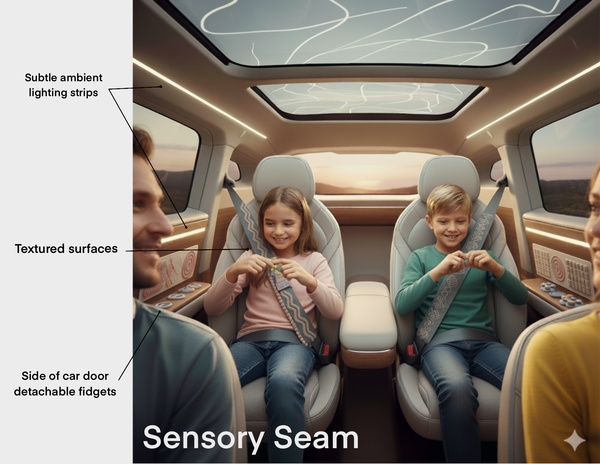
Through these concepts I created, we see a few early stage depictions that range from could see next month to 'wouldn't it be cool if'. Something shared across these concepts? That relaxation comes in many forms and the best way to reach relaxation is often multisensory inputs that work towards a specific goal.
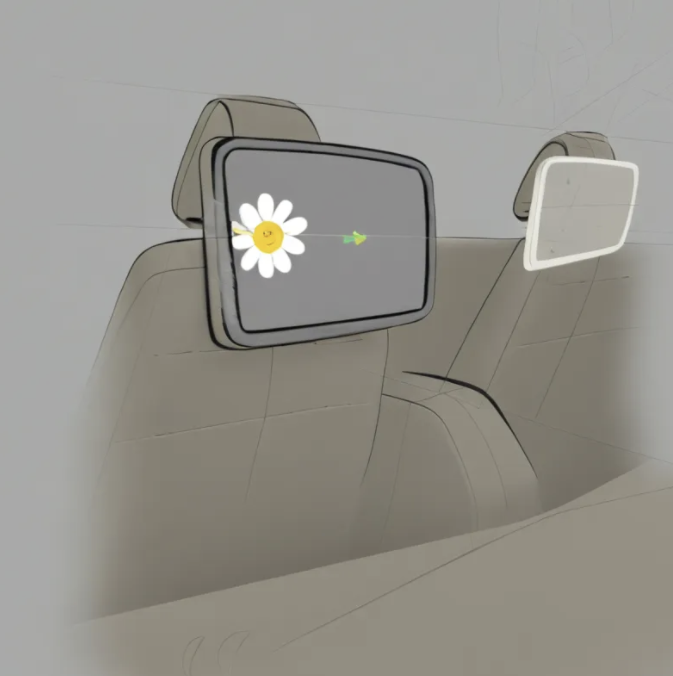
The concept I came up with above uses simple visuals that lead you through a therapeutic approach to mindfulness and breathing. Inspired by EMDR (eye movement desensitization and reprocessing) and bilateral stimulation, this approach utilizes existing tech in a new application.
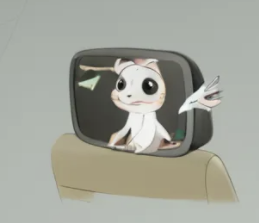
Taking existing examples of digital companions, and gamification of self care; a back seat buddy focuses on developing a rewards based incentive for doing breathing exercise with your pet or a mindfulness activity by bonding with your digital pet and more.
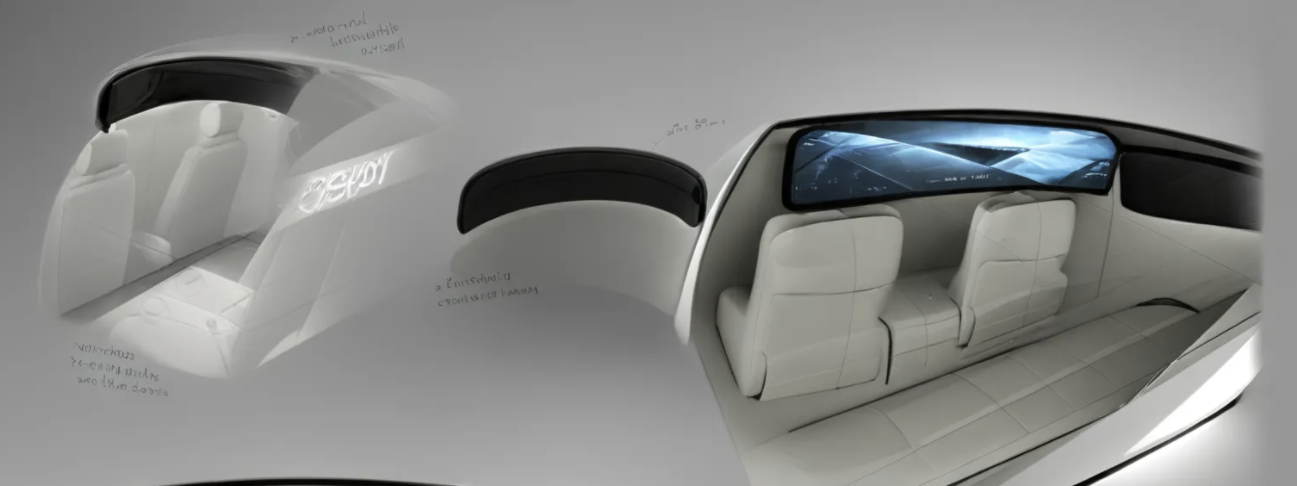
Thinking about the ways that people and kids get immersed in movies, what if we could bring that to the back seat? Imagine if you could learn about the Jurassic period with museum quality immersion on your way to grandma's house! You could even use this level of immersion to enter a meditation scape on a sandy beach, gentle breeze through your hair, the sound of waves there to sooth the discomforts of the drive.
While these are interesting examples of tech being brought into the back seat, what about a fully redesigned back seat? What if we got rid of the uncomfortable headrests that never support your head right as you doze off, or did away with the constantly searching for a comfortable position to stretch? What if there were wellness pods as standard back seat comfort?
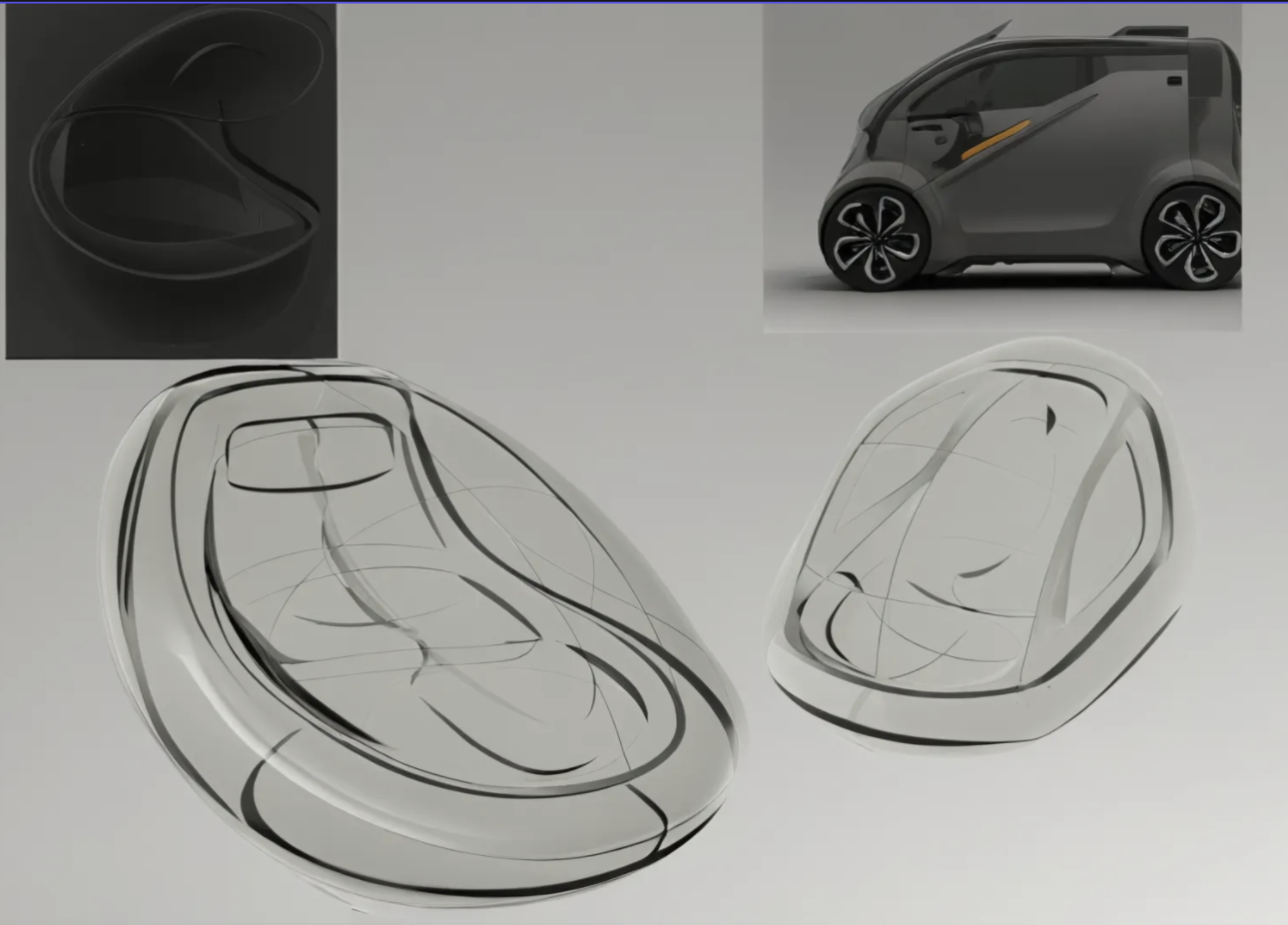
Imaging applying the cutting edge technologies to create a truly adaptive relaxation space available in vehicles. This conjecture is a daydream about how isolation does not need to be done through headphones and mobile devices that create vortexes of fake social stimulus, but rather a space where transit becomes transformative. Imagine stepping in and settling in for a comfortable space to be immersed in top of the line meditative tech. The space knows what you need and can help you regulate. Imagine being a restless 8 year old- the pod provides gentle tactile input that helps you feel calmer and down regulates your fear responses to prolonged travel. It provides the user a space of their own to make as cool or warm as they need, to distract or engage as they need. A space for users to take the back seat and connect with the simple act of breathing.
The Primary research shows that not everyone practices breathing exercises and thus equipping back seats as wellness spaces need to be inviting, exciting, and accessible to all levels of users. It also shows that there are a wide range of approaches to wellness and many places offer multiple types of relaxation. Looking to the future is figuring out how to best apply multiple approaches to wellness in engaging ways.
The back seat is a space of opportunity. It is a space where we can foster growth, development, self connectivity, and reimagine what a relaxing trip looks like. Back seat transportation periods provide an opportunity space for designing a more wellness focused environment that encourages relaxation, mindfulness, and meditative practices in order to reduce restlessness, discomfort, and friction during travel. More than transition, more like transformation. Together we can dream, design, and define what relationship the next generation has with relaxation and wellness through transforming the back seat into a space for growth.