The psychology of roller coasters

This article explores the psychology of roller coasters, what makes them exciting to us and how they affect people. I wanted to explore this because it is an example of another seated experience that people of all ages enjoy. I think it related to my capstone to think about the psychology of this experience and also looking into how roller coasters are created to design an experience, prioritize safety and tell a story.
"Enjoying roller coasters is linked to sensation seeking – the tendency to enjoy varied, novel and intense physical experiences such as rock climbing and parachute jumping.
Physical signs of fear such as a pounding heart, faster breathing and an energy boost caused by the release of glucose are known collectively as the “fight or flight response”. We know that a roller coaster ride is likely to trigger this response thanks to researchers who measured the heart rates of riders on the double-corkscrew Coca Cola Roller in 1980s Glasgow. Heart beats per minute more than doubled from an average 70 beforehand to 153 shortly after the ride had begun.
bungee jumpers not only reported increased feelings of well-being, wakefulness and euphoria just after completing a jump, they also had raised levels of endorphins in the blood, well known to produce feelings of intense pleasure. Interestingly, the higher the levels of endorphins that were present, the more euphoric the jumper reported feeling. Here, then, is clear evidence that people enjoy the sensations that accompany the fight or flight response within a non-threatening environment.
these bungee jumpers also showed increased levels of the hormone cortisol, known to increase when people experience stress.
not all stress is bad. Eustress – from the Greek “eu”, meaning good, as in euphoria – is a positive kind of stress that people actively seek out.
We know that a roller coaster ride can be experienced as a “eustressful” experience thanks to an intriguing study carried out by two Dutch psychologists. They were interested in asthma, and specifically its relationship with stress. Having noted previous research findings that stress leads asthma sufferers to perceive their asthma symptoms as more severe, they wondered whether an opposite effect might be possible by applying eustress.
While lung function predictably reduced from the screaming and general upheaval, so did the feeling of shortness of breath. This suggests that thrill seekers riding roller coasters perceive the experience as stressful in a positive way.
A recent review instead looked at the role of dopamine, another chemical messenger substance in the brain that is important in the functioning of neurological reward pathways. The review found that individuals who happen to have higher levels of dopamine also score more highly on measures of sensation seeking behaviour. While this is a correlation rather than a causation, another study found that taking a substance called haloperidol, which disrupts dopamine’s effects within the brain, led to a measurable decrease in sensation seeking behaviour.
People who have higher levels of dopamine may be more prone to a number of sensation seeking behaviours, ranging from harmless roller coaster rides to taking drugs or even shoplifting.
Though hard to pin down, people enjoy roller coasters thanks to a combination of speed, conquering fear and the positive effects associated with a massive rise in physiological arousal. A roller coaster ride is a legal, generally safe and relatively cheap means of experiencing a natural high (Stephens, 2018)."
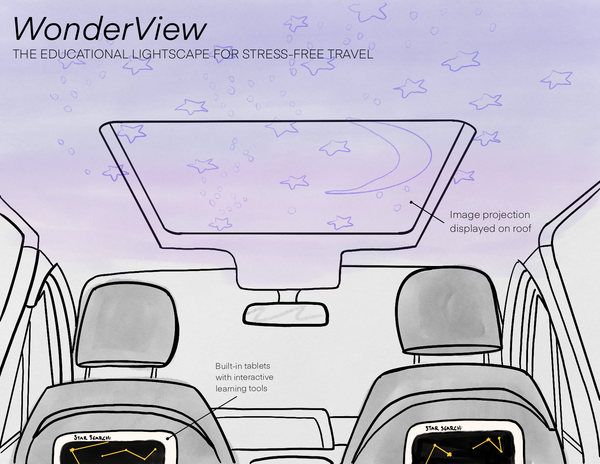
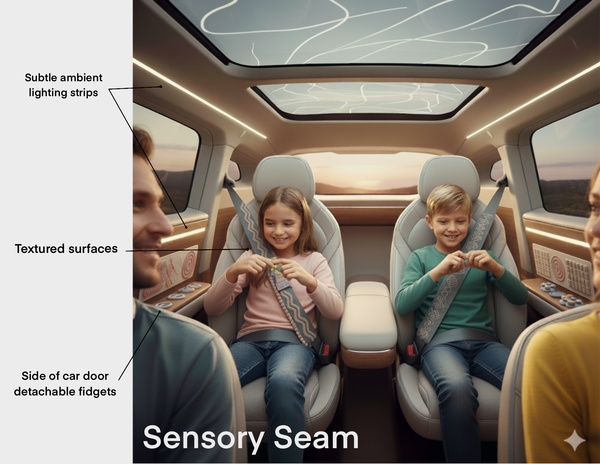
This article focuses on the psychology behind why people put themselves in thrilling situations, which may cause intense behaviors in the body, like increased heart rate and cortisol. I was interested in looking at roller coasters as an outlet for "stress relief." I was interested in understanding how some types of people enjoy roller coasters and putting themselves in thrilling situations. I wanted to challenge the idea of calm and understand the opposite, a fast paced, seated experience. Roller coaster design is very interesting to me because they are created with a theme, and typically tell a story when you ride them. They are marketed as thrilling or scary with key branding. They also prioritize safety and comfort in such an extreme environment. This is relevant for my capstone because I want to explore how to invoke a story in the backseat, turning a car ride into a curated experience, like you see in an amusement park model.
References:
Stephens, R. (2018, July 12). The history and psychology of roller coasters. Smithsonian Magazine. https://www.smithsonianmag.com/science-nature/psychology-roller-coasters-180969607/
AI was used to refine grammar in this reflection.