Tokyo Took Away Trash Cans and Got Rid of Trash
Effective management of angler-generated waste is critical for preserving freshwater ecosystems. Drawing from cultural practices observed in Japan, where public trash bins are scarce, this review explores alternative approaches to waste management in fishing environments.
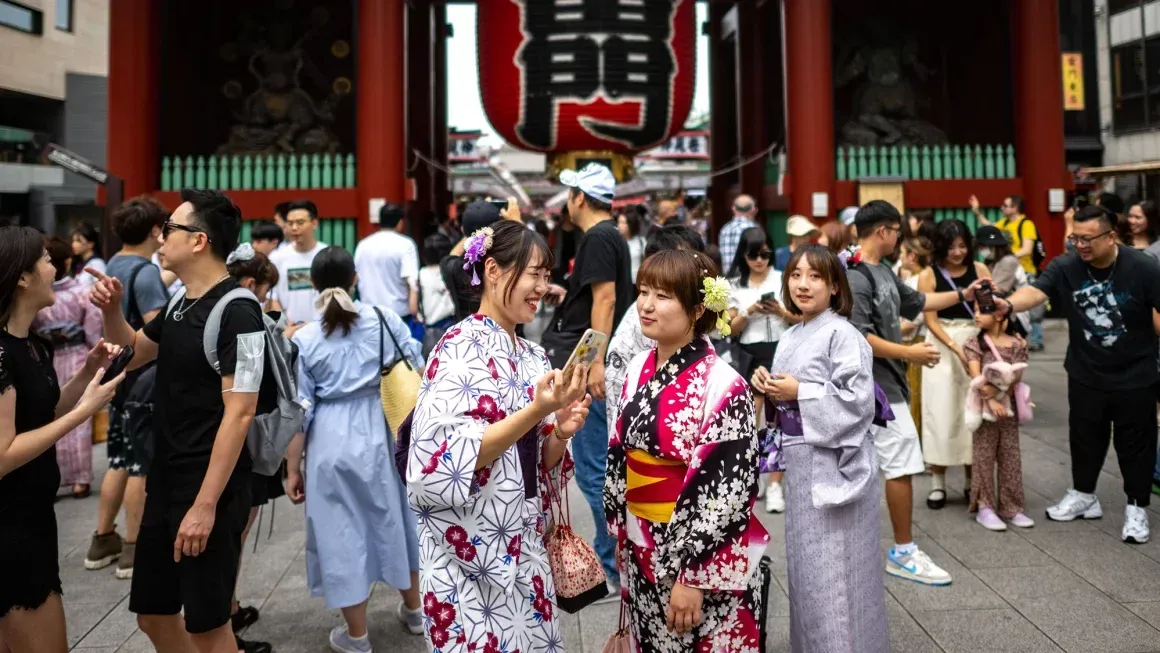
For some, Japan’s clean, bin-free streets are a source of admiration. For others, it’s a daily annoyance. Hong Kong tourist Rubin Verebes, who visited Tokyo in 2024, found himself holding sandwich wrappers for hours with nowhere to toss them.
“It’s infuriating,” he says. “The streets are spotless, yes. But after walking all day, not finding a single bin becomes exhausting.”
Travel companies now coach clients on how to handle their trash—bringing small bags, planning disposal stops, or using furoshiki, traditional cloths that can double as temporary wrappers.
Although our cultures are different, my discussions with DNR personnel have led me to believe there is a common thread: if people don't see litter, they are less likely to litter. This was pointed out to me on site visits, in surveys, and in interviews. The question becomes; how do we get the litter to not start?
“Respect and community drive these decisions,” says Paul Christie, CEO of Walk Japan. “The Japanese accept the inconvenience because they value a clean, cooperative society.”
And there’s another wrinkle: recycling. Many municipalities divide waste into up to 20 different categories. Even locals find the system demanding. This complexity means fewer, smaller public trash cans and a stronger push to sort waste at home.
Dividing up trash in order to get it to the correct recycling junctures makes sense in theory. In action, it appears fatiguing on the citizens of Tokyo. Taking this into account, whatever solution could be made must not take too much thought or time, as that will likely discourage the use of the system. Current efforts I have observed include monofilament disposal bins, which have exciting prospects when it comes to the public's ability to adapt to new receptacle strategies.
References.
Das, N. (2025, June). Why Japan Has So Few Trash Cans, And What It Reveals About the Country’s Culture | One World Outlook. One World Outlook. https://oneworldoutlook.com/culture/why-japan-has-so-few-trash-cans-and-what-it-reveals-about-the-countrys-culture/
This review draws on Why Japan Has So Few Trash Cans and What It Reveals About the Country’s Culture (One World Outlook, 2023) (40%), my own contributions connecting cultural insights to angler waste management and observations from interviews and site visits (40%), and AI assistance in summarizing, synthesizing, and drafting the review (~20%); all interpretations remain the responsibility of the author.