Trash Bins in Public Spaces
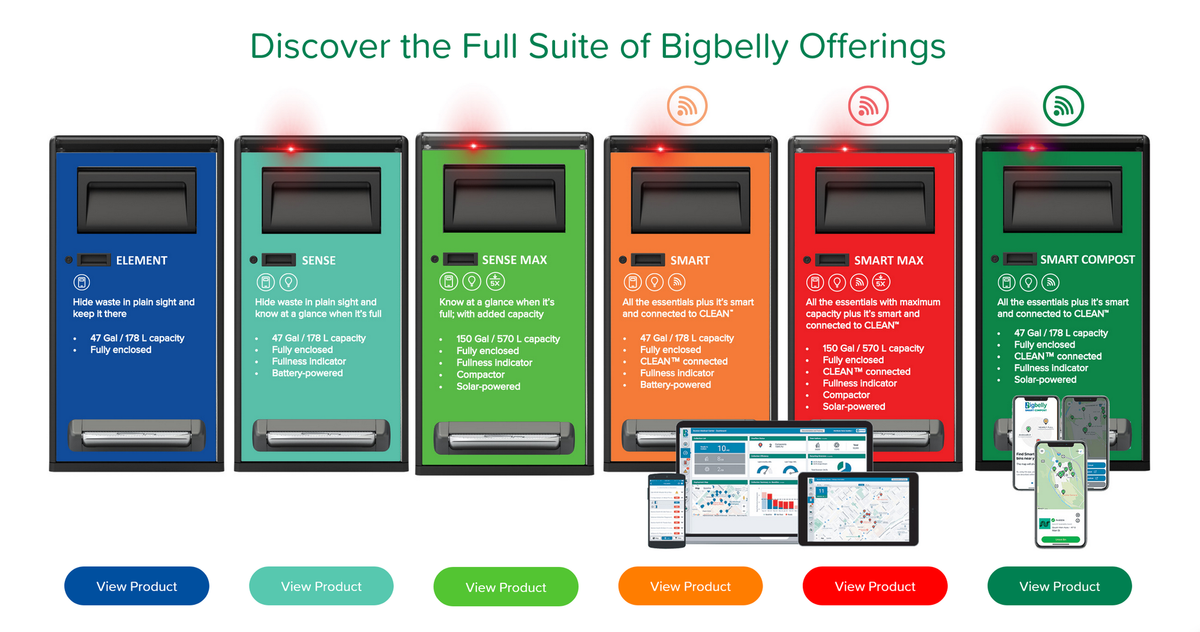
As littering is a huge problem in state parks, especially state park beaches like in Alum Creek, I was thinking about how you can address large amounts of trash. I went to middle and high school in a suburb of Philadelphia, and my family now lives in a suburb of Boston. Both cities are hugely populated, which means they produce a lot of trash. Both cities also have Bigbelly trash cans–so, I decided to look into them.
Quotes from Bigbelly (2025)
Once waste goes in, it can’t come out. Fully enclosed smart trash cans and recycling bins mean no visible waste and no windblown litter, eliminating a food source for pests and keeping your space safer.
High waste volume locations? Our compactors hold 5x the capacity of traditional bins, which means fewer collections and cleaner, quieter spaces.
Don’t let your waste control you. You’ll know to collect before waste overflows happen, so you’re always the one in control.
Your space is dynamic: Pedestrian volume, weather, and more are always changing. Our fullness-indicating and smart bins eliminate overflows and help you know when and where to collect.
Take charge of your space with real-time data and long-term insights on recycling diversion, waste volume, and collection activities. Gain visibility and insights to better manage system operational performance.
Precise data and analytics can reduce collections by 80%. Spend less time collecting waste and more time improving your community or space.
Consistent and uniform recycling is key for communities to achieve their zero-waste and sustainability goals, creating a better world for everyone.
With fewer collections, communities can reduce fuel consumption and GHG emissions by 70%.
Total containment eliminates windblown and pest-strewn litter, preventing pollution in our rivers, lakes, and oceans.
Bigbelly advertises several features that could make trash collecting easier for park staff, and address the problem of trash escaping from trash cans.
Meir Rinde (2023) of WHYY describes positives and negatives of the bins in North Philadelphia.
Excerpts from Rinde (2023)
North Philly just got dozens of new high-tech BigBelly trash cans, and the city says they’re better than before.
The 65 new solar-powered compactor bins have better batteries, sensors, software, and radio transmitters to alert the Streets Department when they’re getting full and need to be emptied, per Commissioner Carlton Williams.
They also have foot pedals that let people open them without using their hands, reducing the ick factor and encouraging passers-by to drop their litter in the receptacle rather than on the street.
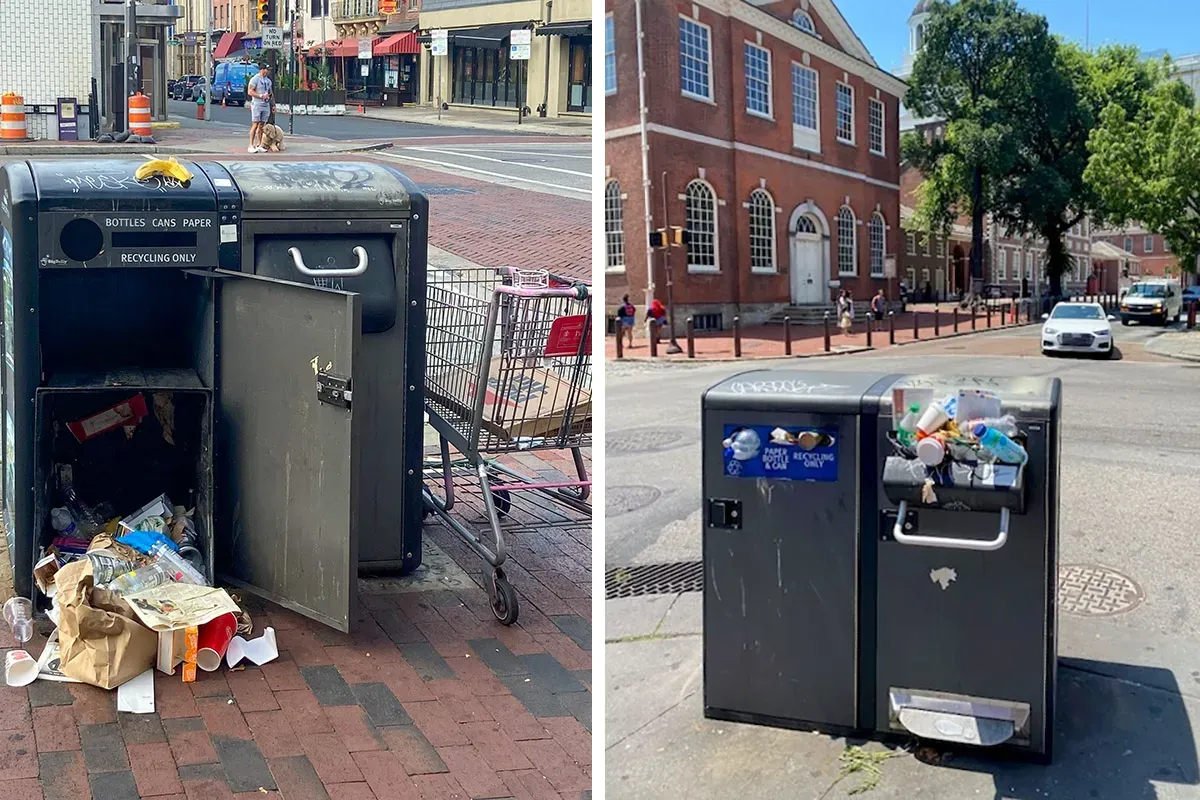
In the business district on North 5th Street in Olney, where older versions of the cans were first installed several years ago, some business owners praised the BigBelly units, some were completely unaware, and some criticized them for actually attracting more trash.
“After the trash cans were installed, that’s when people started piling up trash,” said Doreen Burrows, who has a BigBelly on the sidewalk in front of her real estate office at 5700 N. 5th St. “People started unloading their garbage there. They don’t try to stuff it in. Contractor bags, mattresses, box springs, suitcases, you name it.”
The city has been rolling out upgraded BigBellys citywide over the past few years, with 483 currently installed. Officials plan to eventually have the new features on all of the city’s 1,042 cans. They reportedly cost $6,000 each.
Some say those upgrades won’t solve chronic BigBelly problems.
In Old City, many of the cans are busted, overflowing, and surrounded by trash bags, said Job Itzkowitz, executive director of the Old City District. He said the city’s failure to empty them frequently enough, repair them, or even take advantage of the capacity alerts threatens to erase any advantages provided by the improved units in Olney.
“My concern is that in a couple of years, they’re going to be in the same position that the ones in [Old City] are,” Itzkowitz said.
It's likely that I'll end up designing some kind of waste management system/product for my capstone, and what Rinde (2023) discusses will be important to keep in mind. If the system or bin isn't easy to maintain, it could end up making the littering problem worse. Illegal dumping is already a problem at state parks, and if the implementation of larger bins could invite more, that's something I'll need to consider. Cost is also a huge factor. The state parks funding is already minimal, so any solutions will have to be low budget--which Bigbelly bins, with their advanced technology, are not.
Resources.
Bigbelly. (2025). All Together Better. Bigbelly Waste Management Solutions. bigbelly.com
Rinde, M. (2023, August 24). The problem with North Philly’s new BigBelly trash cans. BillyPenn at WHYY. https://billypenn.com/2023/08/24/philadelphia-new-bigbelly-trash-cans-foot-pedals/
No generative AI was used in the creation of this post.