Turns Out, Plastic Smells Delicious to Animals
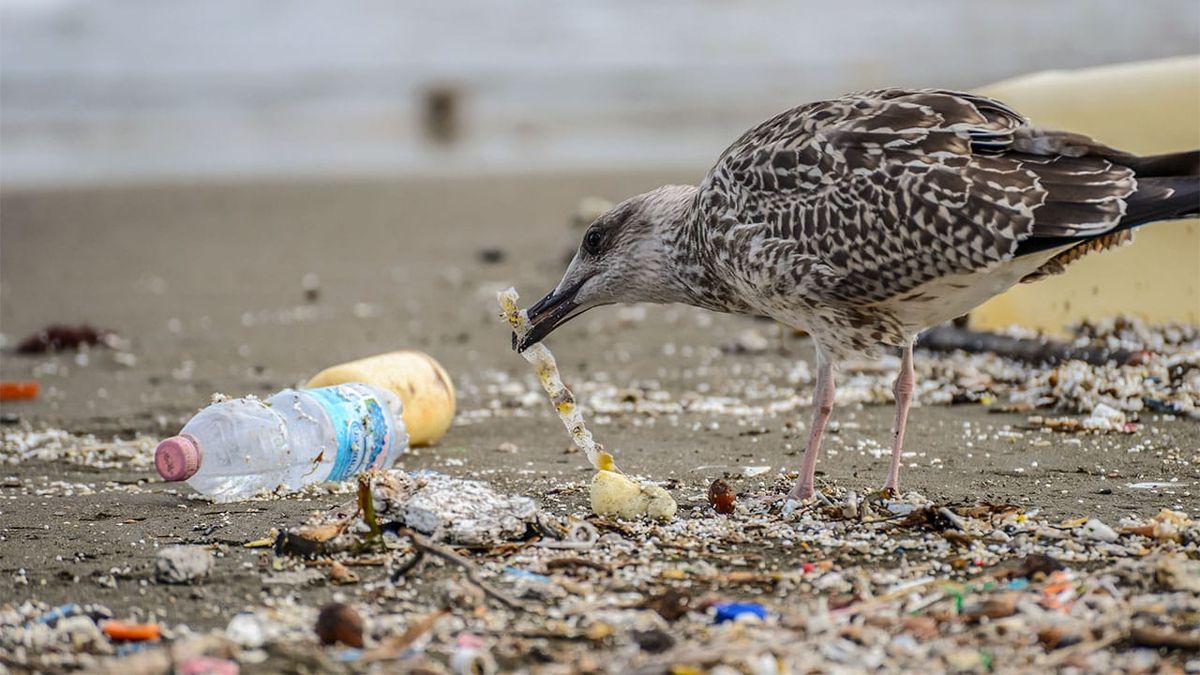
After being told by our contacts at ODNR that the Alum Creek State Park Beach is constantly facing littering problems, I looked for information on how litter affects wildlife in those types of areas.
Excerpts from National Geographic (2016)
As the oceans fill with plastic debris, hundreds of marine species eat astonishing amounts of it. Yet the question of why so many species, from the tiniest zooplankton to whales, mistake so much of it for food has never been fully explored.
Now a new study explains why: It smells like food.
Algae are consumed by krill, a small crustacean that is the primary food source for many sea birds. As algae breaks down naturally in the ocean, they emit a stinky sulfur odor known as dimethyl sulfide (DMS). Sea birds in the hunt for krill have learned that the sulfur odor will lead them to their feeding grounds.
It turns out that floating plastic debris provides the perfect platform on which algae thrives. As the algae breaks down, emitting the DMS odor, sea birds, following their noses in search of krill, are led into an “olfactory trap,” according to a new study published November 9, 2016, in Science Advances. Instead of feeding on krill, they feed on plastic.
The team also found, not surprisingly, that the birds most attracted to the DMS odor are the albatrosses, petrels, and shearwaters that are most severely affected by plastic consumption.
Many of those birds nest in underground burrows, and juvenile birds spend many more months on the ground than birds that nest above the surface. Consequently, burrow-nesting birds rely much more heavily on their sense of smell to get around.
“We should be paying more attention to those species,” Savoca says.
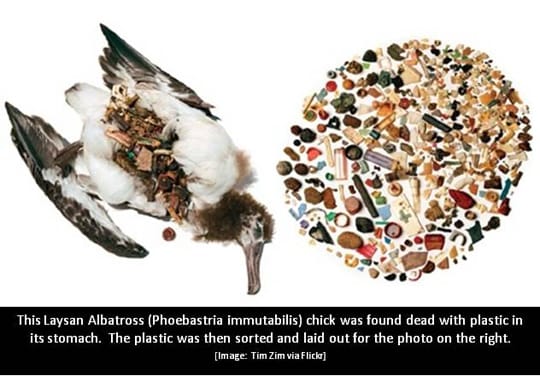
As a child, I saw an infographic like the one above, showing how birds will eat plastic that stays in their stomachs and eventually kills them. It has stuck with me my whole life, and I think probably shaped who I am. It's definitely part of why I chose to pursue design; I want to do what I can to protect wildlife and minimize our impact on the environment. I hope that learning about the impacts of littering (such as how birds consistently mistake it for food) can help people stop doing it, but I don't know if that will be enough. Whether someone's moral code extends to other creatures besides humans isn't guaranteed. So, something to consider is whether bringing attention to problems like in the above article will improve litter, or if other targeted methods are needed.
Resources.
California Academy of Sciences. (2013, August 28). Faux Food. https://www.calacademy.org/blogs/project-lab/faux-food
National Geographic Education. (2016, November 9). Animals Eat Plastic Because It Smells Like Food. https://education.nationalgeographic.org/resource/animals-eat-plastic-because-it-smells-food/
Perkins, S. (2016, November 9). Why do seabirds eat plastic? They think it smells tasty. https://www.science.org/content/article/why-do-seabirds-eat-plastic-they-think-it-smells-tasty
No generative AI was used in the creation of this post.