How Interstate Transportation Affects Waste Management

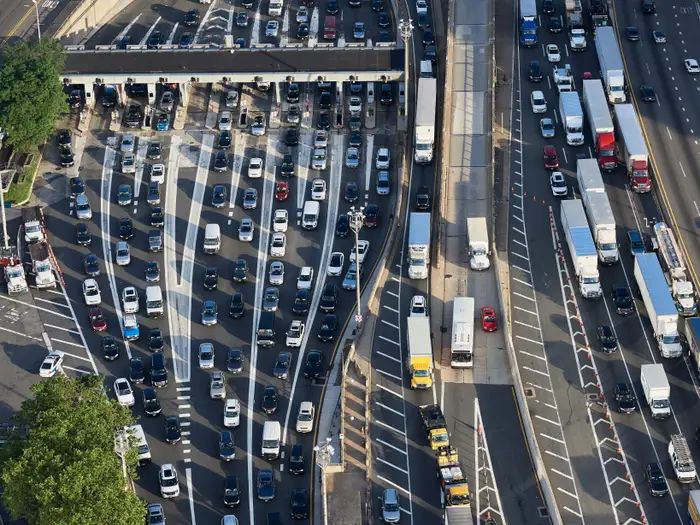
This study explores the challenges of mobilizing solid waste through urban communities while also documenting the insights of field professionals. While the exact kinds of solid waste are not explicitly disclosed, the article does refer to demolition debris, waste that can be recycled, and organics for composting.
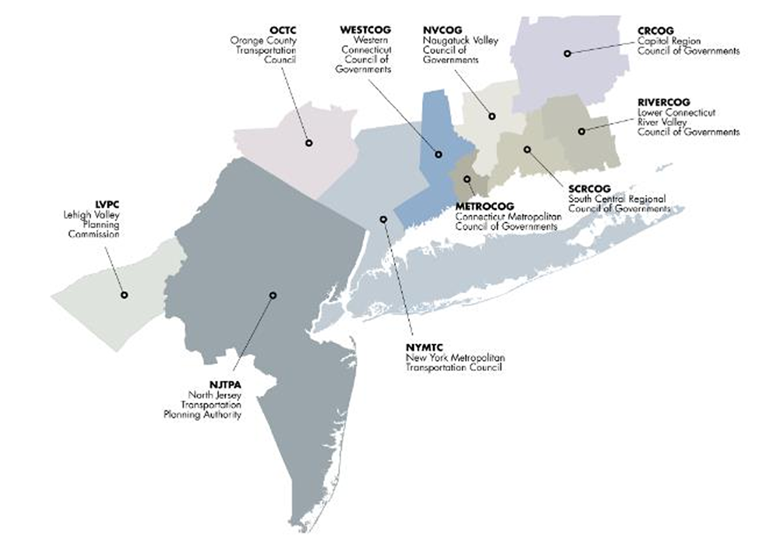
The Regional Waste Movement Study is focused on identifying the needs and opportunities associated with the movement of municipal solid waste (MSW) and construction and demolition (C&D) debris or waste in the Metropolitan Area Planning (MAP) Forum study area, which encompasses six councils of government (COGs) in Connecticut and four metropolitan planning organizations (MPOs) in New Jersey, New York, and Pennsylvania (refer to Figure 1), (New York Metropolitan Transportation Council, 2024, p. 3).
The study shows how - in this interstate region - waste transportation and processing happens disproportionately within and around low-income communities. This can lead to negative health and environmental consequences. Plastic manufacturing and recycling can present similar challenges to local communities.
These interviews took place via online video calls between January and June 2024. Interview participants, listed below, included local and state officials, representatives from the freight and waste industries, metropolitan planning organizations, advocates, and academics.
Participants noted that this lack of coordination poses barriers to comprehensive data collection and leads to regulatory conflicts. Examples include varying vehicle weight limits between states and state-specific regulations for waste containers transported by rail.
Microplastic contamination in water and soil and leaking into food is an ongoing study. However this movement study highlights some of the ways plastic waste can impact local communities, and the challenges that arise when it must be transported across the country.
“Participants explored the tension between centralizing waste transport to maximize efficiency and distributing the adverse impacts of that transport, such as noise and pollution, across communities. Waste movement along rail corridors or highways disproportionately affects communities near those corridors, many of which are low-income and minority populations.
To understand how low-income Columbus communities are impacted by solid waste, the local loops team is partnering with the Neighborhood Design Center to collect survey data from two primary groups: Columbus residents and Columbus business owners.
Recycling and composting are widely supported among participants as strategies to reduce landfill waste. Challenges include contamination of recyclables and market instability, particularly in plastics recycling. Diverting organics from landfills through methods such as anaerobic digestion or composting was seen as a key opportunity, though participants expressed uncertainty about the scalability of these solutions.
“Participants discussed the need for cohesive, top-down policies to achieve effective waste reduction, observing that piecemeal approaches often lack lasting impact.
References
New York Metropolitan Transportation Council. (2024, October 29). NYMTC regional waste movement study: Task 3 final technical memorandum [PDF]. https://www.nymtc.org/Portals/0/Pdf/Regional%20Waste%20Movement/NYMTC_Regional_Waste_Movement_Study_Task_3_FINAL_Memo_20241029.pdf?ver=estUK9Fs2DwSAViUKFyaYg%3d%3d