
What Is Real? Lesson's from “Boggs Bills”
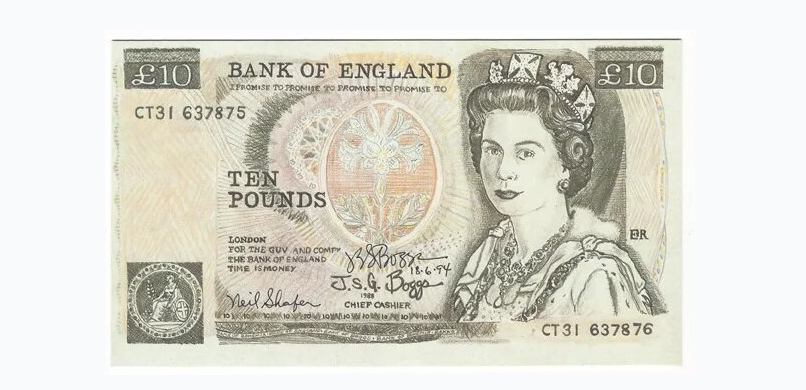
J.S.G. Boggs was an artist who blurred the lines between art and currency. His meticulously crafted drawings of banknotes were not mere reproductions but intentional creations that questioned the very nature of money. By attempting to "spend" these artworks in real-world transactions, Boggs invited both admiration and legal scrutiny, challenging societal perceptions of value and authenticity.
“ In 2001, Boggs engineered the manufacture of 100,000 Sacagawea dollar copies in orange plastic, which he called Boggs Money." (Staff, B. N. R., 2017).
"When the plastic Boggs money debuted, Boggs told Numismatic News (Jan. 23, 2001) that he considered it a natural progression in his evolution as a money-issuing entity." (Staff, B. N. R., 2017).
"To add to the collectibility of the new Boggs Money, Boggs told the News that Boggs Money was issued in different dates and mintmarks. Among the combinations available were a 1984-CH (CH stands for Chicago, where Boggs got his start; 1984 was the year), 2000-J, -G, -B and 2001-S (the J, S, G and B relating to his initials; 2000 is the year in which he conceived this project) and 2001-M21 (the M21 is in reference to a museum of 21st-century art planned for St. Petersburg, Fla; Boggs had donated “real” U.S. currency to its founding)." (Staff, B. N. R., 2017).
"Boggs was apparently interested in other aspects of money creation. Some works of money art that he designed include the mural All the World’s a Stage, roughly based on a Bank of England Series D £20 note and featuring some Shakespearean themes, as well as bank note-sized creations that depict Boggs’s ideas as to what U.S. currency should look like. A $100 bill featuring Harriet Tubman is one known example.” (Staff, B. N. R., 2017).
From a design standpoint, Boggs exposes the performative power of objects in a way that feels both unsettling and liberating. Money, treated as unquestionable authority, is just a designed agreement as its value exists only because we collectively believe in it. By disrupting that belief, Boggs reveals how design governs trust, behavior, and everyday systems we rarely question. The irony that all currency is “made up” reflects a broader truth: design’s meaning is shaped less by inherent qualities than by perception and use. To me, the power of Boggs’ work is how it forces us to see design not as neutral, but as a cultural construct that can be critiqued, reimagined, and ultimately reshaped to transform experience.
References.
Boggs, J.S.G. (1994). Ten Pounds [Sketch]. Banknote Artconcept. https://banknoteartconcept.com/the-boggs-performance-a-money-art-interaction/
Staff, B. N. R. (2017, November 6). Was Boggs an artist or a counterfeiter?. Numismatic News. https://www.numismaticnews.net/paper-money/boggs-artist-counterfeiter
This reflection draws on the article Boggs: The Artist Who Counterfeited Money (Numismatic News, 2025) for factual context and historical details (~40%). My contributions include interpretation, analysis, and personal reflections connecting Boggs’ work to design principles and broader conceptual insights (~40%). AI assisted in condensing, structuring, and editing the content into a cohesive introduction and design-focused review (~20%). All interpretations remain the responsibility of the author.