
What the Titanic's Rusty Grave Teaches Scientists
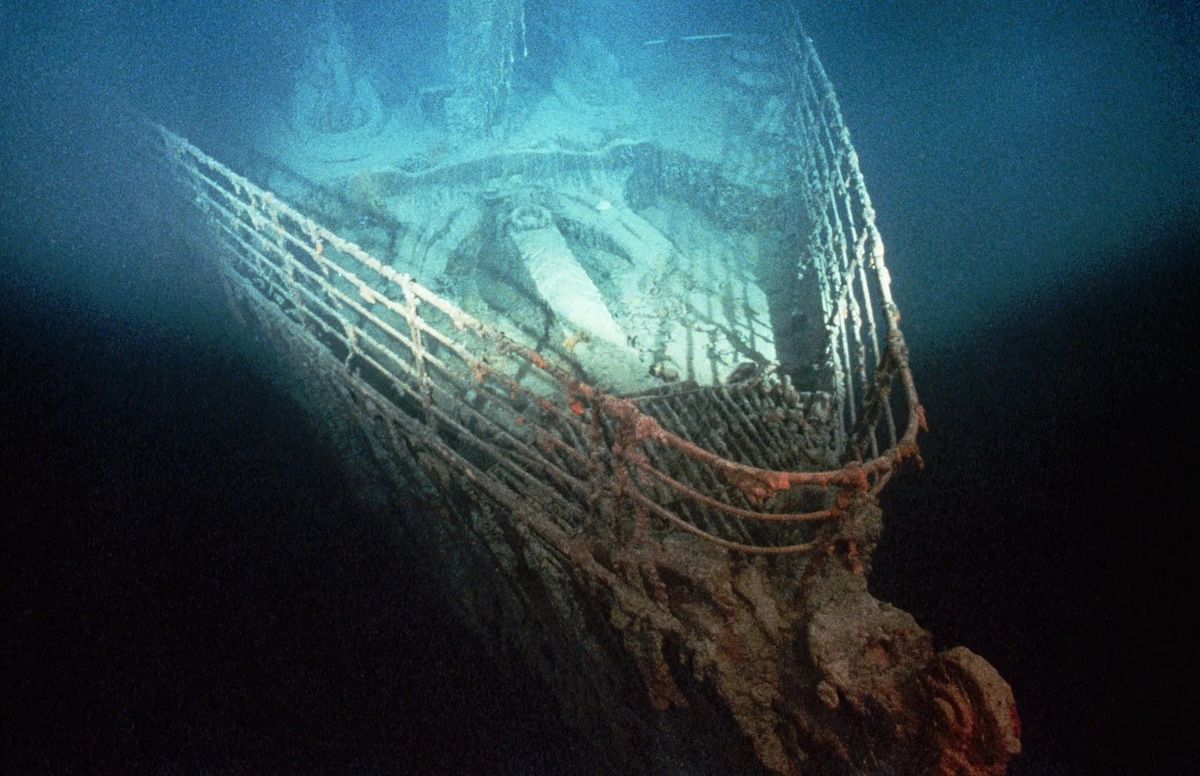
Since its discovery in 1985, the Titanic wreck has given scientists insight into the processes of life and decay that take place in one of the most extreme environments on Earth. This article discusses the challenges scientists have faced in being able to study the shipwreck, and how they have been able to observe the relationship between marine life and this historic man-made vessel.
The location of the Titanic wreck has inhibited its discovery since the ship sank in 1912. Its location in the Atlantic Ocean is susceptible to extreme weather patterns, surrounded by geological formations that disrupt sonar, and it sits at nearly 12,500 feet below the ocean's surface.
"There are limitations to how precise a sonar reading can be, especially with great depth. And the Titanic’s final resting place is in an underwater valley with geologic features that could hide the wreck from sonar imaging through confusing echoes" (Tonks & Gray, 2025).
"And even without taking into account the technological limitations, the Atlantic Ocean created problems of its own for searchers. The first phase of the expedition that eventually found the wreck in 1985 had to contend with bad weather and strong underwater currents. But ocean currents wound up playing a key role in the discovery of the wreck, because it was ultimately found not by searching for the wreck itself but by searching for the trail of debris left behind as the ship sank through the water column" (Tonks & Gray, 2025).
The trail of debris created by ocean currents has not only led scientists to the location of the Titanic but has illustrated the network of connections for marine life surrounding the wreck. This site now serves as a 'living laboratory' for scientists to observe metal corrosion, sediment buildup, and the formation of deep-sea ecosystems over time.
"Despite the cold, darkness and crushing pressure, the wreck has transformed into an artificial reef supporting a surprising range of marine life: from sponges and starfish to colonies of bacteria that feed on the ship’s iron. These microbes produce 'rusticles' or icicle-like formations of rust that slowly break down the steel. They are showing how life persists even in the harshest conditions" (Tonks & Gray, 2025).
"One example of the deep‑sea bacteria is a species called Halomonas titanicae [named after the ship] which has taken residence on the Titanic’s steel surfaces. These microbes 'eat' the rusticles that drip from the wreck. The same movement that created the debris field now facilitates a network of connections allowing coral larvae to travel to new areas" (Tonks & Gray, 2025).
"Studying the Titanic gives scientists valuable insight into how ecosystems survive on limited resources, how human-made materials degrade at great depths, and how nutrients like iron cycle through deep-ocean environments" (Tonks & Gray, 2025).
Review
The most interesting aspect of this article is how deep-sea marine life not only adapted to the Titanic wreck’s presence within their environment but began to thrive off of it. Although a man-made intrusion into the existing ecosystem, organisms began to use the wreck to their advantage, as iron-eating bacteria, microbes, corals, and a slew of marine life established themselves throughout the structure and have since flourished. These observations are an example of nature's resiliency. How might designers be able to implement this aspect into works that encourage a balance between human activity and the environment?
The method in which the Titanic wreck was eventually discovered is another point of interest. Failure to locate the wreck using sonar due to the circumstances of its location posed challenges and the use of alternative approaches which eventually led to its discovery. This could speak to the design process in general. Things don't always go the way we plan them; we face unforeseen obstacles and are driven to use other methods or processes to navigate these difficulties.
References
Tonks, S., & Gray, J. (2025, September 2). 40 years later: What Titanic’s Rusty Grave teaches scientists. The Weather Channel. https://weather.com/news/news/2025-09-01-titanic-wreck-discovered-40-years-ago-what-we-have-learned