Why are Coloring Books Popular with Adults?
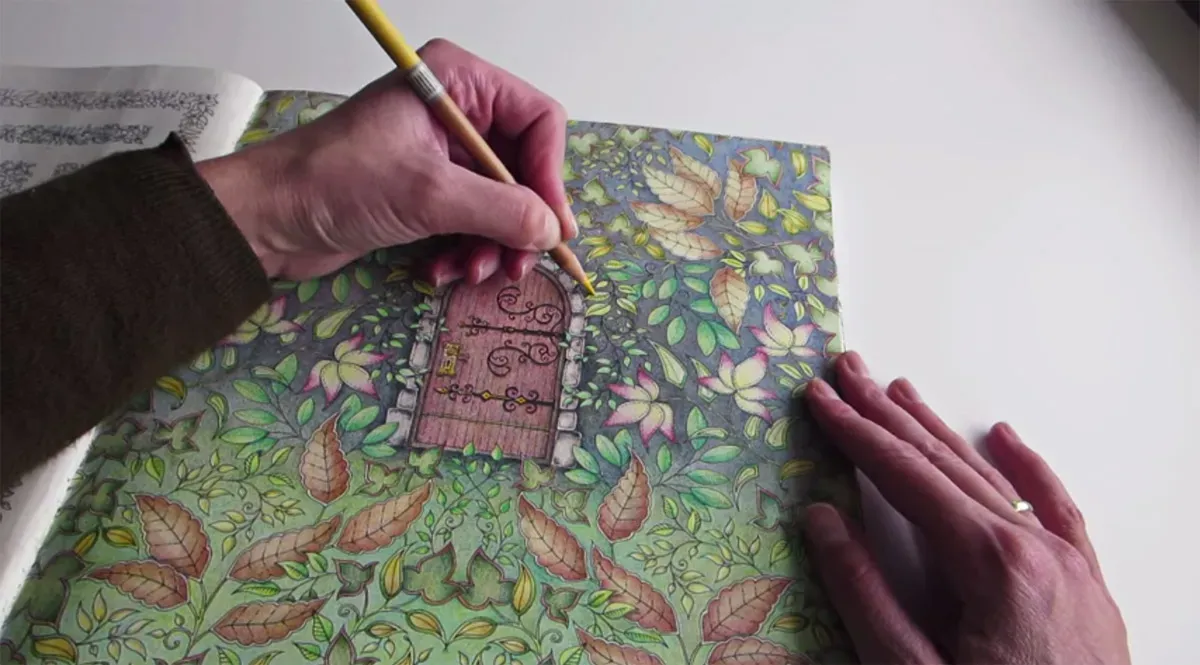
Despite coloring books being thought of mostly for children, adults also enjoy coloring inside the lines. The explosion of adult coloring books could give insight to making my design solution widely appealing to multiple stakeholders.
Coloring books for adults have been around for decades, but Basford’s success—combined with that of the French publisher Hachette Pratique’s “Art-thérapie: 100 coloriages anti-stress” (2012), which has sold more than three and a half million copies worldwide, and Dover Publishing’s “Creative Haven” line for “experienced colorists,” which launched in 2012 and sold four hundred thousand copies this May alone—has helped to create a massive new industry category. “We’ve never seen a phenomenon like it in our thirty years of publishing. We are on our fifteenth reprint of some of our titles. Just can’t keep them in print fast enough,” Lesley O’Mara, the managing director of British publishers Michael O’Mara Books, wrote to me about their own adult-coloring-books catalogue.
The trend has been fuelled to some degree by social media—colorists post their elaborate creations on Facebook and Pinterest, garnering fans and offering pro tips on things like Prismacolor versus gel pens, or how to make that tricky owl in the corner pop—and by marketing that associates them with such therapeutic ends as anxiety- and stress-reduction. But it is also part of a larger and more pervasive fashion among adults for childhood objects and experiences. This “Peter Pan market” has roots in publishing, beyond coloring books (the growth in sales of children’s and young-adult books to much older readers has been well documented), but it is far from confined to that arena.
Susan Linn, a psychologist at Harvard Medical School, pointed out to me that, however soothing and enjoyable coloring might be, these books aren’t even an especially creative endeavor for children, and that products marketed as therapeutic play sometimes barely qualify as playful. They hold users by the hand, she said, whereas “the best toys are ninety per cent child and ten per cent toy.” Coloring might help to release tension, but it’s a fundamentally more directed and restrictive activity than painting something from scratch.
As seen in this article by The New Yorker, products directed towards children often end up appealing to other crowds. One of the primary stakeholders in my project are parents as they are the ones that will end up buying Honda vehicles. There is an argument for improving the reach of my solution by making it appealing across multiple age groups outside of children. Alternatively, drawing upon the target adult audience's childhood for my solution could make it easier to pitch to that demographic.
Another insight from this article is that play requires freedom and self-direction. Coloring books may be soothing but they are inherently restrictive and "barely qualify as playful" (Rapheal, 2015). This might not be a bad thing since my main goal is to use meditative practices (not necessarily play), but the intended balance of freedom to guidance does affect the solution I'll create.
References
Raphel, Adrienne. 2015. The New Yorker. "Why Adults Are Buying Coloring Books (for Themselves)". https://www.newyorker.com/business/currency/why-adults-are-buying-coloring-books-for-themselves
Passion for Pencils. 2015. Youtube. "Colouring My Secret Garden - The Secret Door part 2 (how to)". https://www.youtube.com/watch?v=cb7-1Y3j3dc
All original works in this article were done without the assistance of AI tools.