Why do car screens look bad? Can design save them?
With the advancement of entertainment technology, the incorporation of screens into car entertainment was inevitable. However, the implementation of said screens has been anything but graceful for a multitude of reasons. Analyzing these reasons could give insight to needed improvements as more advanced entertainment technology is implemented in vehicles. This is relevant to my project due to Honda's continued integration of screens into cars.
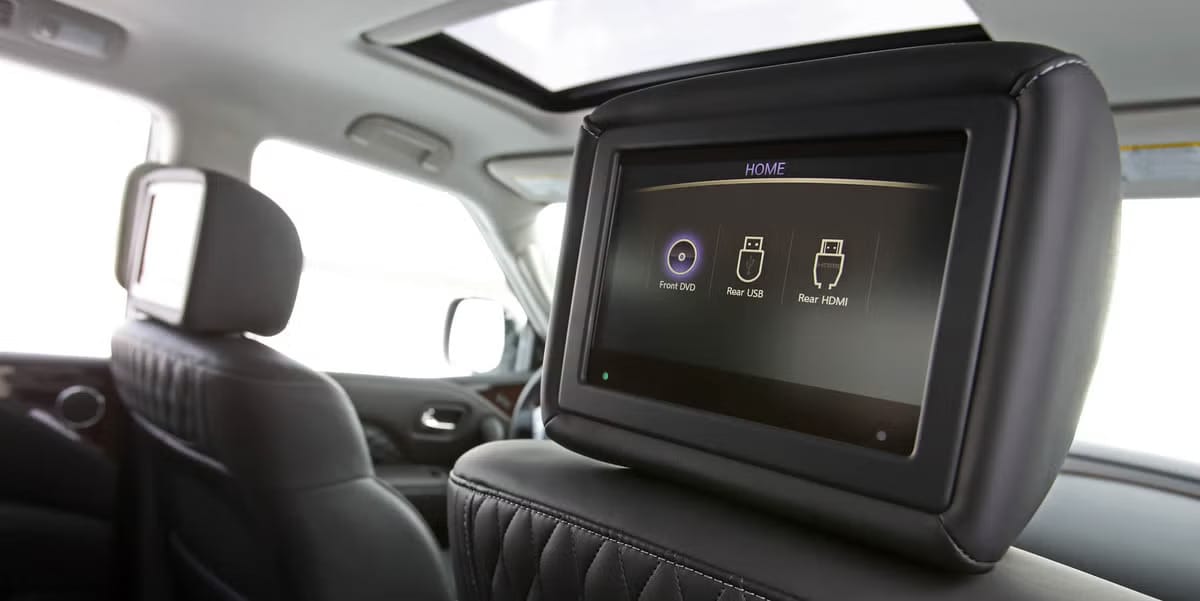
Screens stuffed into the backs of the front headrests used to scream technology. Now these displays look as nostalgic as portable DVD players. Look at how Buick charges $1750 for two tiny eight-inch screens—not so much installed as carved and glued—with two pairs of headphones on the Enclave. The Ford Expedition offers just about the same for $1995. There's coach-class entertainment in the back of the Infiniti QX80, too, also featuring a pair of eight-inch screens. Even the best luxury cars don't attempt to integrate them with any class. They just enlarge the screens and stick them on the seatbacks like mall kiosks. You've just spent top money for an interior worthy of an art museum, and the automaker's finishing touches are two big black rectangles with the surface detailing of a microwave oven.
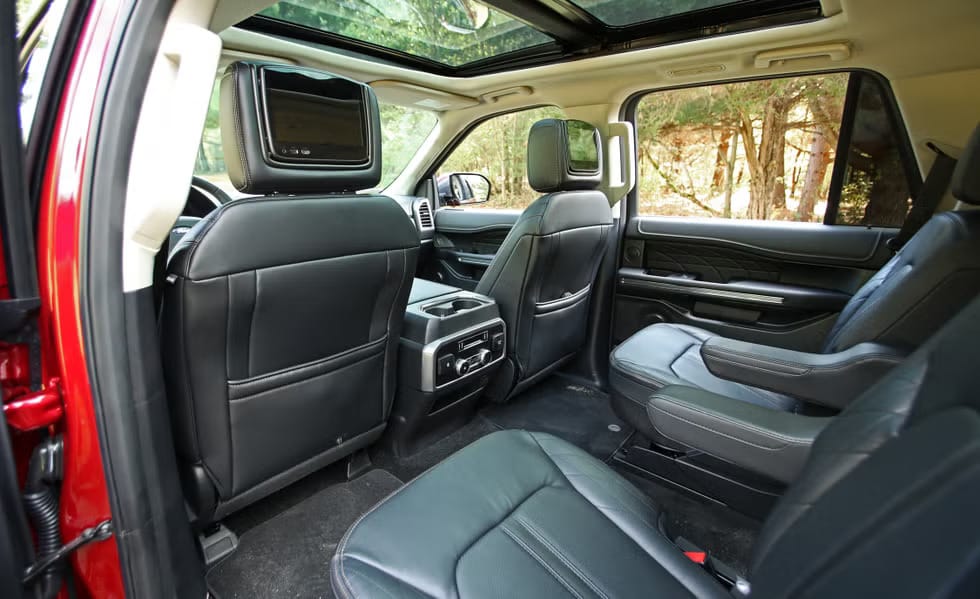
One major complaint of in-vehicle screens is that the cost of their addition doesn't match with their implementation. The screens of the Infiniti QX80 and Ford Expedition look bulky, out of place, and too reminiscent of tacky screens from malls (Personally I see the clock-in machine touchscreens common in fast-food restaurants). Integration of screens into vehicles should be informed by the forms of the surfaces or objects they will be attached too.
On the Odyssey, it's a single widescreen unit that swivels downward from the roof and can split the screen in half. They don't ruin the look of the interior when they're off, which I'd wager is most of the time. The Pacifica has built-in games that are actually good. You (or your back-seat passengers) can play checkers against the enemy sitting next to you, count license plates, and learn basic math skills. Both cars offer the modern answer to "Are we there yet?" with real-time updates from the nav.
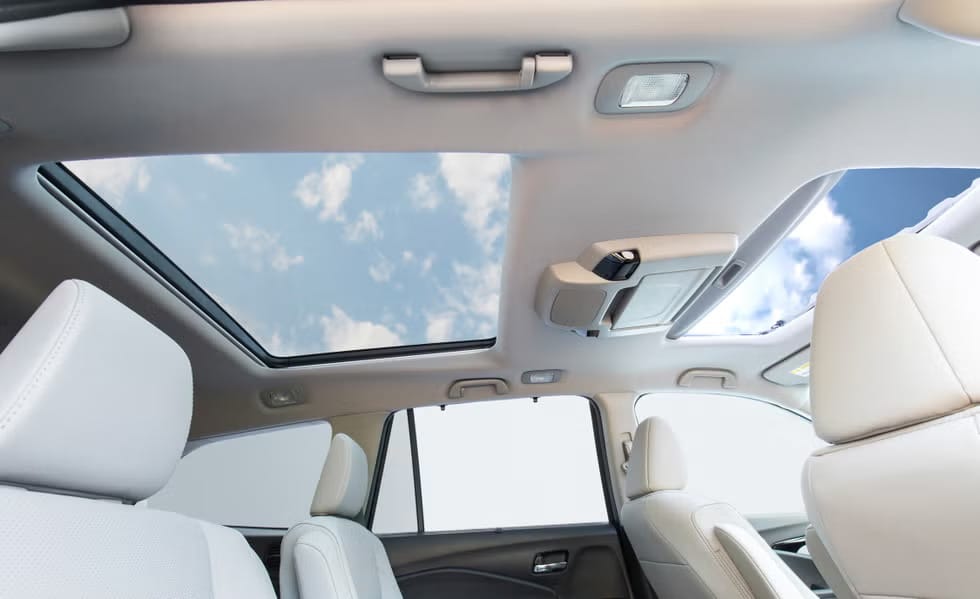
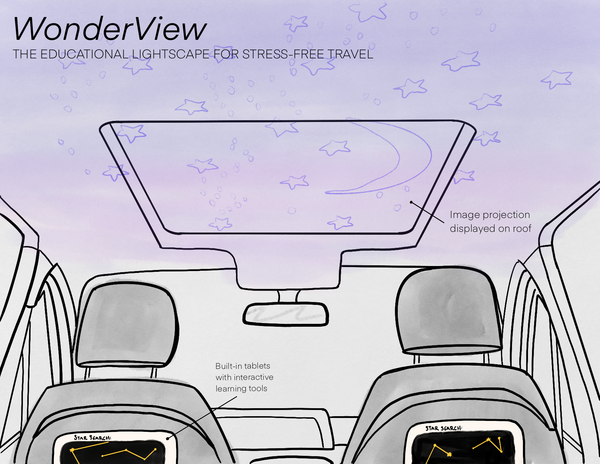
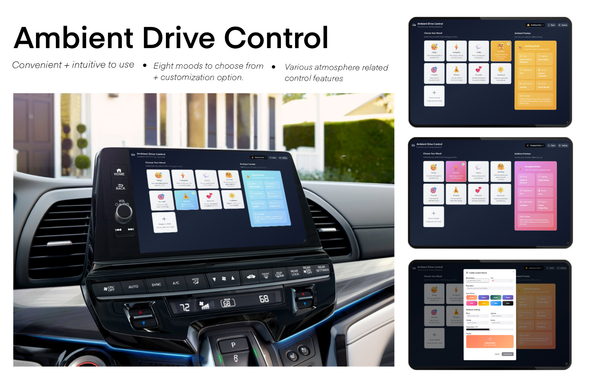
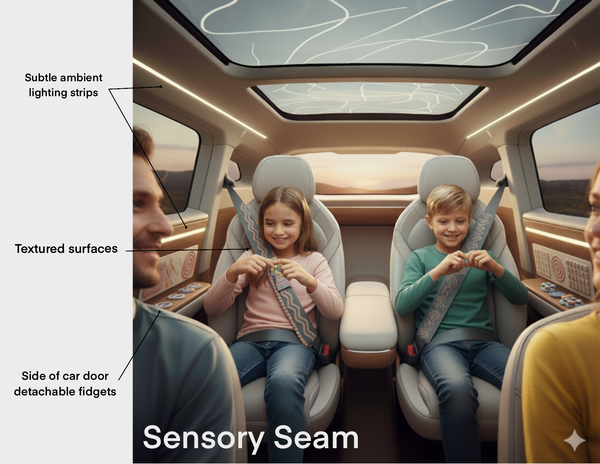
Honda has already implemented a screen in their Pilot model that generally fits with the form of the roof and surrounding headrests while folded. Additionally, the finish of the plastic doesn't intrude compared to the semi-gloss screen of the Ford Expedition. While designing digital solutions for backseat children entertainment, designers should consider if their innovative solutions mesh with the existing forms of a car to prevent tacky aesthetics.
References
Atiyeh, Clifford. 2019. Car & Driver. "Why Are Rear-Seat Entertainment Systems Behind the Times?" https://www.caranddriver.com/features/a27062588/rear-seat-entertainment-systems-pros-and-cons/
All original works in this article were done without the assistance of AI tools.