Why Touching Art is So Tempting
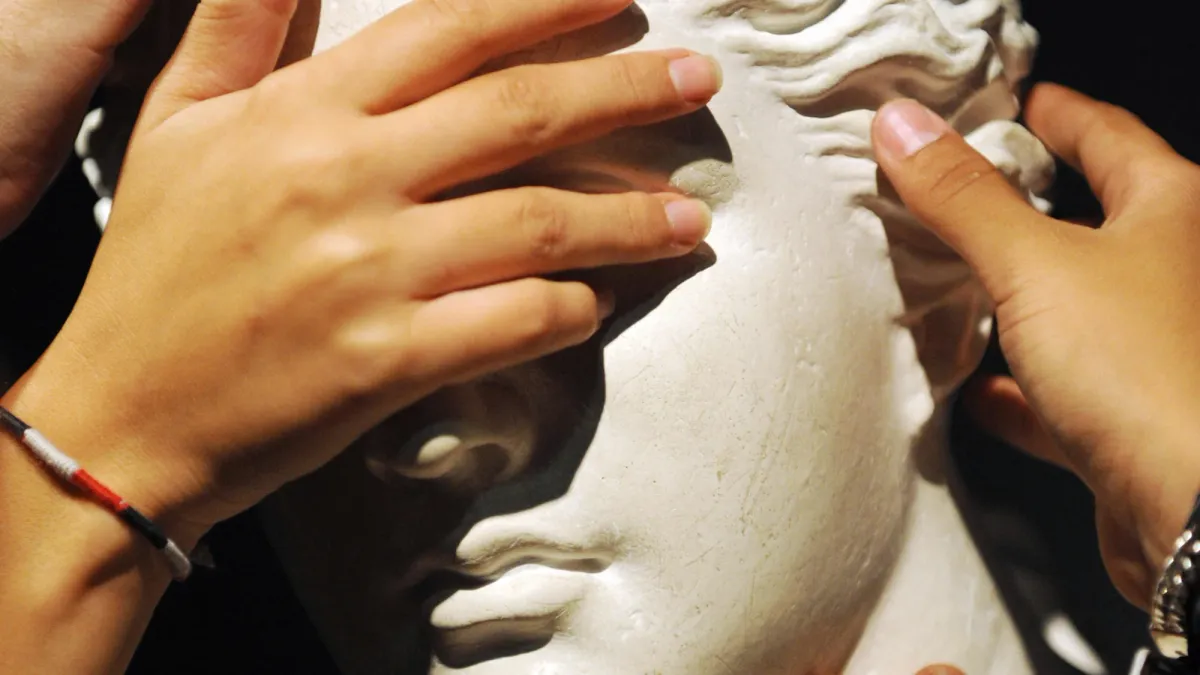
While thinking about how to address the problem of people doing things they're not supposed to do, I thought of art museums and how all of the methods they use to keep people from touching art.
Excerpts from Komar (2019)
Fiona Candlin, a professor of museology at Birkbeck College in London and author of “Art, Museums, and Touch,” is all too familiar with these clandestine moments. She spent years investigating the motivations behind why visitors touch exhibits without permission, what they choose to touch, and how these unauthorized touches make them feel.
As it turns out, this type of rule-breaking is a common part of the museum-going experience. While she was observing unauthorized touching at the British Museum for a report published in The Senses and Society journal, a security guard told Candlin, “You stop a hundred people touching and there are 200 more … It’s like trying to turn back the sea.”
According to Candlin, there are numerous reasons why museum visitors are so tempted to touch art, one of which is classic empirical investigation – simply put, the desire to learn more.
“You want to know how something is made, you want to know what it’s made of, you want to try and get a sense of how it’s put together, and so you touch for those kinds of reasons.”
Part of that inspection is to confirm authenticity. “There can be a real blur between museums and experiences and theme parks and wax works. Often if you have really big objects on display – if you think about going into the Egyptian galleries in the British Museum or the Met. Some people can’t believe you would put real things on display without glass around them. They’re not quite sure and they figure if they touch it, they can make an assessment,” Candlin said.
Touching also has to do with playing with the art pieces on display – especially when it comes to statues of animals and humans. But because these figures aren’t real, museum-goers feel free to push boundaries, patting lion heads or groping naked bottoms. They’re making visual jokes and performing for both themselves and the people they are with.
Standing in front of artwork also often evokes an emotional response. It’s not just about appreciating technique, Candlin explained, but thinking of the human element behind the work and wanting to connect with the person behind the genius.
“If something is made by a named artist, the museum goer wants to feel they have some connection with that named artist. Barbara Hepworth put her hand here and I’m now putting my hand here,” Candlin said.
While she doesn’t go so far as to suggest people break the rules the next time they’re at a museum, Candlin does believe touching is an important – and, unfortunately for security guards, inevitable – part of experiencing art.
“People aren’t just touching the ends of their fingers – they’re stroking things, they’re holding things, they’re mimicking,” she continued. “You’ve got to see touching as part of the continuum of ways in which people physically interact with objects.”
I'm not someone who often feels inclined to touch art at a museum. However, I do understand the reasons people do. It makes sense that people want to explore things with their hands, to learn about them and confirm their reality. Since infancy, that's a natural and often beneficial urge. I also often feel that emotional connection with art, but for me, being in the presence of it is moving enough. Where I can relate more, though, is when I'm out in nature. I feel a connection to those spaces, and the animals that inhabit them, and I want to feel that connection physically. I have often, in the past, taken souvenirs home with me from parks, to keep that connection alive and carry that place with me. After learning 'leave no trace' practices, I do my best to follow them, but it feels like losing a part of life that made it more vibrant. I'll have to keep in mind that many people may feel the same way in my efforts to encourage other park-goers to minimize their impact on state parks.
Resources.
Komar, M. (2019, May 13). Why touching art is so tempting – and exciting. CNN Style. https://www.cnn.com/style/article/why-we-want-to-touch-art
No generative AI was used in the creation of this post.