Music education and children's brain development

Music in general is an integral part to everyday life. More importantly, music being present in the everyday lives of children can have profound effects on their development as seen in this study from USC.
Music instruction appears to accelerate brain development in young children, particularly in the areas of the brain responsible for processing sound, language development, speech perception and reading skills, according to initial results of a five-year study by USC neuroscientists
These initial study results, published recently in the journal Developmental Cognitive Neuroscience, provide evidence of the benefits of music education at a time when many schools around the nation have either eliminated or reduced music and arts programs. The study shows music instruction speeds up the maturation of the auditory pathway in the brain and increases its efficiency
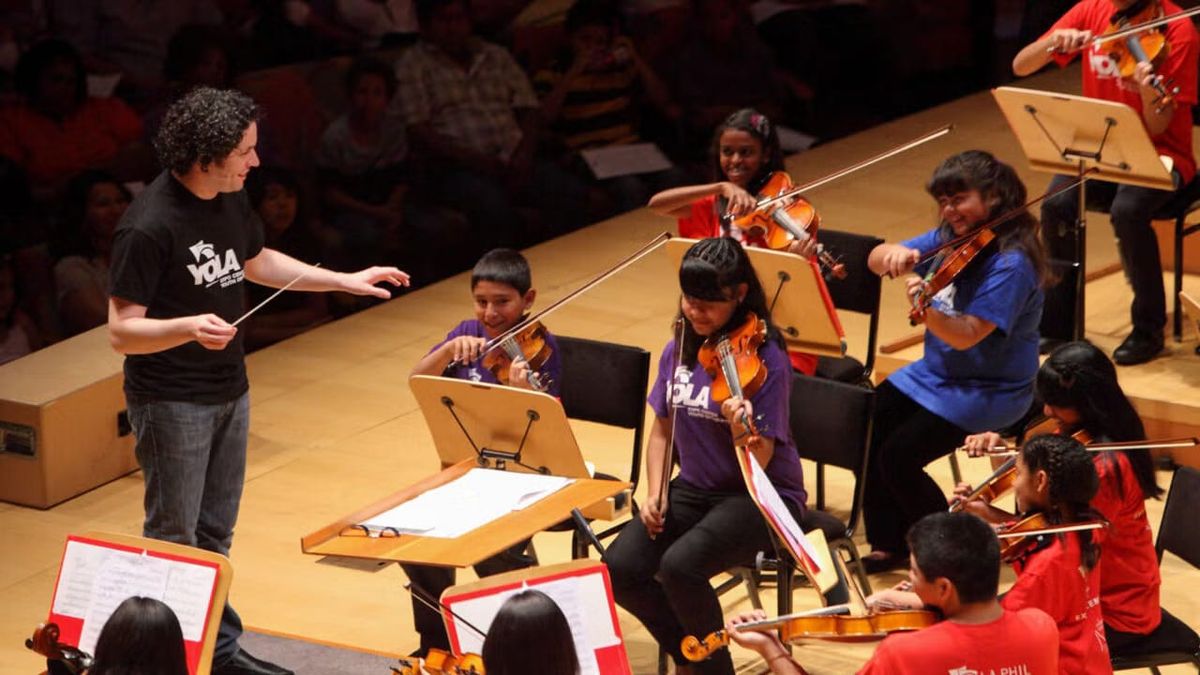
For this longitudinal study, the neuroscientists are monitoring brain development and behavior in a group of 37 children from underprivileged neighborhoods of Los Angeles.
The children learn to play instruments, such as the violin, in ensembles and groups, and they practice up to seven hours a week.
The scientists are comparing the budding musicians with peers in two other groups: 11 children in a community soccer program, and 13 children who are not involved in any specific after-school programs.
Within two years of the study, the neuroscientists found the auditory systems of children in the music program were maturing faster in them than in the other children. The fine-tuning of their auditory pathway could accelerate their development of language and reading, as well as other abilities – a potential effect which the scientists are continuing to study.
The enhanced maturity reflects an increase in neuroplasticity – a physiological change in the brain in response to its environment – in this case, exposure to music and music instruction.
The children also completed a tonal and rhythm discrimination task in which they were asked to identify similar and different melodies. Twice, they heard 24 melodies in randomized order and were asked to identify which ones differed in tone and rhythm, and which were the same in tone and rhythm.
Children who were in the youth orchestra program were more accurate at detecting pitch changes in the melodies than the other two groups. All three groups were able to identify easily when the melodies were the same. However, children with music training had smaller P1 potential amplitude compared to the other children, indicating a faster rate of maturation.
So, children's brains can clearly be easily influenced by what they are hearing and how they are interpreting it in ways that any other non-auditory activities cannot. Parents are always looking for something for their child to be doing in their free time and while sports, clubs and other extracurricular activities have their clear advantages, music education is a clear direction that parents can take to positively impact their children's brain development.
The back seat of a car presents many opportunities for children to be learning or absorbing meaningful information. Possibly a more mild form of music education integrated into the entertainment system in the car would be an easy way to introduce this kind of content to children. Not to mention the fact that music is constantly present in the car with what's on the radio or playing through your phone.
References
Gersema, E. (2016, June 20). Children’s brains develop faster with music training. today.usc.edu. https://today.usc.edu/childrens-brains-develop-faster-with-music-training/