Fabrix: A Sustainable Building Material.
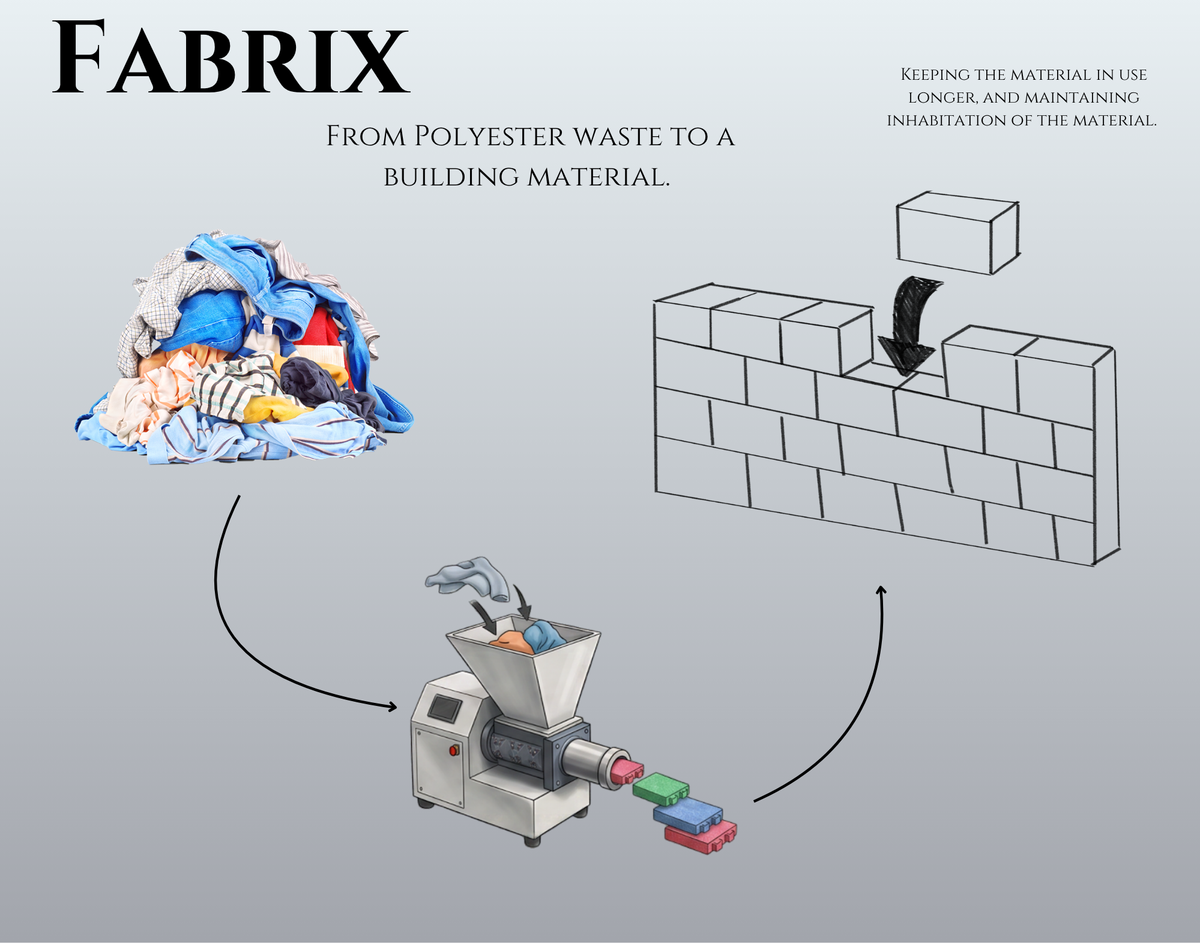
When it comes to the issue of textile waste, the speed at which we accumulate this waste is often attributed to one tangible source: the invention of the synthetic textile. Synthetic textiles cost significantly less in materials and labor to produce. And we’ve become good at it too. The rate at which fast fashion giants like Shein produce these textiles is astounding.
Within this textile waste problem space, we most often see the textile waste issue staying within that clothing sphere. Like the #WearNext campaign, clothing was traded, reused as other textiles, or upcycled into new items.
In this proposal, I suggest a new genre of downcycling to tackle the amount of textile waste that goes into landfills. In regards to this idea of textiles staying within textile waste, if a material is not in any way reused, it might be recycled into new forms of textiles. This however, often comes with caveats: Recycled textiles are often super bad for the environment.
Recycling processes that break down the material often also damage the structural integrity of the material. In the case of something that we would wear and then recycle often, this means that many of those microplastics the material is made of, are ending up in our waterways.
Fabrix as a building material takes that issue of waterway pollutants, and instead places it in a context where excessive washing and interactions with the waterways is much less frequent.
Review
Fabrix as a building material takes that issue of waterway pollutants, and instead places it in a context where excessive washing and interactions with the waterways is much less frequent.
While this transformation of textile waste into a context where those microplastics are not being washed away into our water ways is an excellent way to solve that particular issue, the actual form of this proposal creates other issues.
One of the reasons that textiles are so hard to recycle is because of an inconsistent material makeup. Depending on the brand, style, source, and any number of factors, any given clothing item could have a wide range of material makeup. While this conjecture focuses on polyester and other synthetic fibers, those fabrics, especially on items where the material information might not be plainly available, are often mixed in with organic fibers, and the synthetic materials themselves might have different chemical makeups.
In a situation where we can anticipate a cohesive melding of similar types of plastic, able to form these solid pieces, attempting to recycle polyester material specifically, would be incredibly hard to make consistent and reliable.
Ai Disclaimer: Vizcom, a sketch-to-render Ai tool, was used to generate the final visual of the "fabric-to-bricks" style machine that is included in this visualization, based off an initial sketch provided by the author.
Reference
Vizcom. (2026). Vizcom (Sketch-to-render AI tool) [Image generation software]. https://www.vizcom.com