
780 leftover baguettes turn into public pavilion by MERO studios in montpellier
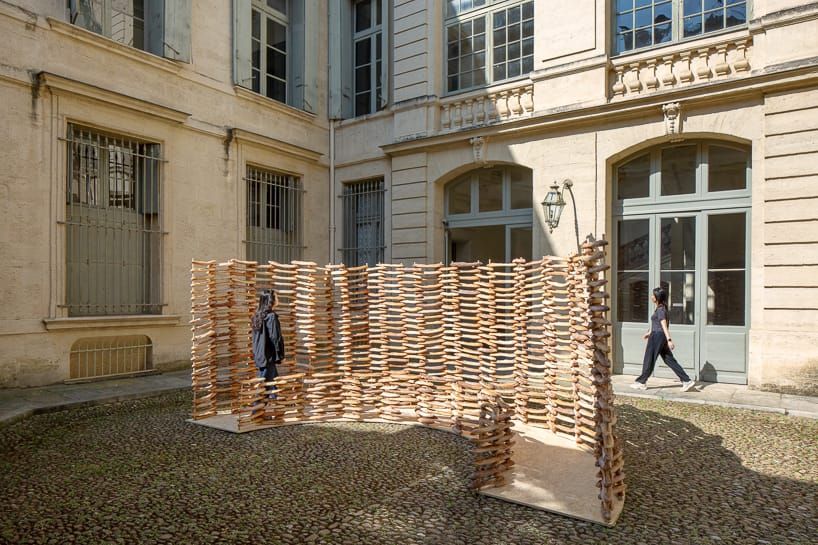
Paysage de Pain is a public installation built from 780 salvaged baguettes, designed by MERO Studios in collaboration with the Montpellier-based nonprofit Pain de L’Espoir. Set in a sunlit courtyard in the Hôtel de Lunas during the 2025 Festival des Architectures Vives in Montpellier, the pavilion explores the potential of food waste, specifically surplus bread, as a spatial and sensory material.
Given that bread is such a staple in everyday French life, as well as its extensive history with human development in general, you might be as surprised as I was to hear that 11% of bread that is being produced in France ends up not being sold at all.
This happens before the bread even has a chance to hit the shelves, with the bakery owners deciding beforehand that those 11% of bread loaves were unfit to be sold. of that 11%, a shocking 60% of that is then destroyed.
In order to bring awareness to this waste of food, baguettes were gathered and repurposed into this installation.
The installation invites visitors to reflect on themes of gluttony and excess. The structure is a dialogue between indulgence and the urgency of environmental responsibility. Visitors are invited to move through dough-scented walls that cracked and aged in the summer heat, highlighting the tension between nourishment and discard. The project, developed by MERO Studios’ designers, foregrounds food waste as a cultural issue, transforming urban excess into a sensory, temporal monument. Here, gluttony becomes a celebration of transformation, an architectural delicacy that invites exploration and reflection on how we consume, discard, and create. In the spirit of the festival, Paysage de Pain is not only a feast for the senses but also a call to savor resources with care and ingenuity.
Review
If you’ve read other posts in this Arts section regarding art pieces, installations and sculptures that utilize waste as a building material, you might anticipate what I might say about this installation. Using this bread that could otherwise be put to use with its intended purpose seems, inherently, wasteful.
And while I do agree with this sentiment, even applied to this particular installation, as well as other concerns that I will echo here, that installations and projects meant to bring awareness have overall a greatly subdued effect comparatively to using that effort to actually create a productive solution to the issue, this one feels slightly different.
I believe this is because of the compostable nature of the building material itself. Bread, as a food source, will spoil, be unsafe to eat, etc. These are real reasons that might have genuinely made this material be unfit to sell, as it’s unclear whether these baguettes were rejected for safety or cosmetic reasons. Despite this thought, this bread will quickly decompose, and unlike the plastic waste discussed in other articles, won’t go on to continue to sit in a landfill for hundreds of years.
While this doesn’t necessarily make this installation entirely less wasteful than others, the long term implications of this waste are worth noting.
Reference
Designboom. (2025, July 4). 780 leftover baguettes form a public pavilion by MERO studios in Montpellier. https://www.designboom.com/art/780-leftover-baguettes-public-pavilion-mero-studios-montpellier-paysage-de-pain-07-04-2025/



