
A Conversation with Summer Wohlfrom
I conducted an impromptu conversation with Buck Creek’s Naturalist Summer while attending a Bird Bingo event. Victoria and I attended because we had been having trouble getting to outdoor events due to the weather. This conversation clarified the structure of Ohio State Parks staff and the barriers to implementing dark sky interventions and rules.
Ohio State Parks Structure
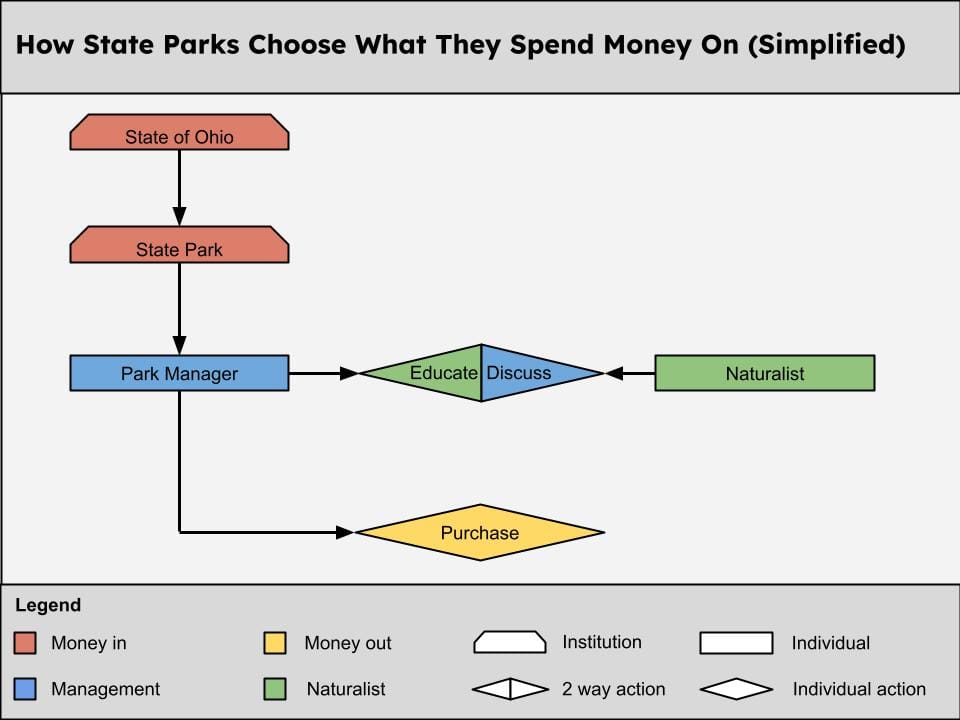
In our conversation, many of Victoria's and my questions surrounded how much agency parks staff have over what happens in the parks they work for and what the chain of command looks like when it comes to change. I expected a specific list of changes or initiatives to be implemented by a certain deadline. However, as I understand it, parks are more like franchises that follow the overall ODNR Parks and Watercraft core values and operational rules, but can choose what they want to invest time and a little extra funding in. So, parks end up being influenced more by the park manager’s and naturalist’s personal interests. Which isn’t necessarily right or wrong; it just isn’t what I had imagined from a government organization.
Adding To The Existing Lighting Infrastructure
We asked if she thought adding to existing lights in the park to create extra shielding to direct light more appropriately would be possible. She explained that the upkeep and the time it would take to change out the bulbs would be cumbersome. Many park lighting fixtures are tall, and the extra maintenance work to install and swap bulbs in retrofitted fixtures could require extra labor that the park could not afford.
Changing Visitor Behavior
We asked how people would react to rules that potentially enforce "dark hours." She explains that people see their go-to campgrounds as a second home and resist change or being told what to do. Another barrier is that parks have no authority to enforce rules like that. So, for parks to see a change in behavior, they need to get visitors on board.
A strategy she suggested was to get children invested in Dark Sky and then they will ideally get their adults involved as well.
Anecdotes
Before Victoria arrived at the Buck Creek Park Office conference room, Summer and I discussed being from Ohio and the changes we've seen over the years. Somehow we ended up on the hot topic of data centers.
She told me that about 5 minutes from her home, a data center went up. In years past, she remembers hearing coyotes howl in packs every summer night, and she grew fond of that familiar summer-night soundtrack. Within a few months of the data center going up, the coyotes stopped howling. While I understood that this felt like a loss in her everyday life, she kept explaining the ecological implications of the coyotes leaving.
She explained that if the coyotes were leaving, so were their prey. This means that, at least locally, there could have been a larger migration of animals retreating from an area that previously supported them. Summer and many of the people in her community live in Clark County because they like to be close to nature. They fear that if more industrial development happens in the area, more and more wildlife will be driven away, and many consider moving if that does happen. How many times will they end up needing to relocate if the sprawl of tech keeps encroaching on rural areas like Clark County?
She theorizes the coyotes and their prey may have left because of the light from the data centers. The small mammals may have left because they were more exposed to predators like birds of prey when they had a spotlight on them, completely eliminating their camouflage.



