
AED+

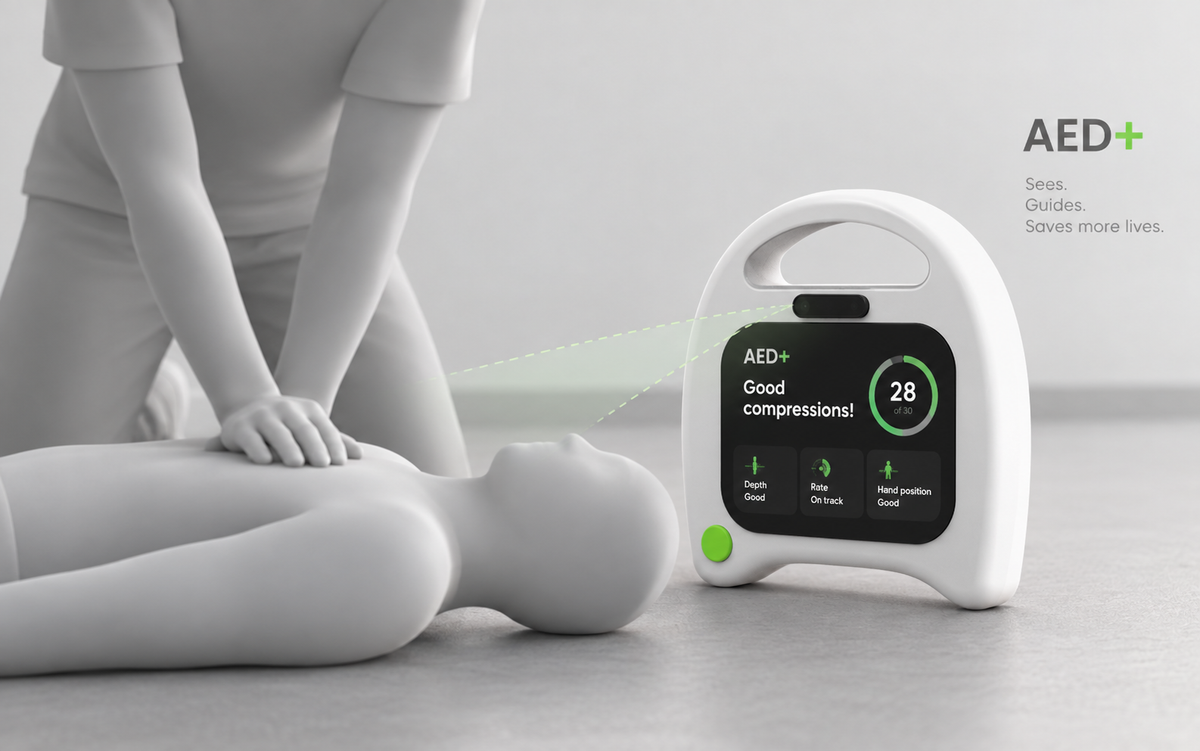
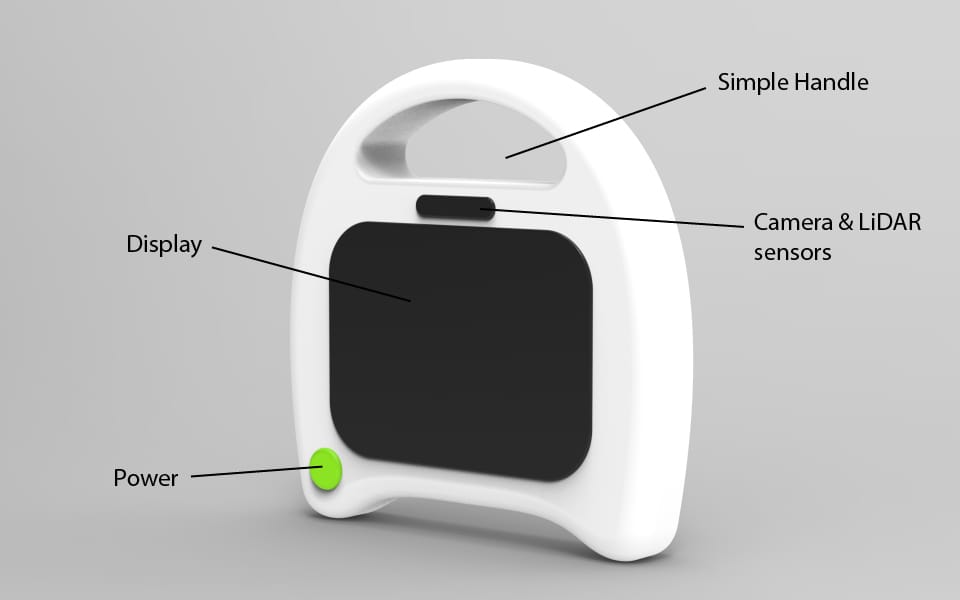
AED+ is an effort to combine modern vision detection and the ChatCPR technologies. As the conjecture for my Science + Tech section, I found that CPR and AED technology is being advanced with the introduction of AI. Here are some excerpts from the article AI-Powered CPR Coach Outperforms 911 Dispatchers in Guiding Bystander Resuscitation:
“‘More than 350,000 Americans suffer out-of-hospital cardiac arrest each year, and survival sits at roughly 9%,’ added Nimit Desai, B.S., a research affiliate at the UC San Diego Qualcomm Institute, a medical student at UC San Diego School of Medicine, and lead author of the study. ‘Given that only 2% of Americans are certified to perform CPR, when someone collapses, they call 911 and wait. ChatCPR could change that and begin to save lives’” (University of California San Diego, 2026).
“‘ChatCPR won every head-to-head comparison with human dispatchers,’ explained Noor Majhail, B.S., an EMS responder and study coauthor. ChatCPR scored 15 percentage points higher than the dispatcher on basic CPR steps; specifically, dispatchers met 85% of the guideline steps, and ChatCPR met 100%. For more advanced steps, the gap was even larger; ChatCPR scored 99% while dispatchers scored 63% — a gap of 36 percentage points” (University of California San Diego, 2026).
As ChatCPR is able to outperform human dispatchers in helping with CPR, it is important that this technology could be easily available to rural communities. This device would work fully offline, and could be stored at homes or at local centers like libraries. It would use both the voice technology and computer vision to instantly coach any person on proper CPR. This is especially crucial in rural communities, where emergency dispatch may take a long time to arrive. It makes clear sense to combine this with an AED, allowing the user to assess and help in any cardiac or respiratory situation.
This device only works if it can be quickly dispatched to a situation, so the largest barrier for its use is simply getting it into peoples homes. It is hard to make a financial commitment to a medical device that could live in your home that you hope you do not have to use. For this reason, the largest barrier to implementing this would be education and outreach, the technology has already been proven.
Reference
University of California San Diego. (2026, May 18). AI-powered CPR coach outperforms 911 dispatchers in guiding bystander resuscitation. UC San Diego Today. https://today.ucsd.edu/story/ai-powered-cpr-coach-outperforms-911-dispatchers-in-guiding-bystander-resuscitation
No generative AI was used in writing this article. Generative AI was used to render the in-context hero image.



