
Art Sync

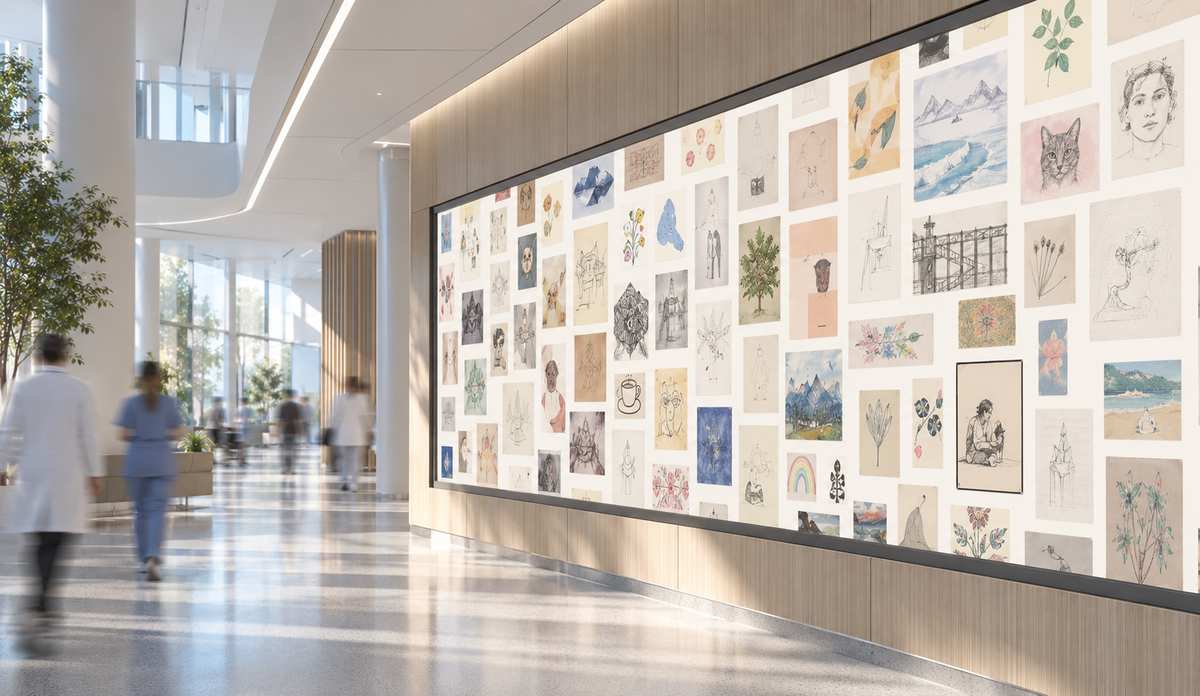
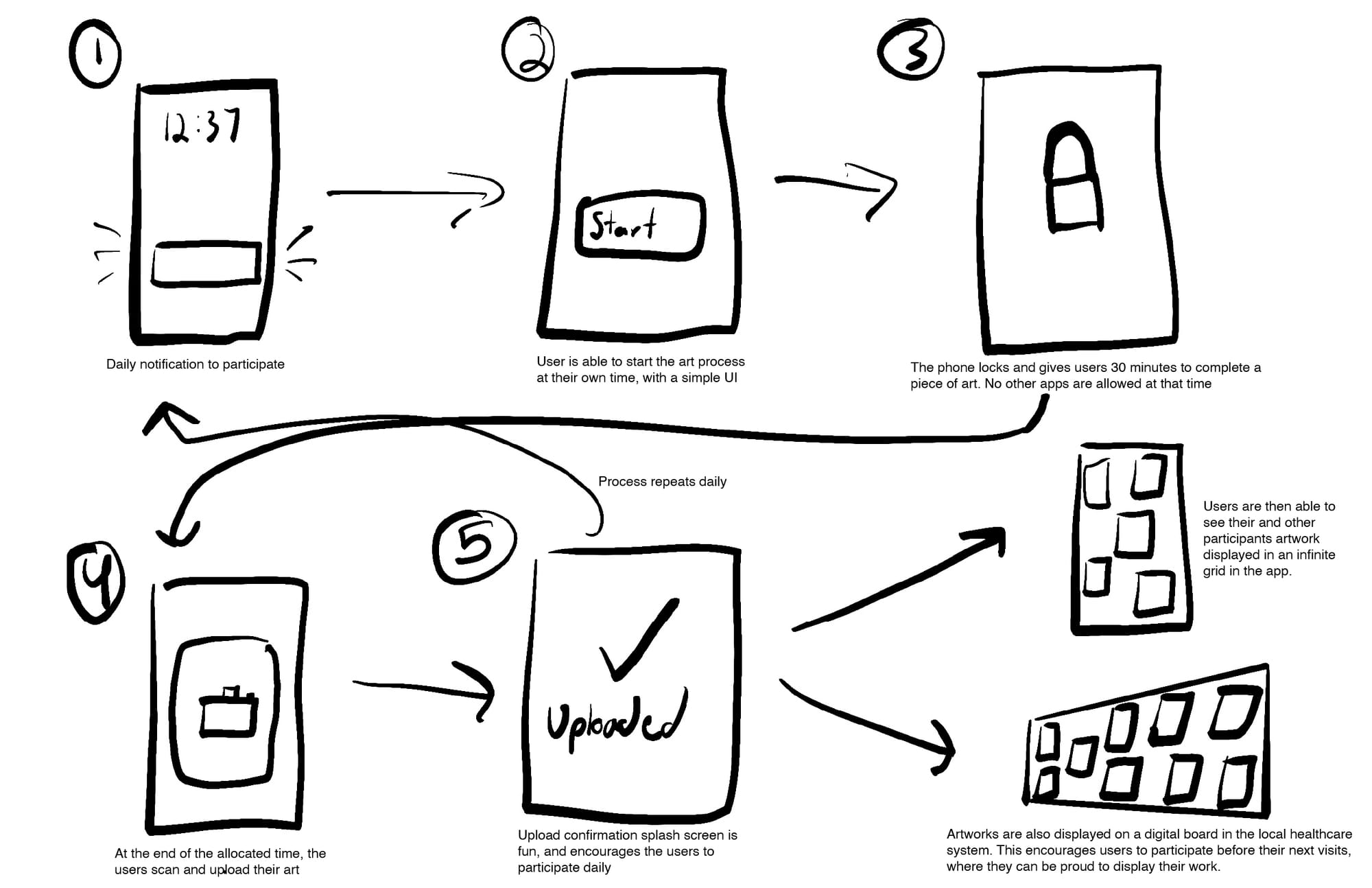
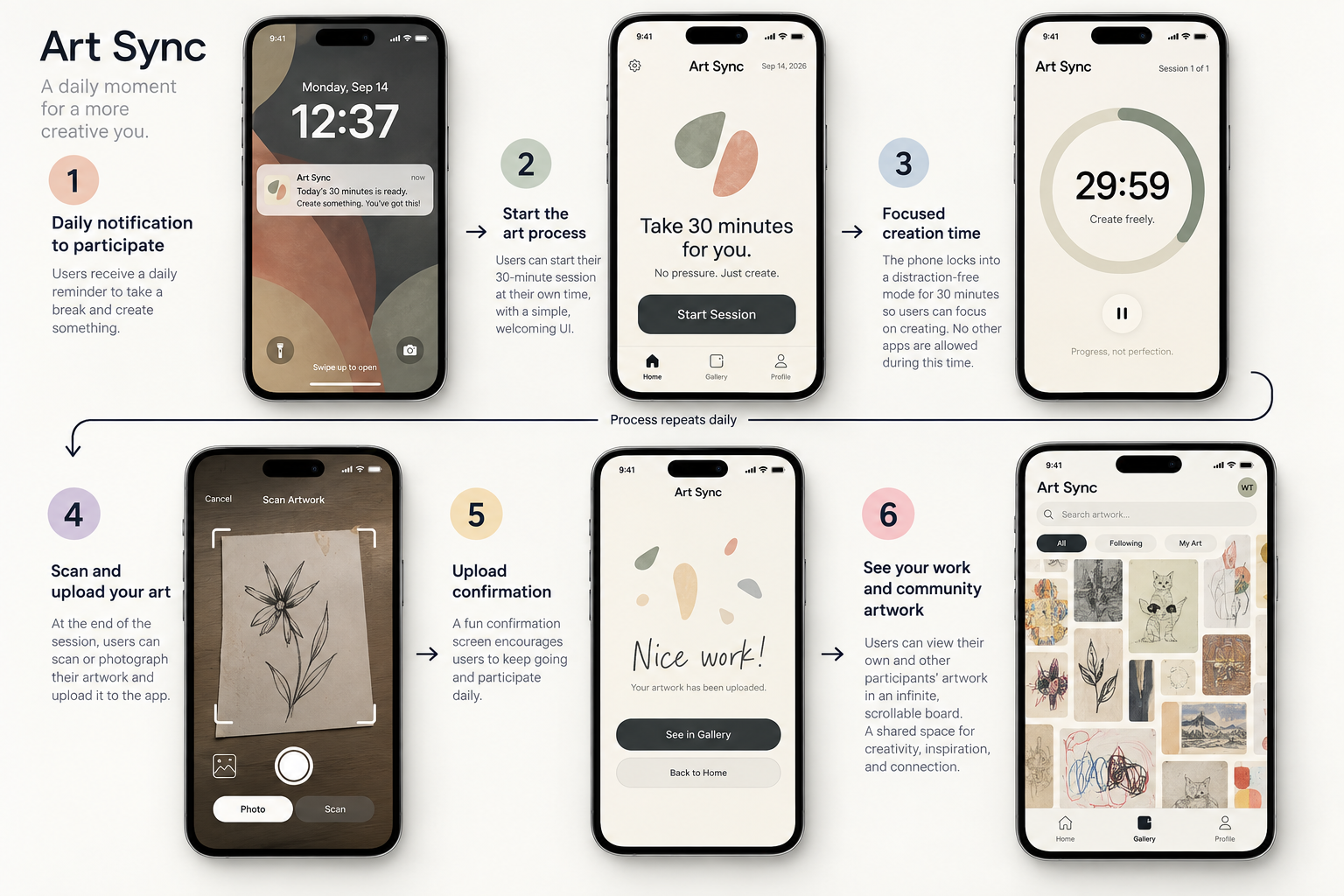
Art Sync is designed to help patients participate in art based activities when away from a health center. This concept is based on multiple elements of research through my Arts & Lifestyle section:
“An Ohio State College of Medicine art show allows students, residents, faculty and staff of Ohio State's Health Science Colleges and the Wexner Medical Center to cultivate compassion and human expression, Serena Smith, senior consultant of media relations at the Wexner Medical Center, said. The annual event, titled "Medicine and the Arts," is comprised of two parts: a temporary show that took place March 6-8 and an extended display that opened Thursday at the James Art Gallery, running until April 18.
According to Dr. Sheryl Pfeil, director of the Linda Stone Humanism and the Arts in Medicine program, the show provides a space for rejuvenation and the recapturing of one's resilience” (Han, 2024).
‘Painting is kind of like my medicine and it's therapeutic in that way,’ Wojtasek said. ‘In addition to being therapeutic, it's like a nice goal-oriented activity for me to have outside of work’” (Han, 2024).
“To expand public access, the collection is being digitized to display on a free app for arts and culture, Bloomberg Connects. Physical signs with QR codes are being placed next to the art.
At Woodhull Hospital the other day, Tijae Medina, 13, was getting anxious about his dental appointment. But then he turned down a gleaming white corridor and looked up to find a spotted dragon in high heels. Or was that a cow?
He instantly felt more at ease.
‘I feel like walking into a hospital is scary,’ he said. ‘It took my mind off it for a second’” (Hu, 2023).
This conjecture takes the positive benefits of creating and sharing art and encourages users to do so even when they are not at a medical care center. Every day, the user is notified to spend thirty minutes of screen free time making a piece of art. That art is then scanned, and uploaded so that it can be viewed either on the app or on a large display installation in the hospital. This builds a healthy habit at home, as well as allowing the users to feel more connected to other patients through their shared experience of viewing each other's art at the hospital.
Of course, this conjecture has its flaws. First, while encouraging users to make physical art, it is still a digital platform that requires a phone and cellular reception. Both of which may not be available to users in rural Ohio. It also may invoke anxiety about sharing art, the thirty minute limit is made to encourage users to be comfortable sharing imperfect work, but there can still be a barrier to overcome with that. Finally, this conjecture also assumes that a patient is making multiple visits to a care center, so this conjecture may not and hopefully does not apply to the majority of the population.
References:
Han, C. (2024, March 25). Painting as medicine: Wexner Medical Center employees reduce stress through art. The Lantern. https://www.thelantern.com/2024/03/painting-as-medicine-wexner-medical-center-employees-reduce-stress-through-art/
Hu, W. (2023, October 8). In stress-filled halls, an artistic balm. The New York Times. https://www.nytimes.com/2023/10/08/nyregion/nyc-hospitals-public-art.html
No generative AI was used in writing this article. Generative AI was used to render concept art for the app and in-hospital display.



