
Beyond Streetlights: The Impact of Car Headlights on Natural Area
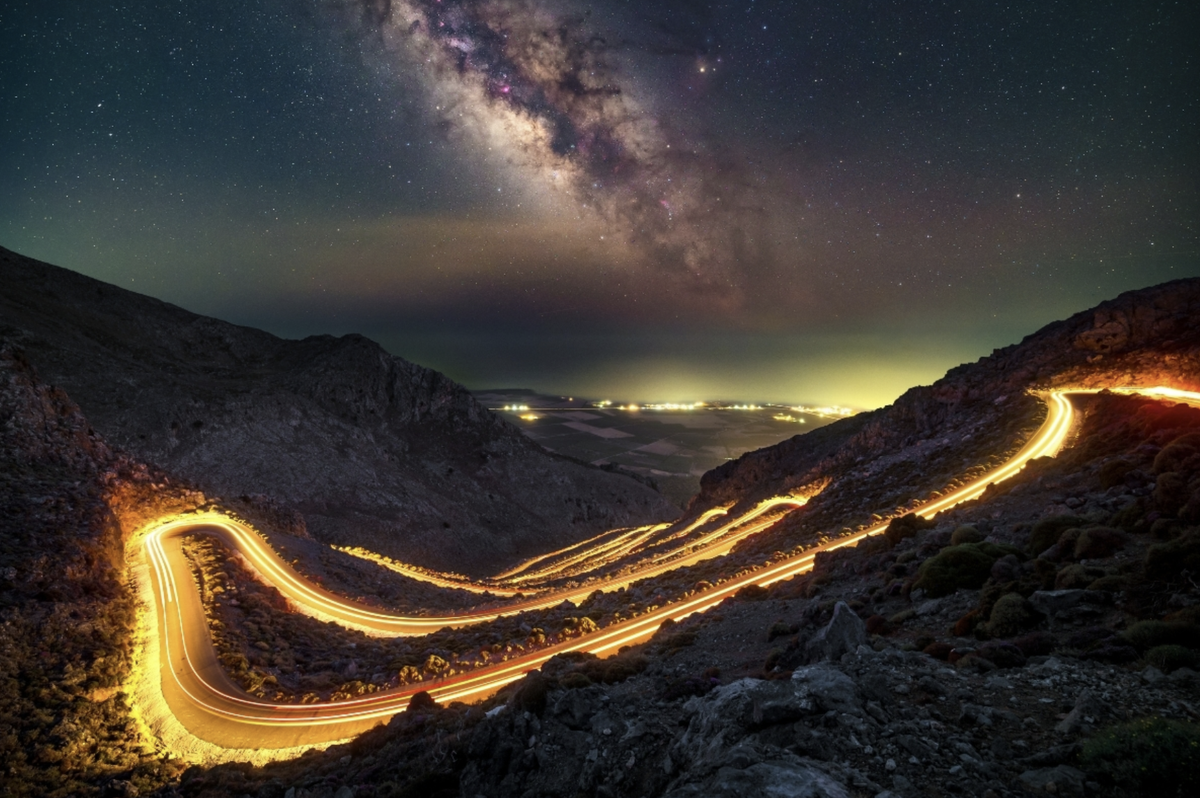
The article “A Driving Source of Light Pollution: How Car Headlights Are Reshaping the Nighttime Environment” by Drew Reagen explains how car headlights are becoming an important but often overlooked source of light pollution. During our ODNR kickback Heather and Tracey stated that one environmental impact that has been on their radar recently is how RV’s disrupt the environment, from noise, light, and debris left behind. Most people think about light pollution as coming from streetlights, buildings, or other permanent lights, but the article explains that headlights can also affect the nighttime environment. Millions of cars travel through forests, fields, wetlands, and other natural areas at night, bringing bright artificial light into places that would normally be dark. One of the biggest problems with modern headlights is how bright they have become.
“Modern headlights are designed to illuminate far down the road, but that visibility comes at a cost. Even at distances of 50 meters, headlight beams can expose roadsides to light levels far brighter than natural nighttime conditions. For comparison, a full moon provides only about 0.1 to 0.3 lux, while headlight emissions can reach around 25 lux.”
“Many species cannot quickly adjust their vision after exposure, leaving them disoriented, exhausted, or vulnerable to predators long after the car has passed.”
This means that a car passing through a natural area can create a very large and sudden amount of light compared to what wildlife would normally experience at night. Animals who are out at night get disoriented, vulnerable to predators nearby, loss of food, etc. when exposed to this type of light, just like with humans when our eyes are adjusted to a dark environment when we are flashed with a light turning on/phone screen/etc it takes us a few seconds to be able to see clearly again.
“Many modern LED and xenon headlights emit blue-rich, cool-white light. Blue light is particularly disruptive at night, suppressing the production of melatonin and disrupting circadian rhythms in many species.”
“Worldwide traffic is expected to double by 2050, alongside the construction of roughly 25 million kilometers of new paved roads.”
The problem with modern headlights is not only how bright they are, but also the color of the light they produce. Blue-rich, cool-white headlights can interfere with the natural nighttime patterns of animals by affecting their circadian rhythms. For wildlife in areas near roads, repeated exposure to these headlights could make it harder for animals to follow their normal nighttime behaviors. This is especially important for the ODNR project because reducing the amount of blue light from vehicles could help protect wildlife while still allowing drivers to see clearly. Instead of completely removing headlights, we could explore the possibility of using amber/warmer-colored headlights, filters, or covers that reduce blue wavelengths while maintaining safe visibility for drivers.
As more roads are built, headlights could reach natural areas that have previously remained dark. This article is especially useful for the ODNR project because it allows us to think beyond the regular streetlights and infrastructures that first come to mind.
References
Grammarly. (n.d.). https://www.grammarly.com/
Reagan, D. (2026, January 8). A driving source of light pollution: How car headlights are reshaping the nighttime environment. DarkSky International. https://darksky.org/news/a-driving-source-of-light-pollution-how-car-headlights-are-reshaping-the-nighttime-environment/



