
Black Mirror Episode: Common People

Netflix's dystopian psychological thriller TV show Black Mirror highlights the ways financial barriers can prevent people from accessing and maintaining healthcare in its first episode “Common People” (Season 7, Episode 1) . It demonstrates how even innovative medical technologies can become inaccessible and unethical when their costs exceed what patients can afford, creating additional stress for individuals and their families.
The episode follows Amanda and Mike, a working-class couple whose lives are transformed after Amanda is diagnosed with a life-threatening brain tumor.
After Amanda suffers a medical emergency that leads to the discovery of a deadly brain tumor and with help from a convincing company rep, Gaynor (Tracee Ellis Ross), Mike subscribes to a groundbreaking neuroscience company, Rivermind, which offers to essentially scoop out the afflicted portion of Amanda's brain and replace it with synthetic material that can receive transmissions from a backup imprint of her brain to fill in the gaps and allow her to live a normal life. (Nolfi, 2025).
Gaynor tells the couple that the company is looking to expand its coverage area, and that they'll soon be able to travel beyond the locally limited range of reception, and that Amanda will lose consciousness if they don't stay within its bounds (Nolfi, 2025).
Amanda: "Holy sh¡t! I mean, I'm, like, really happy I'm alive, but 300 bucks a month? Mike, it's a lot of money every month" (Brooker, 2025, 14:30).
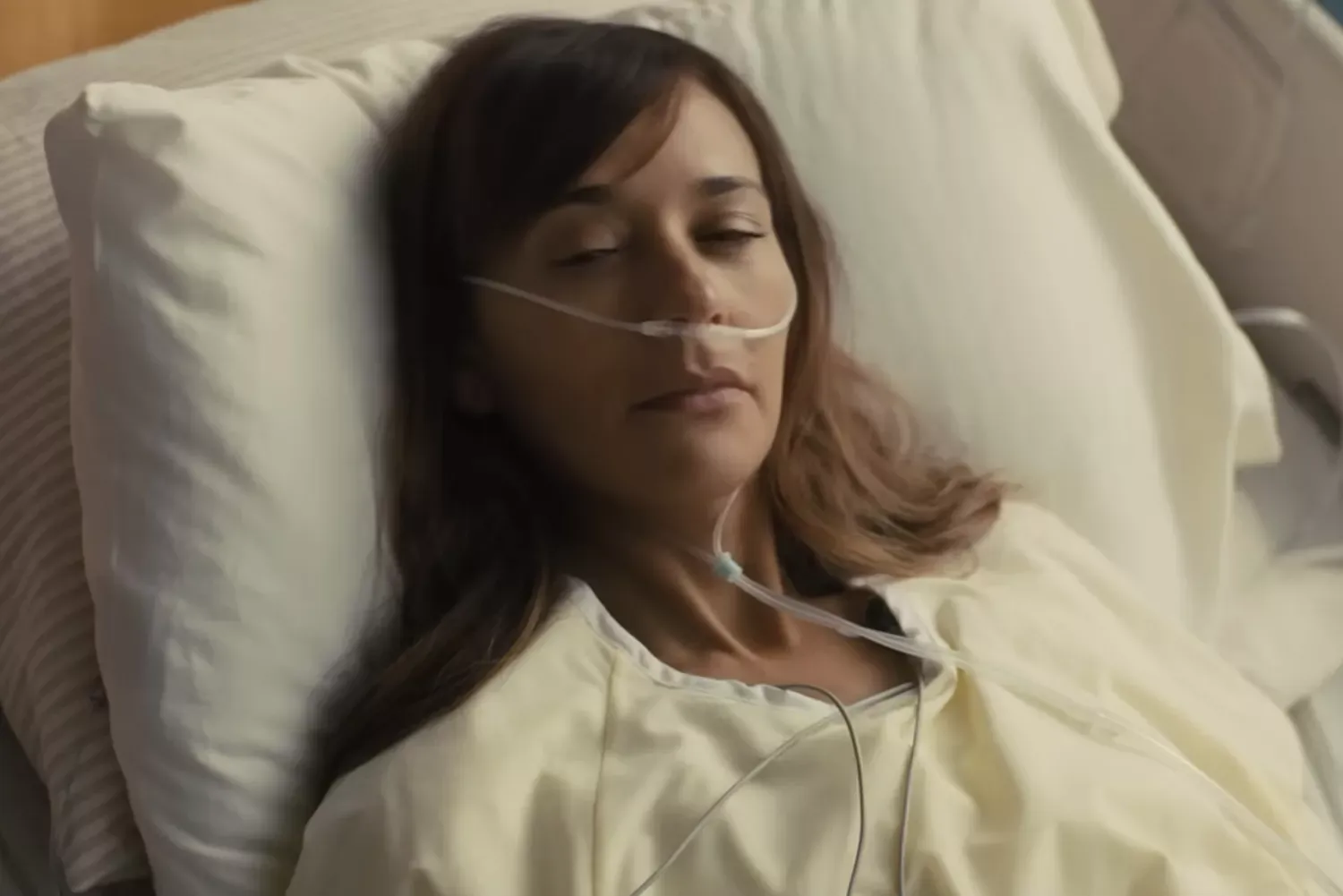
When Amanda's functionality begins to suffer as Rivermind saps lower-tier services to benefit its higher-priced services (and the product's fee balloons beyond the couple's ability to pay), Mike indulges in fleeting moments of happiness with his wife via purchasing brief Rivermind boosters that offer Amanda control over select heightened senses for a limited amount of time — essentially, a gift card that lets her live a "normal" life for a short time (Nolfi, 2025).
As the story progresses, Rivermind introduces subscription tiers without fully communicating their implications to the couple, causing Amanda to begin speaking advertisements without her knowledge. Due to the couple’s financial situation, they cannot afford the higher subscription tiers that would eliminate the advertisements. As a result, Amanda begins unexpectedly reciting inappropriate advertisements in front of children at work, creating problems that affect both her professional life and sense of control over her own body and treatment.
The company introduces an app that can alter the user’s mood and abilities, blending advanced technology with accessibility by placing these functions directly at the user’s fingertips, but for an extra charge.
Dial it up or dial it down. Take control of your mood with the Rivermind app. And with the exclusive Rivermind Lux Ability Browser, you can use skills and attributes sourced from other Rivermind users (Brooker, 2025, 20:00).
This demonstrates that solving a medical problem does not necessarily make a solution accessible if the financial demands of using it exclude certain patients. Medical innovations should be designed to be ethically accessible, ensuring that the benefits of new technologies are not limited only to those who can afford them. In my capstone work with Battelle, this reinforces the importance of considering affordability and accessibility alongside the functionality and innovation of medical products and services. This is important when designing for rural and remote communities where limited healthcare resources and financial barriers may make expensive medical technologies even more difficult to obtain or maintain.
References:
Brooker, C. (Creator). (2025, April 10). Common People (Season 7, Episode 1) [TV series episode]. In Black Mirror. Netflix.
Nolfi, J. (2025, April 10). Black Mirror creator explains ending of “Common People” episode starring Rashida Jones, Chris O’Dowd: “Particularly chilling.” Entertainment Weekly. EW.Com. https://ew.com/black-mirror-common-people-ending-explained-11711717
AI was used to check grammar in this reflection.



