
Bridging the Border Wall With Art


In a world that is becoming more and more divided by the day seemingly, the job of remarrying those who have been torn apart due to social, political, or physical barriers falls to artists and designers. Exploiting moments of intervention in everyday life is one of the most immediate and impactful ways to spark conversation about even the toughest subjects. This installation at the border wall that divides Mexico and the United States gives citizens of each country to view each other as equal and with the same human values.
The art project, which has been a media sensation, is the work of architecture studio Rael San Fratello, a partnership between San Jose State interior design faculty member Virginia San Fratello and UC Berkeley architecture professor Ronald Rael, author of the 2017 book Borderwall as Architecture: A Manifesto for the U.S.-Mexico Boundary.
Ten years in the making—the duo drew up conceptual sketches for the project in 2009—the piece was inspired by the Secure Fence Act of 2006. It features three pink seesaws, which are installed between the slats on the border fence, which allow people on either side of the border to see one another.
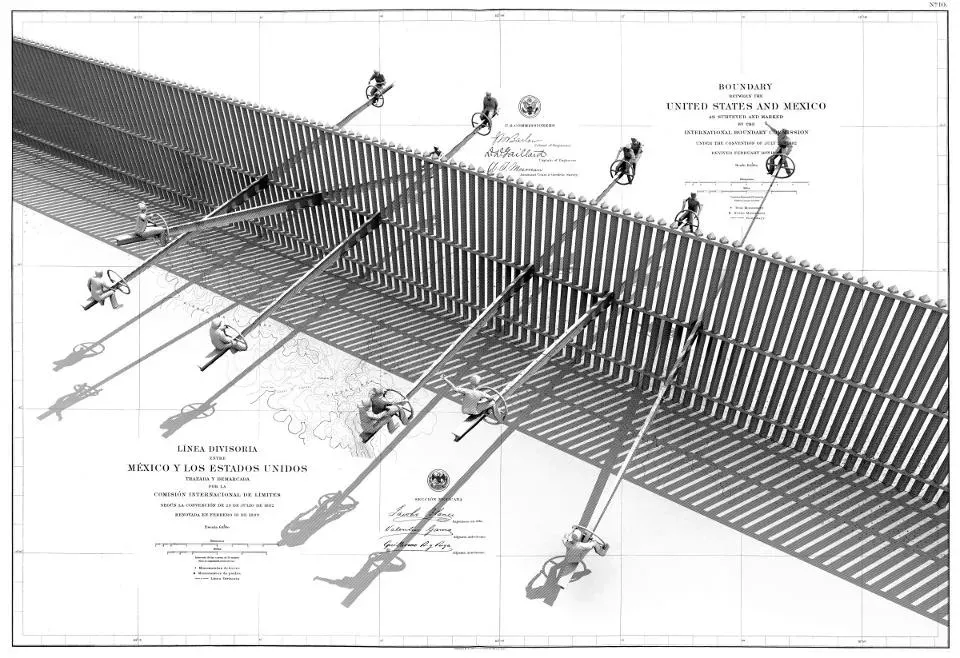
In contrast to heart-wrenching scenes at the border that have filled the news in recent years, the unveiling of Teeter-Totter Wall, in the El Paso suburb of Sunland Park, New Mexico, was a joy-filled occasion. Overseen by Mexican soldiers and US Border Patrol agents, families on both sides gathered to play during the temporary installation, which lasted about a half an hour.
This intervention at the border wall forces the participation of two individuals to partake in the activity and then asks them to sit directly across from each other and look at one another. To peer through the cracks of the border wall must be a profound experience where you are looking at someone who is being blamed for troubles in your country.
The way two people are able to look at each other and form new perspectives on how they might be feeling or thinking about themselves and about those on the other side of the wall creates a moment of contemplation that can spark meaningful conversations that move society forward. One could argue that a similar divide exists in the environment of the car from the front to the back row and creates two different experiences that often times, the parties involved only get to experience one of the two. So, there must be a way to connect that experience gap and force front row passengers to understand what its like in the back row and for the back row to know what it's like in the front.
References
Cascone, S. (2019, July 30). Artists Briefly Bridge the US-Mexico Border With a Heartwarming Seesaw Linking Kids in Both Countries. news.artnet. https://news.artnet.com/art-world-archives/us-mexico-border-teeter-totter-wall-1612897



