
Building a Business on Waste
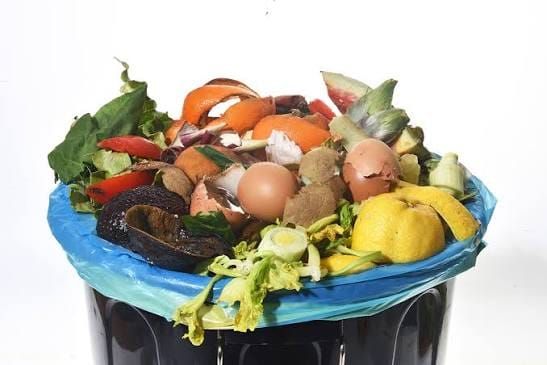
“Industrial symbiosis (IS) is a collaborative approach concerning physical exchange of materials, energy, and services among different firms: accordingly, wastes produced by a given firm are exploited as inputs by other firms. This approach is able to generate economic and environmental benefits at the same time, the former for the involved firms and the latter for the collectivity as a whole. For these reasons, the implementation of IS is largely recommended. However, despite its huge potentialities, the IS approach seems to be actually underdeveloped and not fully exploited. Firms without any prior experience of IS exchanges suffer from lack of awareness about how to integrate the IS practice into their current business models and how to gain economic benefits from IS. Since the willingness to obtain economic benefits is the main driver pushing firms to implement the IS practice, this issue constitutes an important barrier to the development of new IS relationships.
For each model, we highlight how firms can create and get economic value from IS. Moreover, from the interaction among firms, each of them implementing its own business model, several business scenarios at inter-firm level can arise. These scenarios are also presented: for each of them, strengths and weaknesses are identified and a short case study is discussed. The identified models can be useful at the company level since they provide indications about how to integrate the IS approach within their current business model. (Fraccascia et al., 2016)
One of the areas that I thought was particularly interesting to explore within the Local Loops problem space was the business structures that would need to be in place in order to successfully allow for the waste of one company to be another company's resource. The article provides an initial framework for how Marble Plastics could enter into this circular economy and explore outside of their own internal process. While a circular economy does seem like there is little downside and it should be implemented everywhere, there are barriers that stop it from being implemented successfully. A hurdle that often stops companies is the lack of knowledge on how to properly integrate this process into their existing business models. This is one of the challenges that could be faced by Marble Plastics because even if there is a use for the material, it must also make sense economically and operationally.
References:
Fraccascia, L., Magno, M., & Albino, V. (2016). Business models for industrial symbiosis: A guide for firms. Procedia Environmental Science, Engineering and Management, 3(2), 83–93.



