
Cala Health kIQ

Looking at automated and assistive medicines, this therapy device allows for non-invasive procedures to alleviate stress in patients. While smartwatches and rings have become prevalent in tracking health levels such as heart rate and REM sleep, this device allows for the user to get treatment on the spot.
At Cala, we’re working to free people from the burden of chronic disease. We began by creating the first non-invasive prescription therapy for hand tremor. After years of careful fine-tuning and improvements, we released Cala kIQ — our most sophisticated therapy yet. Our products have empowered thousands of people to get back to their lives with confidence and ease (About Us, n.d.).
But we won’t stop there. Our pioneering technology can be applied across neurology, cardiology, and so much more. It’s all part of our mission to help people in their struggle with chronic disease (About Us, n.d.).
"Individualized for you" -Cala Health.
Meet Cala kIQ — the only FDA-cleared, wearable device that delivers effective therapy for action hand tremor in people with essential tremor and Parkinson’s disease (About Us, n.d.).
The Cala kIQ™ System with TAPS™ therapy delivers transcutaneous afferent patterned stimulation. The device is physician prescribed and clinically proven to reduce your action hand tremors (About Us, n.d.).
Essential tremor is a common neurological condition that causes an uncontrollable shaking, often in the hands. It can deeply impact daily life, making everyday activities such as eating, dressing, or enjoying a cup of coffee difficult (About Us, n.d.).
When medications aren’t meeting your needs, the Cala kIQ™ system with TAPS™ therapy may be the next step. It can safely be used with common medications — in the moments when you need relief from tremor (About Us, n.d.).
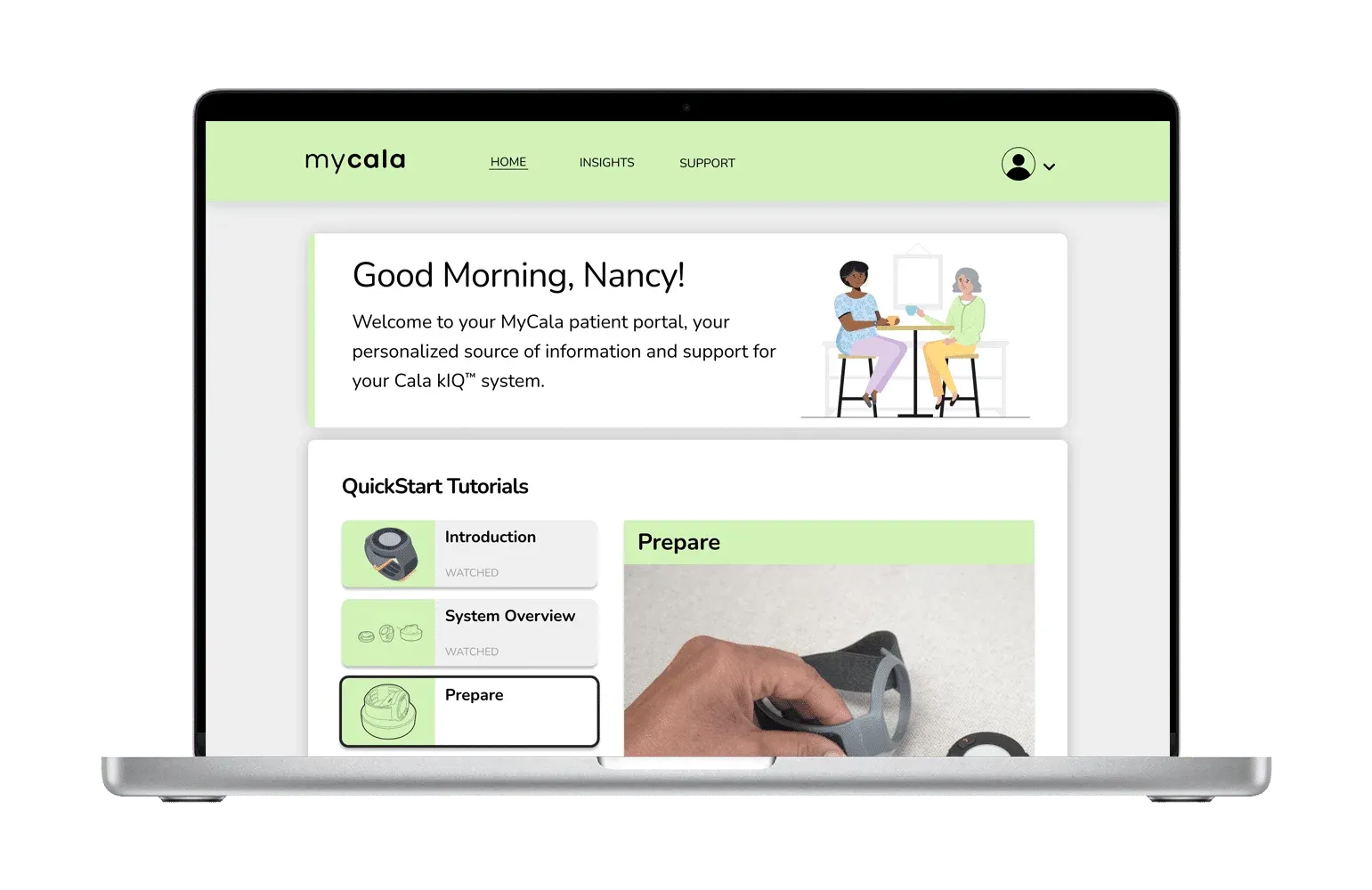
See your secure therapy data on the MyCala.com patient portal (About Us, n.d.).
When you first wear the device, it will sense your unique tremor signature and deliver individualized therapy. The therapy counteracts the tremor noninvasively, through the nerves that run from your wrist to your brain (About Us, n.d.).
This treatment method would be greatly beneficial for people who cannot frequent doctors to obtain treatment, lessening the burden of remote living for healthcare. Unfortunately, such treatments are not capable of healing, only of lessening chronic pain in interval time periods.
Essential tremor is a neurodegenerative condition, which means it could worsen over time. Some people with essential tremor may find that eventually, their tremor requires invasive surgical options, such as deep brain stimulation, in order to relieve the burden on daily life (About Us, n.d.).
This pushes me to consider how personalized devices could allow for optimized health tracking on the onset stages of a degenerative disease. Reducing one-on-one professional treatment could also directly reduce financial burdens on the patients, a critical factor for remote and rural living where poverty conditions are high. The relief the patient feels might improve their quality of life and could be an interesting pathway to take for my capstone.
References:
About us. (n.d.). Cala kIQ. Retrieved September 9, 2026, from https://calahealth.com/about-us/
AI was used to check grammar in this reflection.



