
Can Red Light Reduce Light Pollution?
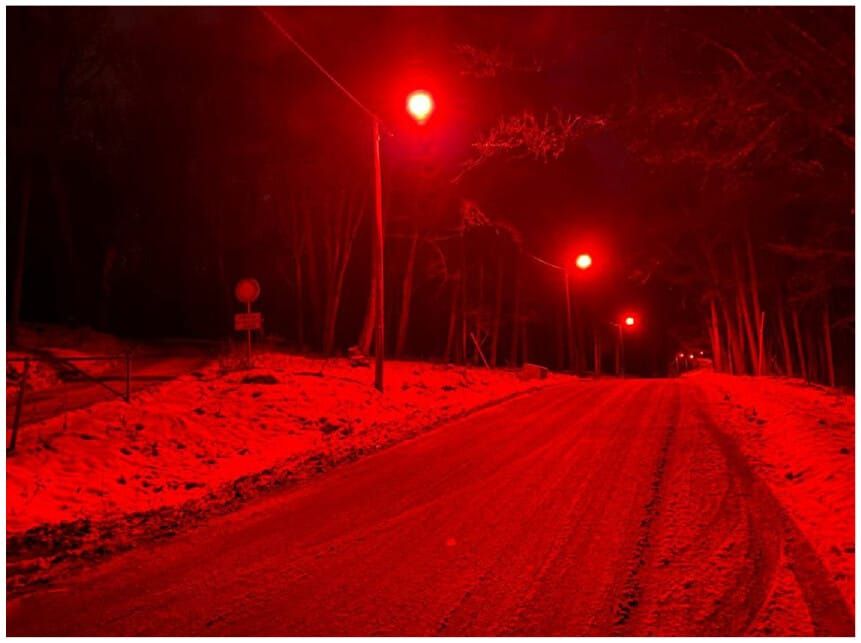
The article “Research note: Red light to mitigate light pollution: Is it possible to balance functionality and ecological impact?” by D Durmus, AK Jägerbrand and MN Tengelin, examen whether using red light outdoors is actually a good way to reduce light pollution while still providing enough light for people. The article explains that artificial light at night can harm ecosystems and affect human sleep patterns, so researchers are looking for better lighting solutions.
Red light has become one possible option because it “scatters less in the atmosphere compared to light of other wavelengths,” which can help reduce skyglow. It can also have less of an effect on melatonin and may help people maintain their night vision. Because of these benefits, red lighting has been considered especially useful around wildlife, including bats. However, the article points out that red light is not a perfect solution for wildlife.
“Red light is hypothesized to induce less sky glow and glare along with a reduced impact on insects and bats in comparison to white light, making it a potentially effective approach for mitigating light pollution. However, its benefits and potential ecological advantages need further examination in the context of challenges arising from lighting design functionality and broader ecological impacts on other species.”
"Light at longer wavelengths, that is perceived as red by most humans, scatters less in the atmosphere compared to light of other wavelengths, potentially reducing skyglow. . . Red light minimally suppresses melatonin, often referred to as a sleep-regulating hormone, resulting in less disruptive effects in wildlife and human circadian rhythms.
“Even though animals, such as arachnids, insects, amphibians, reptiles, birds and mammals, do not have their peak spectral sensitivity in the long wavelength range, they can still detect red light.14 For example, red light can disrupt the magnetic orientation of migratory birds, leading to disorientation and behaviors such as circling around the light source, which may increase the risk of collisions.”
“Despite its potential benefits, the use of red light offers limited design functionality for humans. Narrowband red light provides poor color rendering, which can hinder accurate object identification including faces, potentially affecting perception of safety and security, compromising visual acuity, clarity and color discrimination by reducing the local contrast in the visual environment…Red light has been shown to reduce subjective evaluations of spaces, such as visual comfort and spaciousness."
Different bat species react to red light differently, with some avoiding it while others may actually be attracted to it. The article warns that “the large variability in the response of bats to red light” means that its effects can depend on the species and environment. Red light can also affect other animals, including birds, insects, amphibians, reptiles, and mammals. The article also discusses problems with using red light for humans because it provides poor color recognition, making it harder to identify objects, faces, and surroundings. This could potentially affect how safe people feel in outdoor spaces. The researchers therefore argue that red light should not automatically be treated as the best solution to light pollution. Instead, they suggest that “very little or no light is more beneficial than red light in outdoors”. Overall, the article shows that reducing light pollution is more complicated than simply changing the color of outdoor lighting. Designers need to consider human safety, visibility, energy use, wildlife, and the specific environment before choosing a lighting solution.
References
Durmus, D., Jägerbrand, A., & Tengelin, M. (2024, January 20). Research note: Red light to mitigate light pollution: Is it possible to balance functionality and ecological impact? - D durmus, AK Jägerbrand, MN Tengelin, 2024. Sage Journals. https://journals.sagepub.com/doi/10.1177/14771535231225362
Grammarly. (n.d.). https://www.grammarly.com/
Shiller, D. (2024, February 21). Researchers find red lights outdoors for wildlife protection comes with potential risks |. LightNOW. https://www.lightnowblog.com/2024/02/researchers-find-red-lights-outdoors-for-wildlife-protection-comes-with-potential-risks/



