
Capped in Amber
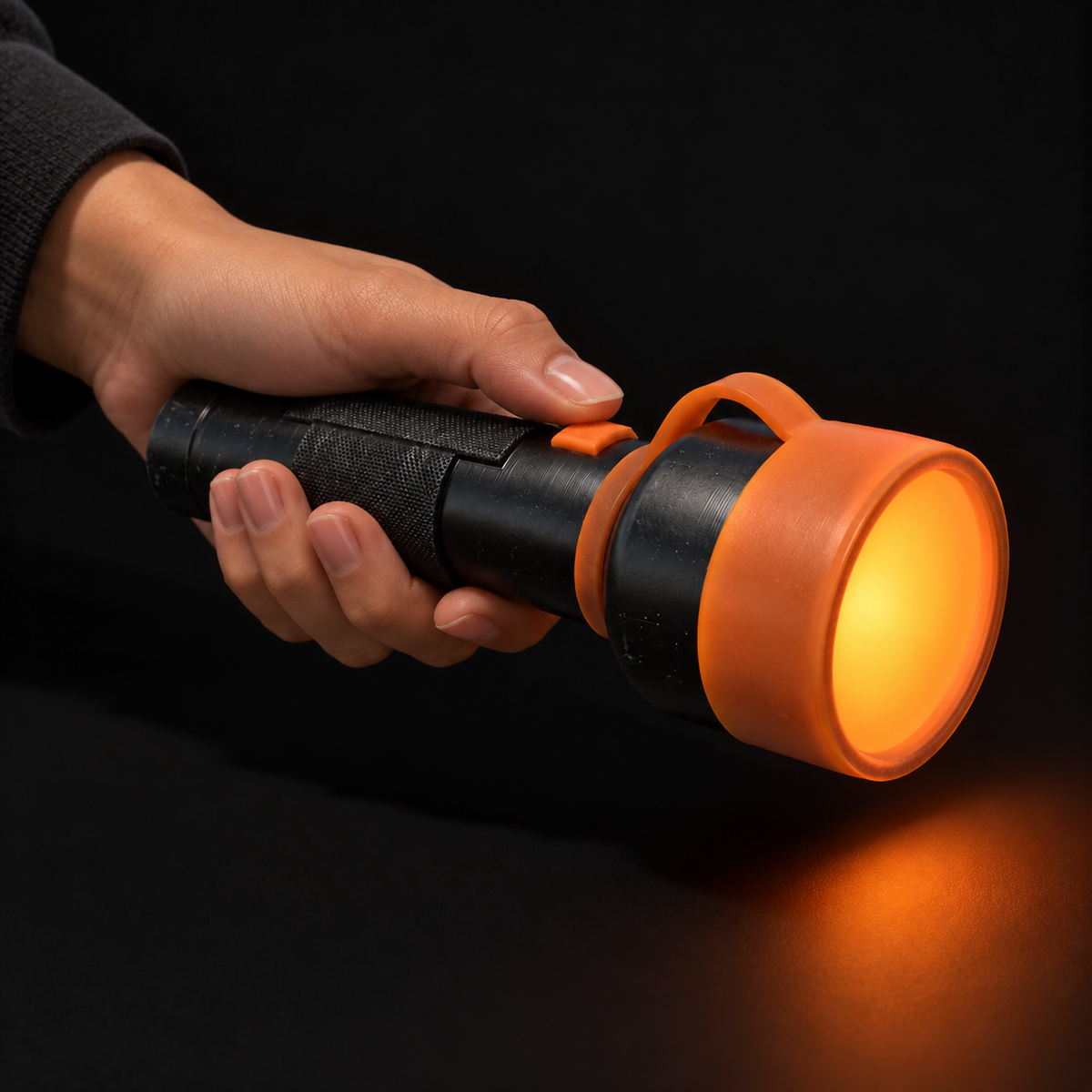
Through my conversations with Summer and my Science & Technology research I was able to gain insights that helped push me into coming up with this concept. Summer mentioned that many state parks have small shops where visitors can purchase basic necessities. She also explained that people can have difficulty breaking away from familiar routines, so instead of asking visitors to completely change their habits, I wanted to explore a small adjustment to something they already use. While attempting to recruit participants for my survey, I spent time observing activity at different campgrounds and noticed many RV campers using handheld flashlights while walking through dark areas at night. My survey supported this observation, with 21 out of 28 participants reporting that they carry a personal flashlight when visiting state parks. This showed me that flashlights are already a familiar and established behavior. Instead of creating an entirely new product, I began exploring an attachment that could work with the flashlights people already own.
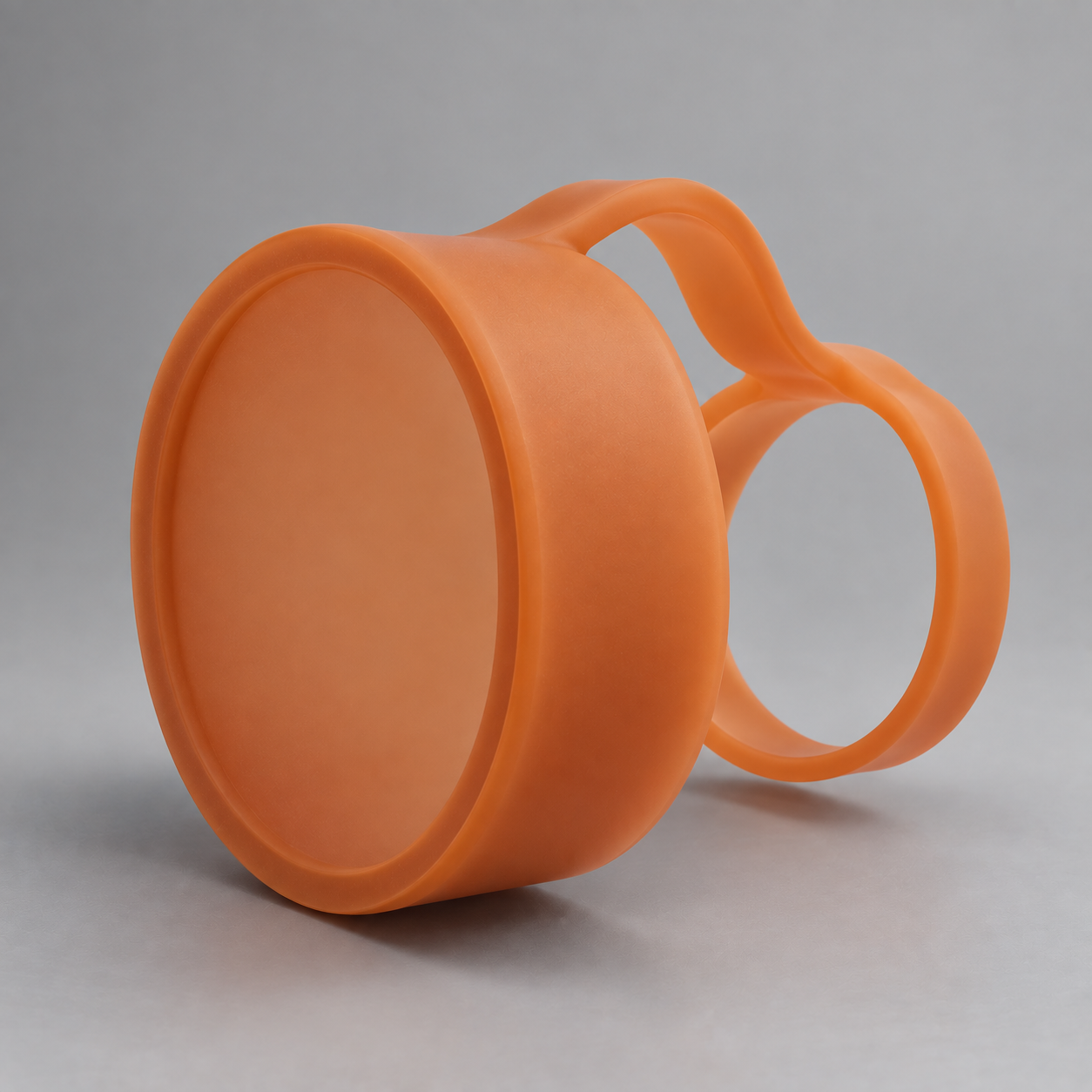
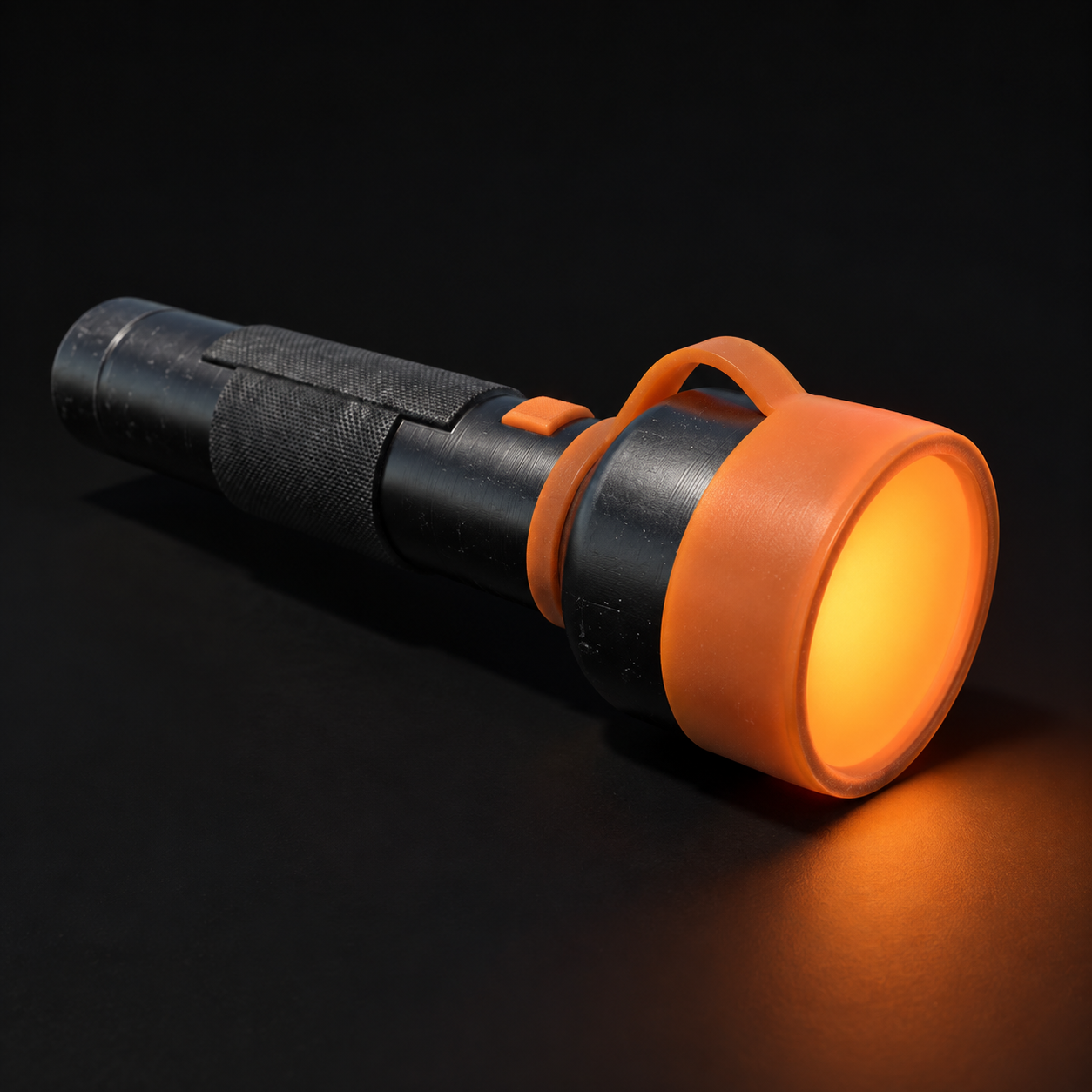
My concept is a stretchable orange silicone cap that fits over the head of different flashlights and changes the bright white LED light into a softer amber-orange light (Flagstaff Dark Skies Coalition, n.d.). It has a small circular ring that can fit around the handles of the flashlight. This way the user wont loose the cap when its being stored away. The goal is to make a small change to an existing behavior rather than asking visitors to learn something completely new. The cap could be sold directly in park stores, making it easy for visitors to purchase and use during their stay. This direction also connects to my research on light pollution, including the articles “Lamp Spectrum and Light Pollution” by the Flagstaff Dark Skies Coalition which discusses how the spectrum of outdoor lighting influences many aspects of light pollution. As well as the article “Research note: Red light to mitigate light pollution: Is it possible to balance functionality and ecological impact?” by D Durmus, AK Jägerbrand and MN Tengelin, examen whether using red light outdoors is actually a good way to reduce light pollution while still providing enough light for people. All of which helped me consider how the color and spectrum of artificial light can affect nighttime environments.
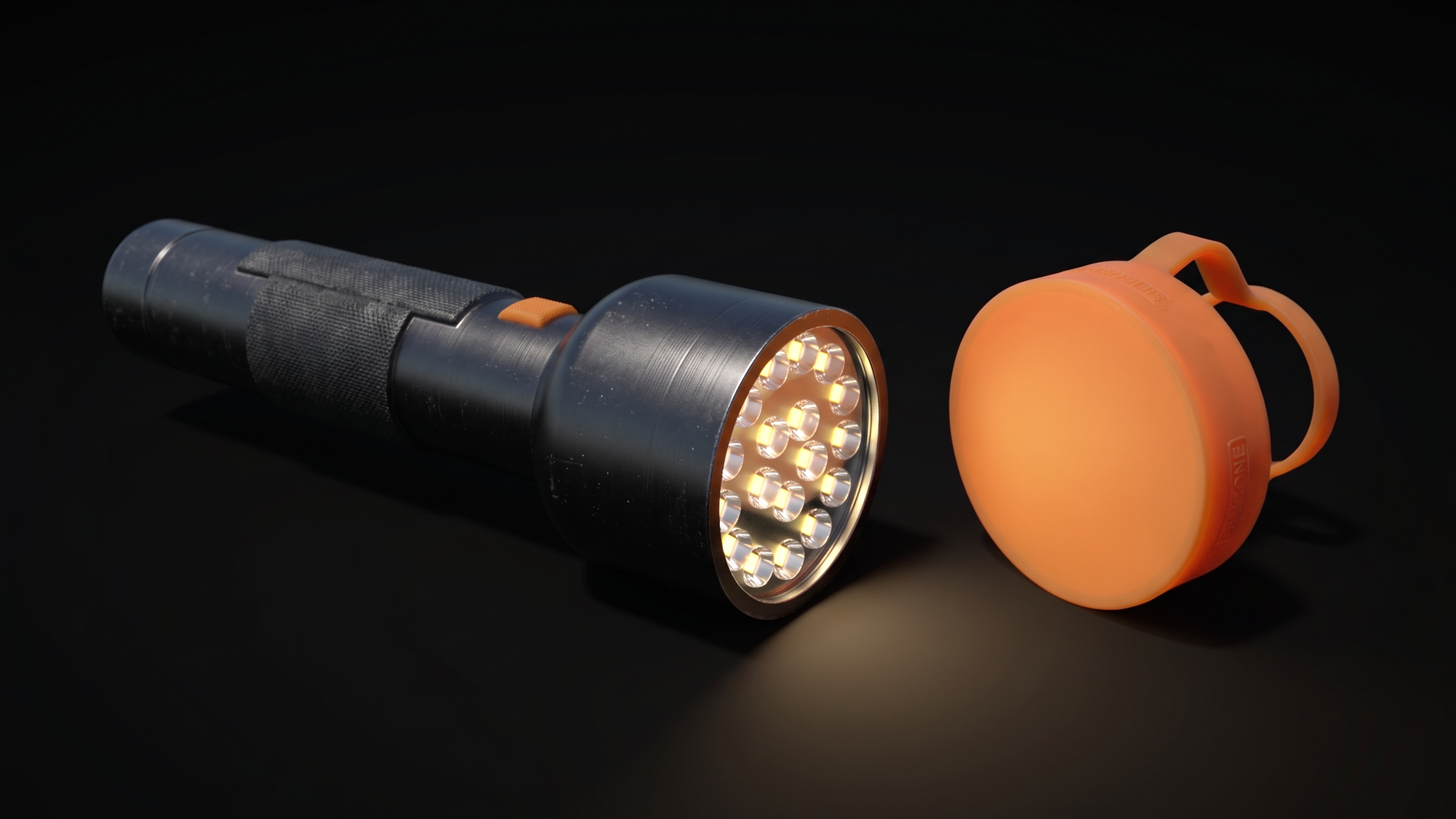
However, there are still several things I need to investigate. The silicone would need to be durable and flexible enough to stretch over different flashlight sizes without tearing or becoming loose. This could mean developing multiple sizes to accommodate different flashlight designs. More importantly, the product cannot simply change the color of the light, it still needs to provide enough visibility for visitors to safely navigate their surroundings. This raises concerns about how reddish lighting can affect visual performance (Flagstaff Dark Skies Coalition. n.d.)). This means the final design would need to find a balance between visitor visibility, comfort, and reducing the impact of artificial light on the nighttime environment.
References
Grammarly. (n.d.). https://www.grammarly.com/
Lamp Spectrum and Light Pollution. Flagstaff Dark Skies Coalition. (n.d.). https://flagstaffdarkskies.org/critical-dark-sky-issues/lamp-spectrum-light-pollution/
Shiller, D. (2024, February 21). Researchers find red lights outdoors for wildlife protection comes with potential risks |. LightNOW. https://www.lightnowblog.com/2024/02/researchers-find-red-lights-outdoors-for-wildlife-protection-comes-with-potential-risks/



