
Cleveland Clinic: Most Men in Florida Are Skeptical of Health Advice from Social Media and AI

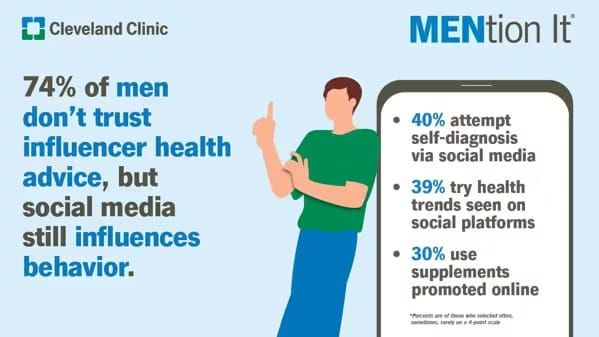
“The survey is part of Cleveland Clinic’s 11th annual MENtion It® campaign, which aims to encourage men to talk more openly about their health. This year’s focus examines the role of social media trends and online influencers, while looking at areas that included myths and misconceptions around male fertility and testosterone use, the influence of social media on health decisions, and how men are approaching their overall health and well-being” (Cleveland Clinic, 2026).
Social media has definitely impacted how I view fitness and my health. I wonder if there could be a social media-formatted way to share health knowledge that is correct, and still shared and viewed by as many people as typical influencers.
“The statewide survey of 402 Florida men ages 18 and older found that, while most men remain skeptical of health information on social media, what they see online can still influence real-world health decisions. While only 16% follow or try health advice from social media users, most men (81%) rarely or never follow or try health or medical advice from influencers who are not healthcare professionals” (Cleveland Clinic, 2026).
“One-fifth have attempted to self-diagnose based on information found on social media, and 23% have tried new diets or wellness trends after seeing them on social media. Additionally, 17% report obtaining supplements or medications they saw online without first consulting a healthcare professional.
These findings indicate that social media can motivate men (67%) to improve their health, but it can also have negative effects. Nearly half (46%) say they feel concerned about their health after seeing health-related content on social media, while 31% compare their bodies, fitness levels, or overall health to others online” (Cleveland Clinic, 2026).
The findings showing that social media can impact men to improve their health is a good thing in my opinion, as it shows the general population wants to be healthy. I wonder if overall the impacts have been positive, or if not much action has actually been taken.
“Despite these pressures, most men still prefer to place their trust in doctors and healthcare professionals over AI when it comes to health advice. Only 15% of men trust that AI would provide proper guidance if they asked questions about sexual health, while just 7% would choose AI over a healthcare professional for sexual health issues because of its convenience.
‘We learned that despite the myths and misconceptions surrounding men’s health, men still trust the media and even AI for health information,’ said Dr. Ritch. ‘This presents an opportunity to continue developing resources, like Cleveland Clinic’s campaign, that raise awareness around men’s health. Increasing awareness is an important first step toward encouraging men to take a more proactive approach to their health’” (Cleveland Clinic, 2026).
I found this article to be positive, I did not suspect that so many men would not be following social media advice. At the same time, I wonder if this would cause distrust in real telehealth solutions. Campaigns will have a hard time if even relatable influencers are not able to communicate ideas, so maybe a strong partnership between the two could help.
References
Cleveland Clinic. (2026, September 1). Cleveland Clinic: Most men in Florida are skeptical of health advice from social media and AI. Cleveland Clinic Newsroom. https://newsroom.clevelandclinic.org/2026/09/01/cleveland-clinic-most-men-in-florida-are-skeptical-of-health-advice-from-social-media-and-ai
No generative AI was used in writing this article.



