
Creating Shared Experiences Through Virtual Reality
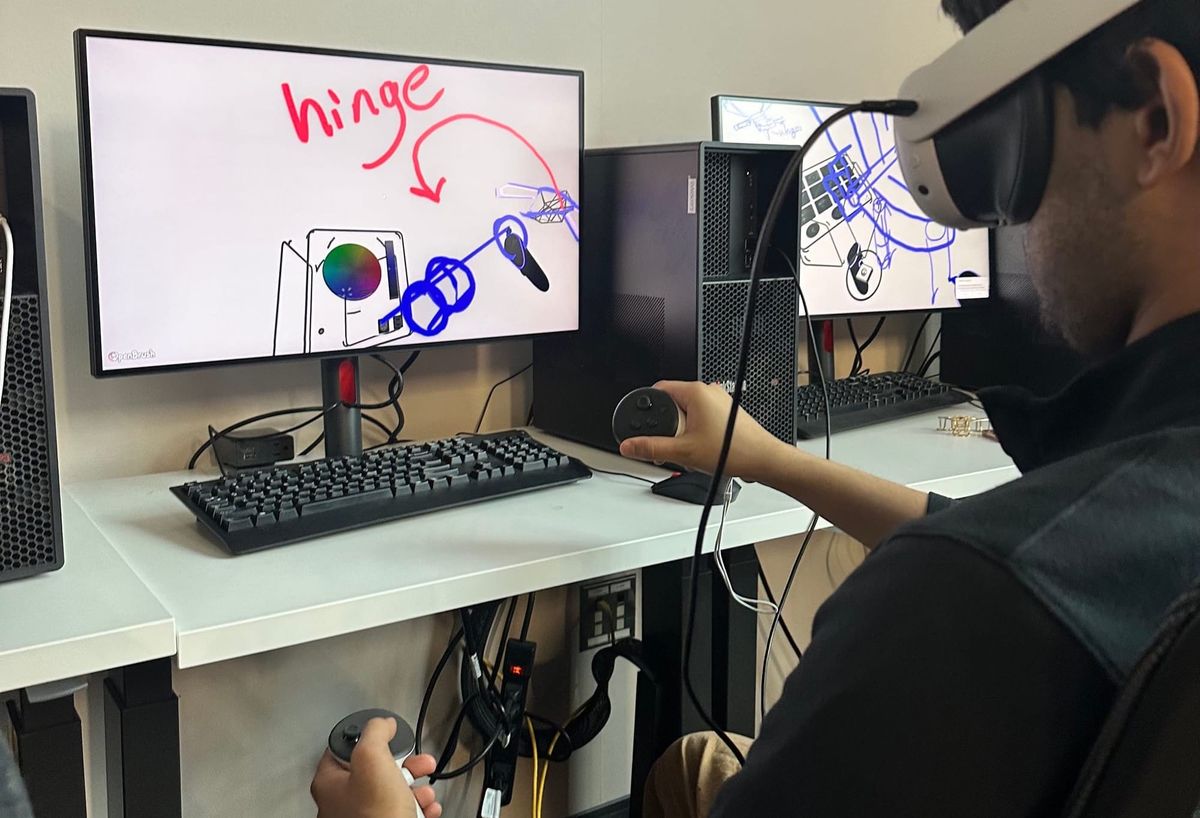
VR has opened our eyes to what's possible with technology.
Virtual reality has changed a lot over the years and has become more than just something used for gaming and entertainment. VR allows people to enter a digital environment and feel like they are actually part of the experience instead of only watching it through a regular screen. As the technology continues to develop, it is also being used in different areas like education, healthcare, architecture, travel, and entertainment. (Cross, 2024).
What makes virtual reality different from other types of technology is how immersive the experience can feel. It can use things like visuals, sound, and movement to make people feel more involved with what they are experiencing.
This article talks about the development of virtual reality and how it can create environments that feel interactive and realistic (Cross, 2024).
VR creates environments, experiences and interactions that look and seem real. When they wear a VR headset, users are transported into a three-dimensional, interactive world that can be explored and manipulated. This digital environment is designed to engage multiple senses, including sight, sound, touch and movement (Cross, 2024).
It’s important to understand how VR began to see how far we’ve progressed. Today, we are seeing a resurgence when it comes to VR, as it certainly has seen its fair share of up-and-down moments (Cross, 2024).
In 1968, Ivan Sutherland introduced the world to what is commonly considered the first head-mounted augmented reality display, known as "The Sword of Damocles." This groundbreaking invention laid the foundation for the virtual reality devices we use today (Cross, 2024).
Over the decades, tech advancements have accelerated the development of VR. In the 1980s and 1990s, companies like Sega and Nintendo developed VR gaming systems, albeit generally with limited success. It wasn't until the 2010s when companies like Oculus and HTC Vive introduced high-quality VR headsets that leveraged powerful graphics and motion tracking technology (Cross, 2024).
VR cinema is all about immersive experiences that can be brought to life in existing theaters. This innovative form of storytelling offers a unique and communal way to enjoy content, allowing participants to share the virtual space and collectively engage in the narrative journey—without having to spend thousands of dollars to experience VR (Cross, 2024).
Reflection
Reading this article made me realize how much virtual reality has developed over time and how it is being used for more than just gaming. I already knew about VR, but I mostly thought about it as something used for games and entertainment. I didn’t really think about how it could also be used for education, healthcare, architecture, travel, and other experiences.
I never knew about the idea of VR cinema and how multiple people can experience the same virtual environment together. I usually think of VR as more of an individual experience because everyone is wearing their own headset, but this showed me that it can also create a shared experience. I think it is interesting how technology can make people feel like they are somewhere completely different while still experiencing it together.
Reference
Cross, A. (2024, August 13). The evolution of virtual reality: Exploring the past, present and future. Forbes. https://www.forbes.com/councils/forbesbusinesscouncil/2023/11/09/the-evolution-of-virtual-reality-exploring-the-past-present-and-future/
Grammarly. (n.d.). https://app.grammarly.com/



