
Crucial Cleaning: How Proper Precautions Stop Invasives
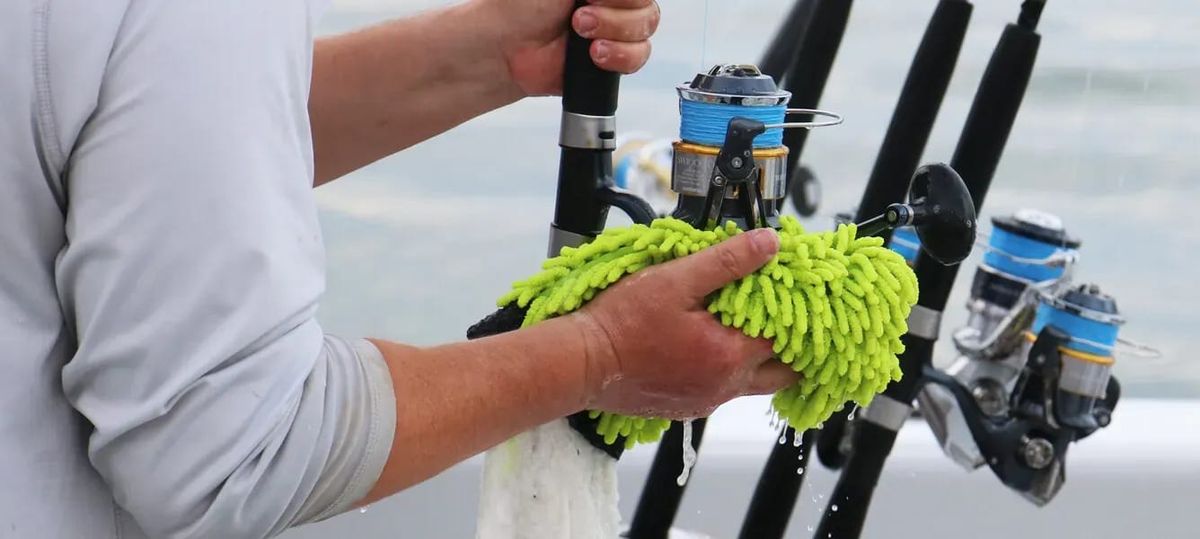
This article takes a look at fishing practices and how they can contribute to the overall spread of aquatic invasive species.
“The spread of aquatic invasive species (AIS) is an ongoing challenge in many places in North America, including the Great Lakes region. Large freshwater lake systems are particularly susceptible to AIS invasions because there are multiple pathways for introduction, including ballast water from large ships, disposal of unwanted baitfish, and movement of equipment by recreational users” (Connelly, 2016)
“Recreational users can distribute AIS in multiple ways. For example, Jacobs and MacIsaac (2007) found that fishing line fouled with diapausing eggs of fishhook waterflea Cercopagis pengoi, which can remain viable for weeks, was a potential source of introduction of this species to non-invaded lakes if the fishing line was not cleaned. Kelly et al. (2013) found that recreational boaters traveling into Lake Simcoe, Ontario, Canada could transport zooplankton (both native and invasive) in water-holding compartments in their boats as they moved to different locations within this large lake. They recommended frequent drainage of standing water in the boat to prevent AIS movement from one part of a waterway to another” (Connelly, 2016)
“Given the potential for AIS to be moved via recreational equipment, anglers can play a major role in the spread of AIS. For example, about half of the anglers surveyed in a southwestern Montana study reported that they only occasionally, rarely, or never cleaned their boots or waders between uses. In a recent survey in the United Kingdom, Anderson et al. (2014) found that 12% of anglers and 50% of canoeists who move their equipment, including boats, between basins did not either clean or dry them adequately between uses” (Connelly, 2016)
“Over 80% of anglers indicated they were aware of the rules and recommendations intended to prevent the spread of AIS. However, far fewer (45%) indicated a familiarity beyond basic awareness. Awareness of the rules or recommendations was strongly correlated with taking actions to prevent the spread of AIS. Those who were familiar with the rules and recommendations scored significantly higher on the AIS behavioral response scale than those who were aware of the regulations but did not know much about them “ (Connelly, 2016)
“Given that anglers were aware, knowledgeable, and concerned about AIS, it appears they do not have to be convinced of the value of taking actions to prevent the spread of invasive species. However, while many were taking actions such as inspecting their equipment and draining water-holding compartments before moving to a new water, there were other actions that were not taken by as many people nor as consistently. These actions include disinfecting, rinsing with hot water, or drying their equipment, which are actions that require more time and equipment, and, at least in New York State, recommendations about the best way to perform these actions differ. Those who found these actions easier to take and not too costly (i.e., had positive control beliefs) were more likely to always take them. Therefore, it appears that constraints such as time, money, and equipment are likely limiting factors” (Connelly, 2016)
Review
Contrary to many other situations involving invasive species awareness, a larger percentage of anglers expressed a decent level of awareness about poor practices in the context of spreading AIS. Part of this is due to a more surface level understanding as opposed to an in-depth understanding of what exactly happens and why during these spreading instances, but what is particularly interesting is the barrier of effort present in taking the proper precautions. Participants cited that disinfecting equipment, drying implements, and being mindful of responsible procedures usually resulted in better practices, marking a significant issue with how many anglers operate. This information could be integral in developing systems or infrastructure to provide anglers with the proper means to handle their equipment responsibly and significantly lower the spreading rates of AIS across the country.
References
Connelly, N. A. (2016, May 31). The role of anglers in preventing the spread of aquatic invasive species in the Great Lakes region - Sciencedirect. Science Direct. https://sciencedirect.com/science/article/pii/S0380133016300387



