
Design Conjecture: Invisible Projector
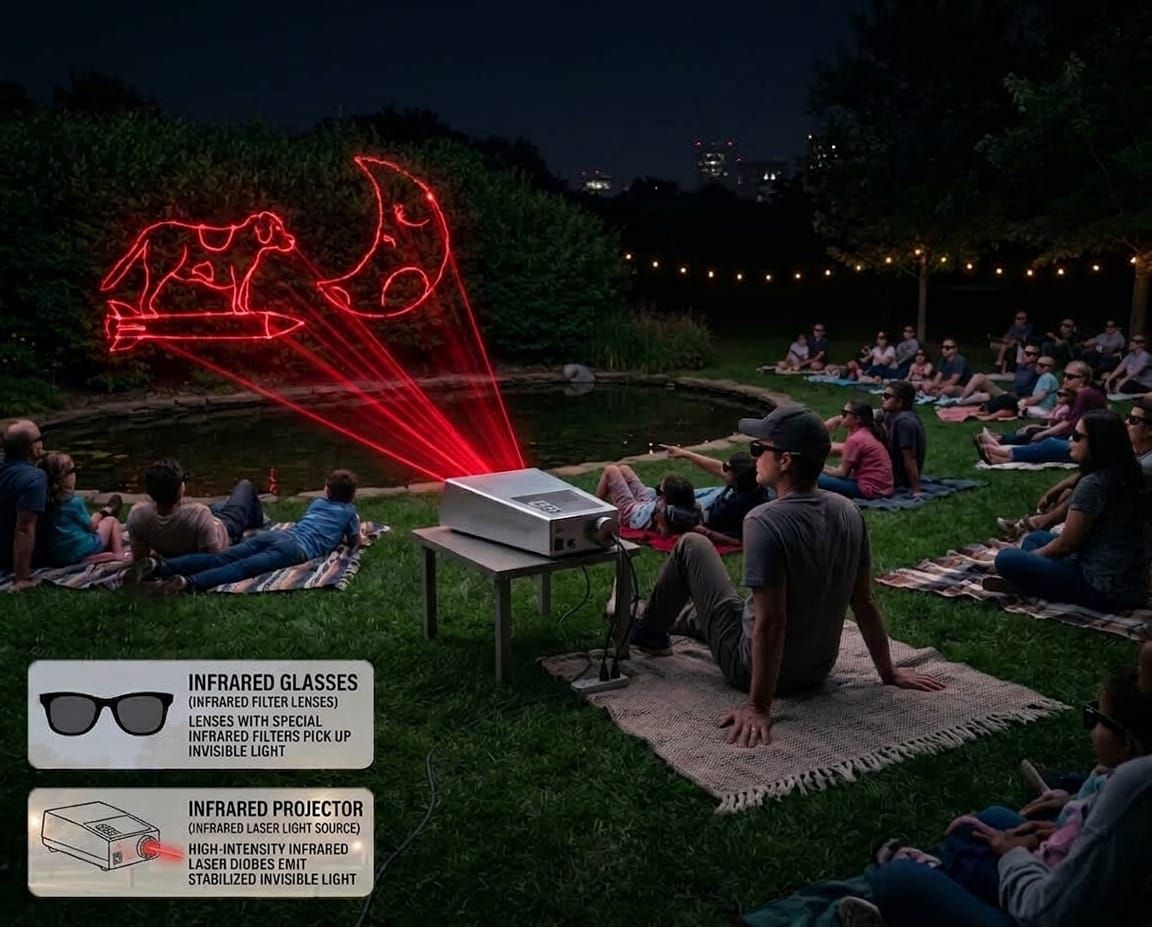
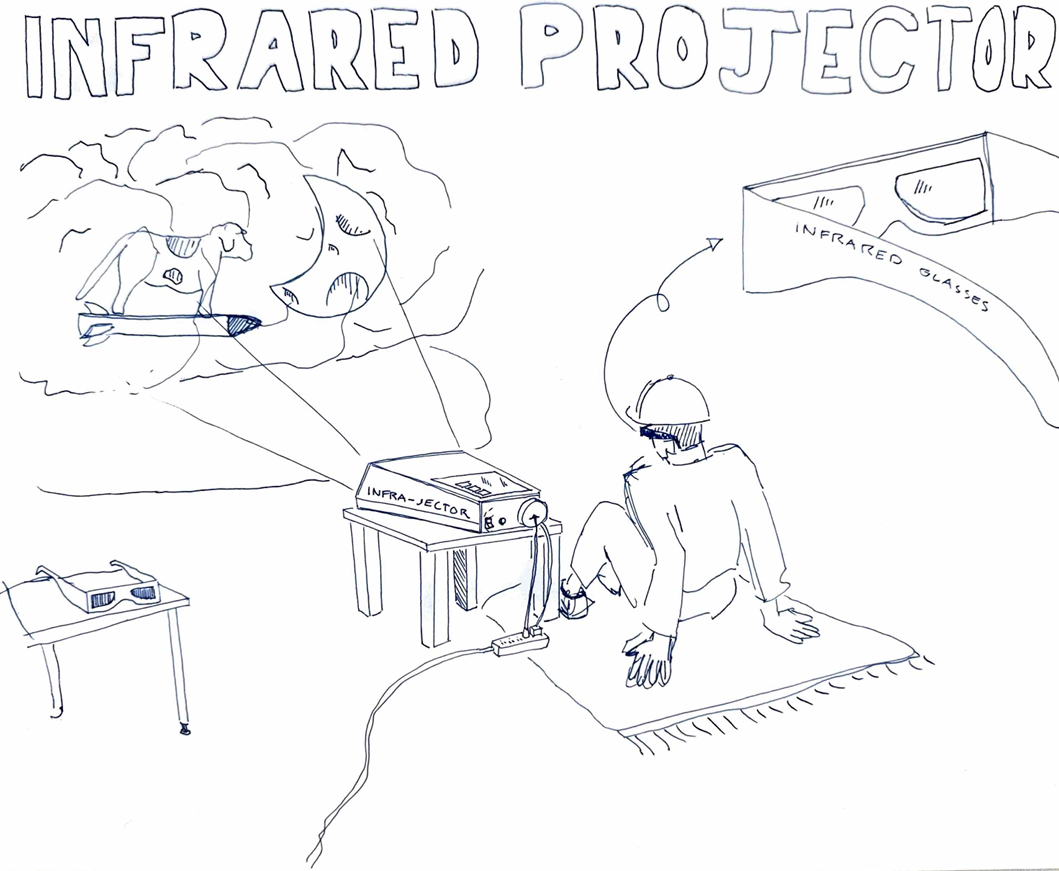
A significant drawback of entertainment events in public parks is the light and sound pollution generated by projectors, pyrotechnics, and other equipment. Beyond distracting from the night sky, this pollution disrupts nocturnal wildlife, interfering with foraging, mating, and migration behaviors that depend on natural darkness. An infrared projector offers a new alternative. Rather than emitting visible light, it projects using wavelengths outside the range most animals can detect, meaning the show itself leaves the surrounding ecosystem virtually undisturbed. Audiences experience the visuals through specially designed infrared glasses with filtered lenses.
This approach aligns closely with ODNR's dark sky objectives. Rather than treating entertainment and conservation as competing priorities, infrared projection lets parks host engaging evening programming without contributing to artificial sky glow or habitat disruption. It also stands as a meaningfully quieter, cleaner alternative to fireworks or drone shows, avoiding the debris, noise, and wildlife stress associated with those formats.
Infrared projection isn't truly harmless: many nocturnal insects and some mammals can detect near-infrared wavelengths, so "invisible" light may still disrupt behavior. The technology also requires costly specialized glasses for every viewer, limits audience size, and lacks the spectacle and shared communal impact that make fireworks and drone shows so popular. However, it serves as an example of a progressive idea that could change how entertainment is viewed.
Reference:
Vizcom. (2026). Vizcom (Sketch-to-render AI tool) [Image generation software]. https://www.vizcom.com



