
Designing New Possibilities With Living Materials
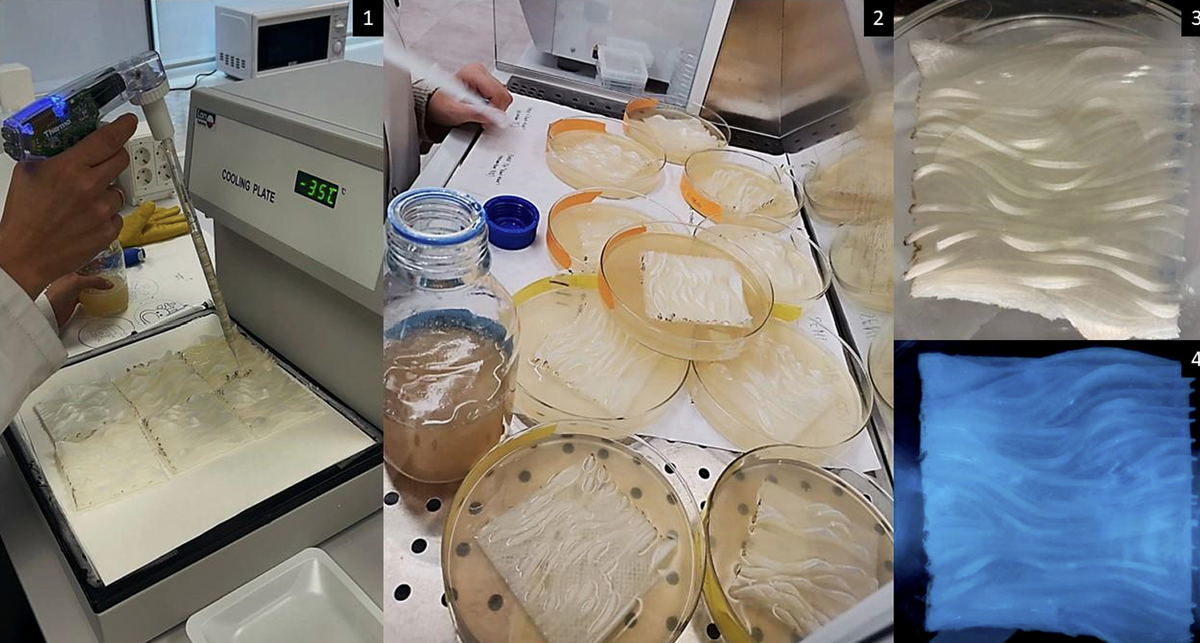
The article “BioLumCity: 3D-Printed Bioluminescent Urban Tiles” explores a new way to create light using living bacteria instead of traditional electric lights. The researchers used a type of marine bacteria called Aliivibrio fischeri which naturally produces light. They placed the bacteria inside specially designed 3D-printed tiles that act as a surface for the bacteria to live and grow. This was very interesting to read this case study, because i'm trying to figure out the possibilities we can take with using the invasive plant hydrilla. A resource that we have an abundance of. instead of just letting it take over we should try to think of ways to be resourceful and turn it into something innovative.
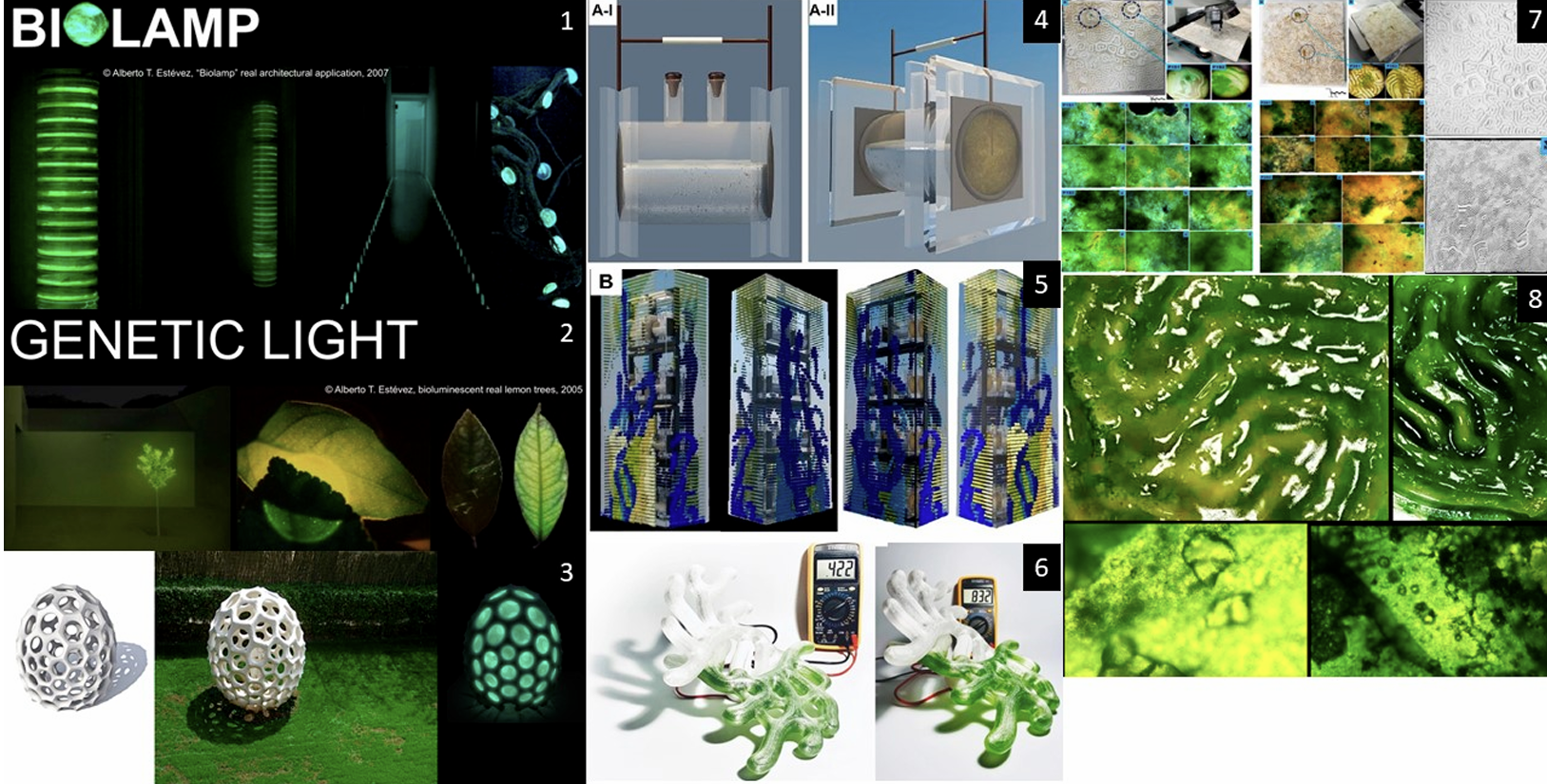
Aliivibrio fischeri CECT 524, a marine species found in temperate and subtropical waters [35], was employed as a naturally bioluminescent agent, as it is known for an intensity of its bioluminescence at ~490 nm in the blue–green range, as documented in the literature [22].
A. fischeri produces bioluminescence only when its cell density exceeds a critical threshold; therefore, the optimized media and scaffold design play crucial role in boosting culture viability, density, and bioluminescence behavior.
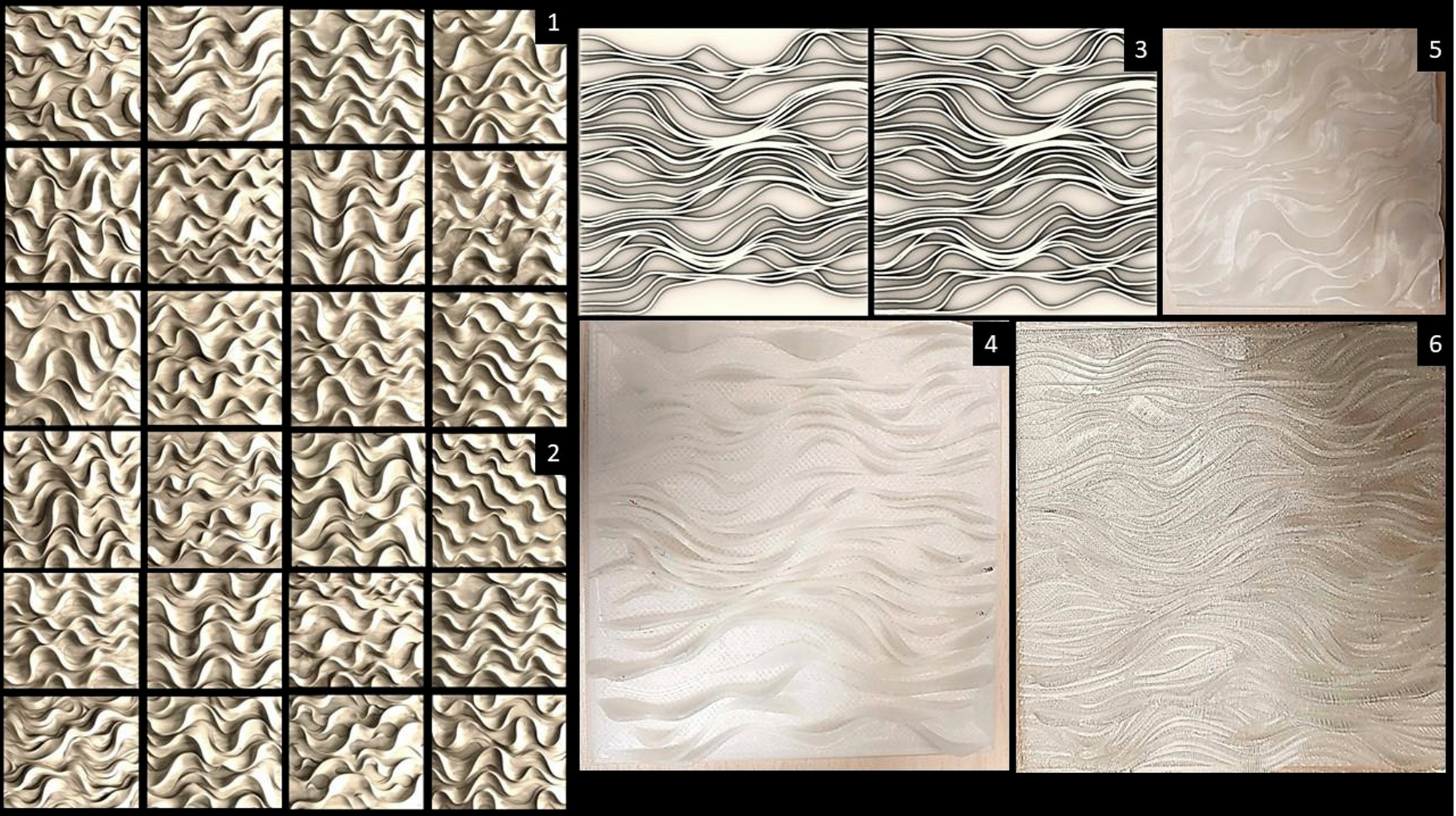
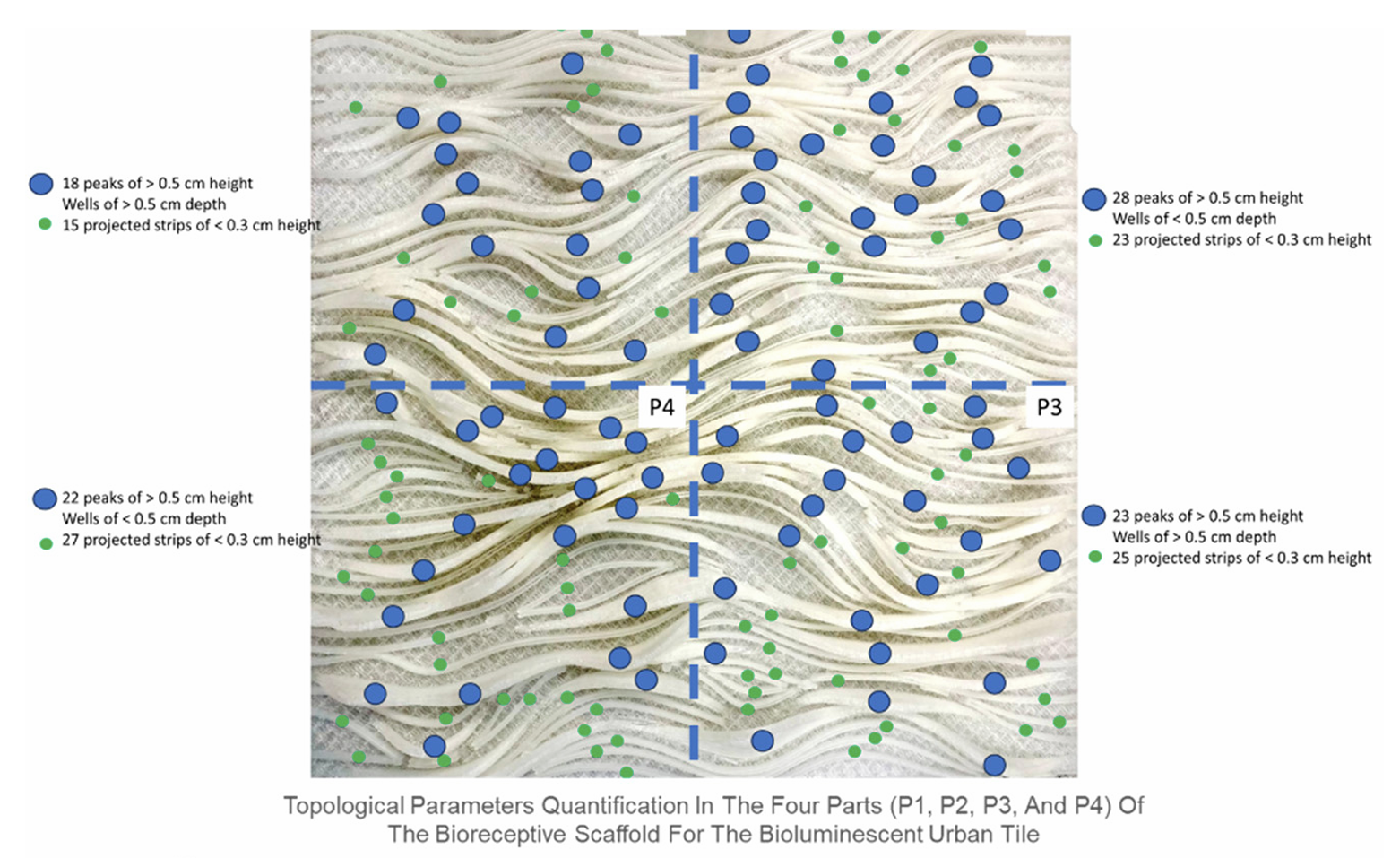
Therefore, this was reflected in the baroreceptive tile design, incorporating high peaks, projected strips, and wells, translating this field-based pattern into a baroreceptive scaffold that facilitates the anchorage of the bacterial cells without hindering their motility.
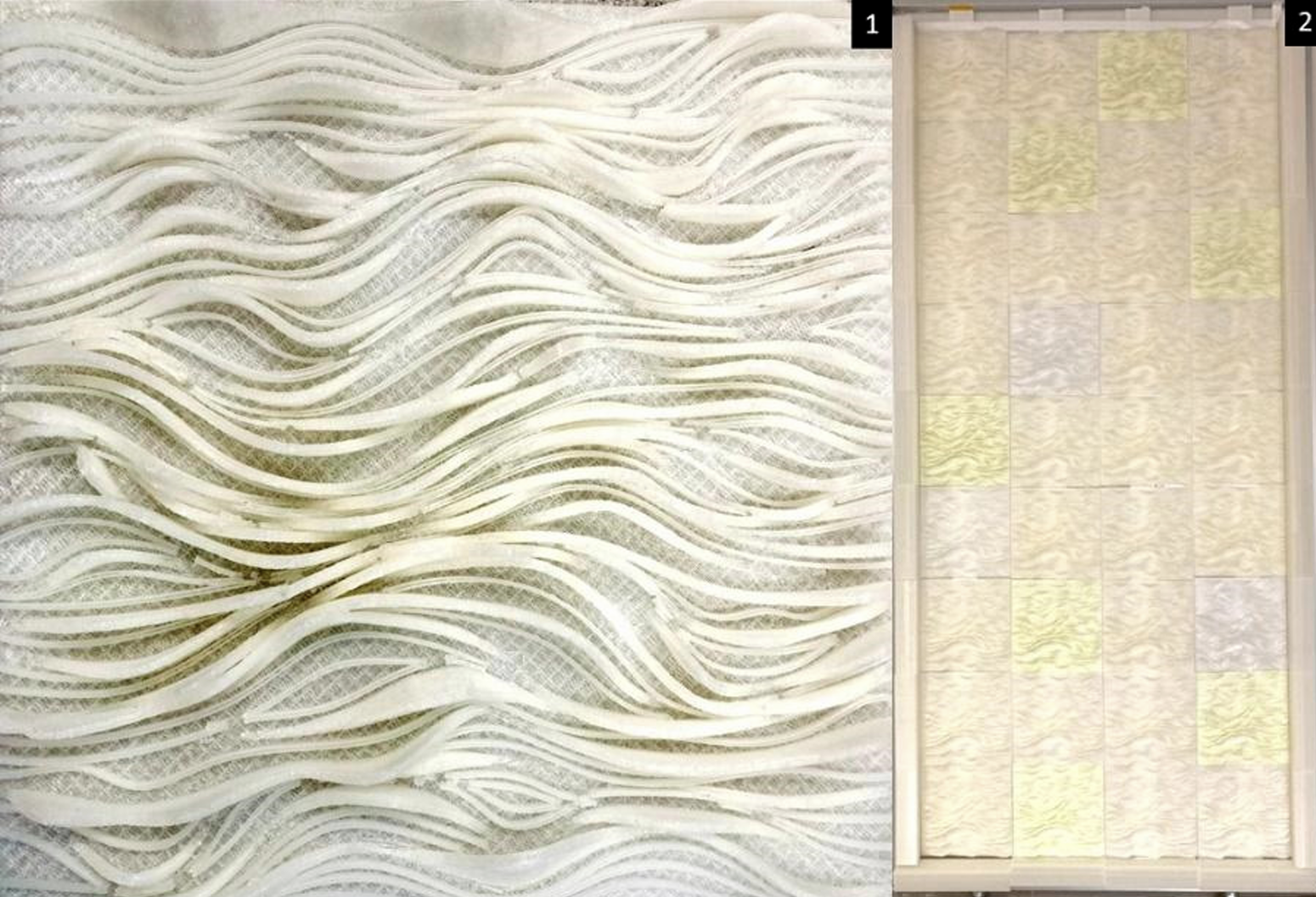
The researchers found that the shape of the tile affected how well the bacteria produced light. The tiles were designed with small curves, peaks, and spaces that helped the bacteria stay attached and produce more light. After testing different materials, they found that Marine Broth worked best for growing the bacteria. One of the tile designs produced a blue-green glow that lasted for up to 10 days without needing to be refilled.
It is proven that a scaffold–bioluminescent material system is more applicable on an architectural scale for stand-alone applications, achieving sustainability in terms of materials and processes and achieving enhanced and prolonged bioluminescence activity in comparison to micro-culture-scale applications in previous studies that failed to achieve or prove the feasibility of the economic scaling of a typical petri dish micro-culture.
The researchers also looked at whether the tiles could eventually be used on a larger architectural scale. The technology is still experimental. The researchers have not yet determined exactly how much useful light the tiles could provide in a real outdoor environment. They also need to study how weather conditions such as temperature, humidity, and airflow would affect the bacteria. This article shows how living materials and 3D printing could be combined to create a new type of passive lighting. Instead of adding electric lights to an environment, the material itself could produce light. BioLumCity is interesting not simply because it “makes things glow,” but instead of adding a lighting device to the environment, the material itself could become part of the lighting system.
References
Abdallah, Y. K., Estévez, A. T., Martin, A. B., & Soriano, M. S. (2025, October 5). BioLumCity: 3D-printed bioluminescent urban tiles employing Aliivibrio fischeri Bioink as passive urban light. MDPI. https://www.mdpi.com/2673-8007/5/4/105
Grammarly. (n.d.). https://www.grammarly.com/



