
Designing Waste
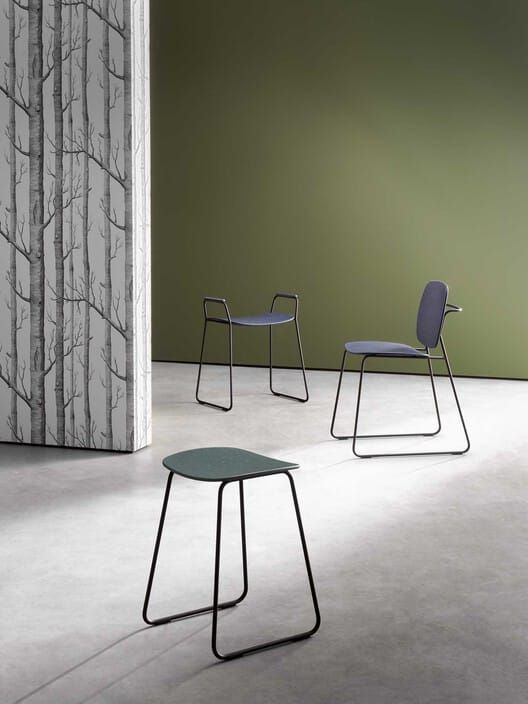
“The role and relationship of furniture in architecture and space design are of great relevance. Designers such as Eileen Gray, Alvar Aalto, Mies Van der Rohe, and Verner Panton conceived furniture —primarily stools and chairs— that endure over time as powerful and timeless elements, with a determining impact on the interior atmosphere. Thus, the relationship between furniture and space becomes a constant dialogue in which design, aesthetics, and materials contribute their dimension.”
“Today, furniture should not be limited solely to fulfilling an aesthetic and functional role, but should also have a purpose in the context of contemporary design and sustainable development. It is essential to reflect on and question the processes and choice of materials in the manufacturing of these elements, in addition to the value they bring to interior spaces. In this context, HEWI has taken a step forward by creating the Re-seat family, consisting of stools and chairs made from post-industrial recycled materials (PIR), sourced in part from the processes of the company itself and a regional supplier, both based in Bad Arolsen, Germany. It also features integrated solutions with universal design in mind, making a statement in favor of innovation and eco-design.”
“With the extensive use of plastic in industrial processes, a crucial question arises: How can we give a second life to waste materials produced during manufacturing? This underscores the need to create a family of recycled products with the high quality associated with HEWI. Today, economic viability, social acceptability, and ecological responsibility have become determining factors in product design.” (Tovar, 2023)
This article directly relates to the problem question that we have been presented with from Marble Plastics: “How can manufacturing waste become useful?” This article offers a perspective on an industry that can directly benefit from the use of manufacturing scraps as a material for production. In the article, it states that furniture should consider the materials and process alongside the functional and aesthetic role in the design process. In the attached article, the stools and chairs that are discussed are made from recycled materials, including waste that was generated by the company itself, creating a more circular system that reduces net waste. Marble Plastics could benefit from a similar process where the waste that is generated is not separate from the design; rather, it becomes intentional. Another part of the article I thought was useful was how closely it mirrored the problem space that is present in the Local Loops project. They both look at how we can use the material to become a useful product or service, rather than just finding a way to dispose of the material.
References:
Tovar, E. (2023, October 2). Re-purposing materials: From post-industrial recyclate to accessible furniture. ArchDaily. https://www.archdaily.com/1007326/re-purposing-materials-from-post-industrial-recyclate-to-accessible-furniture



