
From Pests to Plant Food: How Hydrilla Can Be Turned Into Fertilizer
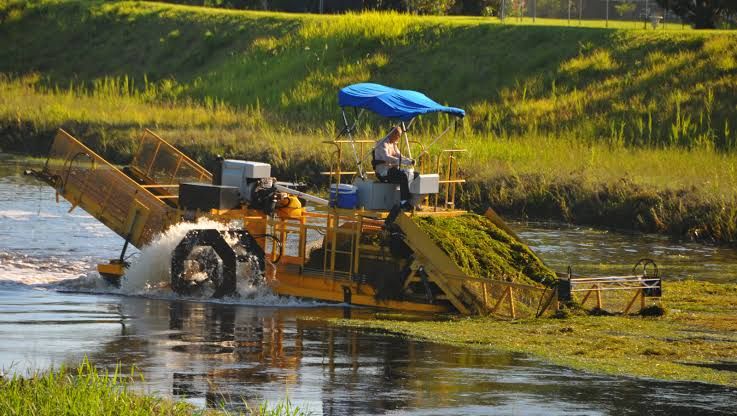
This study surrounding the viability of composting hydrilla contains an important look at how we can possibly turn a very plentiful and invasive species into a profitable resource. While particular conditions and additives are necessary for achieving a usable product, proper harvesting and supply of needed resources allow this dangerous plant to become a highly valuable agricultural resource, incentivizing its removal and treatment beyond the purpose of keeping its population at bay.
“Composting of the Hydrilla verticillata, an invasive aquatic weed, signifies aquatic waste management as a safe and hygienic method that produces a nutrient-rich end product, i.e., compost. However, its higher moisture content, higher N-losses, and lower degradation rate have shown negative impacts on the composting process. Therefore the primary objective of this study was to assess the composting physics and the degradation kinetics after addition of three different carbon-rich agents with Hydrilla verticillata” (Jain, 2019)
“In this study, the aquatic green waste H. verticillata was composted after addition of various locally available CA (dry leaves, grass clippings, and wood chips). All experimentations were performed in the Indian Institute of Technology Guwahati (IITG), Guwahati, Assam, INDIA. A primary substrate, i.e., H. verticillata, was acquired from the eradicated wetland. Inoculum, i.e., (cow dung) was acquired from a proximate dairy farm. Dry leaves and grass clippings were collected from IITG campus whereas wood chips were obtained from the nearby wood cutting mill” (Jain, 2019)
“The H. verticillata contains high moisture content that plays an important role in adjusting the various composting process properties, but its excess percentage can be the problem to achieve better quality compost. This study is mainly focused on minimizing the moisture content during the composting of H. verticillata. Previous studies indicated the role of carbon-rich agents to avoid production of leachate. When compared to the control study, the data of this study stated good quality compost after the addition of locally available carbon-rich agents” (Jain, 2019)
Review
While it is absolutely possible to turn these invasive plants into commercially usable resources, it often comes with significant challenges. In this instance, much time and study are required to figure out what hydrilla needs to become a successful fertilizer. Admixtures, drying times, harvesting techniques, and yield equations are factors that many people must study and work on to create a viable product. A problem as big as hydrilla is worth the effort and attention, but other species and problems may have trouble meeting the criteria of urgency. Finding solutions that can apply to a wide range of these species is one approach, and developing more efficient systems to figure out how to best process these plants are just a few of many potential approaches that can be taken to remedy these issues as elegantly as possible.
References
Jain, M. S., & Kalamdhad, A. S. (2019). Drum composting of nitrogen-rich Hydrilla verticillata with carbon-rich agents: Effects on composting physics and kinetics. Journal of Environmental Management, 231, 770–779. https://doi.org/10.1016/j.jenvman.2018.10.085



