
Glow Where It Grows

When I first started thinking about how parks could make visitors feel safer at night without adding traditional lighting infrastructure, I was interested in materials that could glow in the dark. I gained inspiration from the glow paths I read about (Lahoz, 2024) (Tom P., 2026). I wanted to find a solution that could help people see where they were going while still allowing the natural darkness of the park to remain. This led me to explore bioluminescent and photoluminescent materials. However, my direction began to change when Heather and Tracey discussed the problems that hydrilla is causing in Ohio lakes and reservoirs during our kickoff. I became interested in whether this invasive plant could be more than just a problem that needed to be removed. Could it become a material that could actually be useful within the parks?
Through my research, I read how plants could be dried and repurposed into other materials, including compost. I also became interested in traditional construction methods that used natural plant fibers mixed with materials such as mud and clay (Hideo, 2003). These examples made me think about how natural materials could be incorporated into products that people interact with every day. Instead of simply removing hydrilla and treating it as waste, I began thinking about how it could potentially become part of a park trail system.
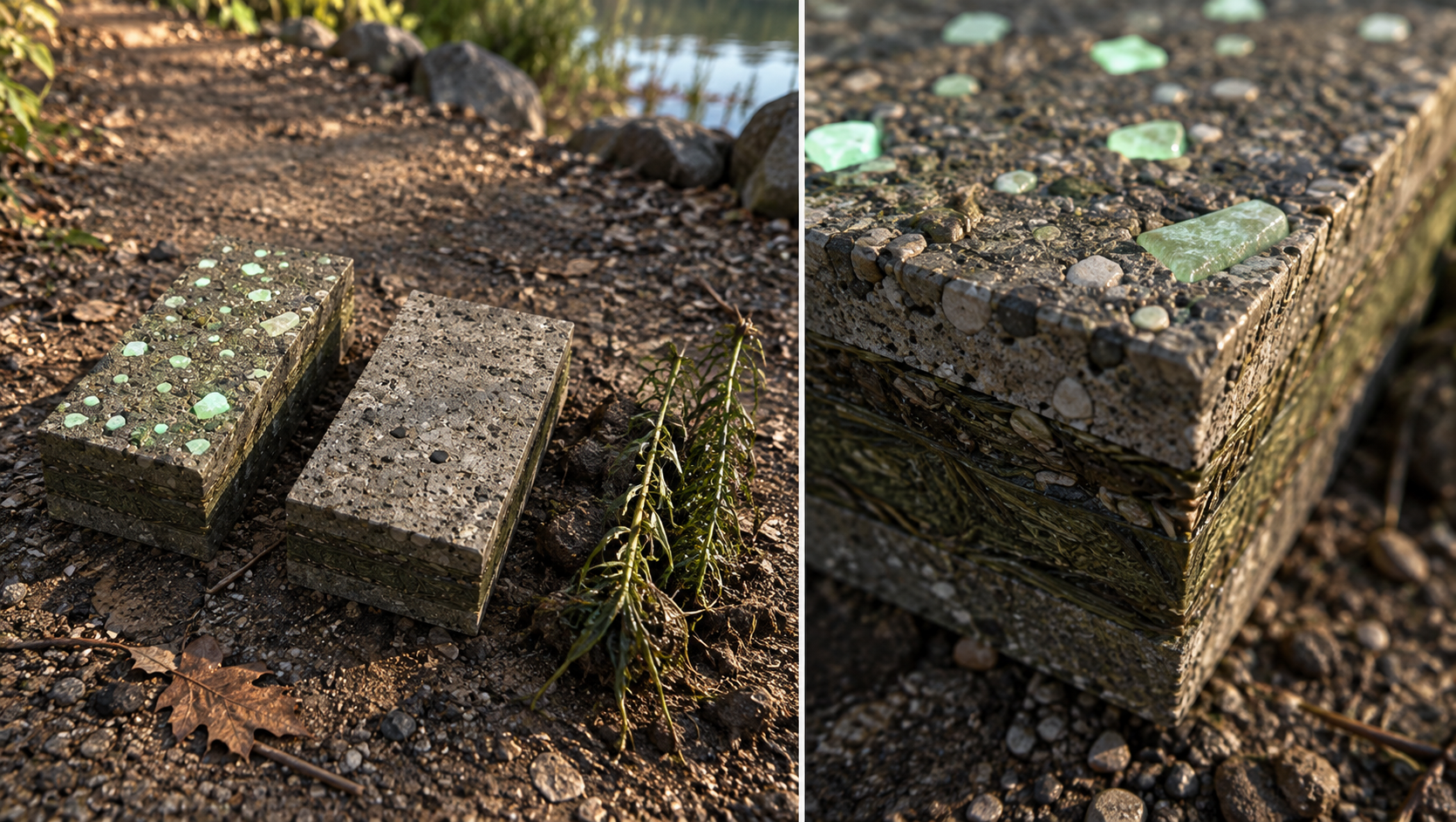
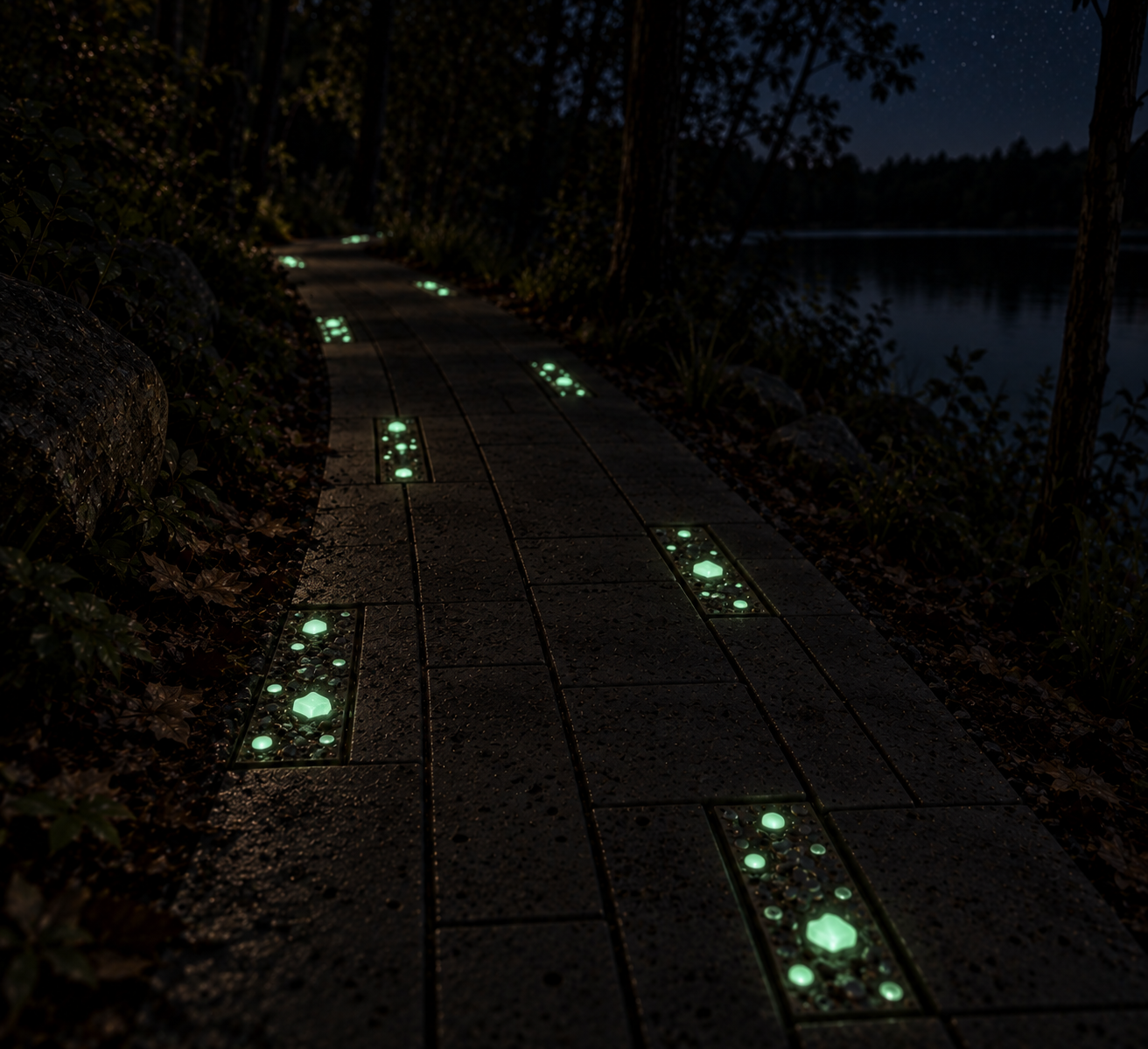
My first concept explores drying hydrilla and incorporating the plant material into a cement brick. I would then introduce photoluminescent materials, such as glow powders, paints, or rock, similar to the products available from TechnoGlow. These materials absorb energy from sunlight during the day and gradually release it as a visible glow after the sun goes down. The goal would be to create a brick that becomes more visible as the park gets darker. These bricks could be placed selectively throughout trails rather than covering the entire pathway with light. The glowing sections could help visitors understand where the trail continues, identify crossings, or locate important facilities and directions. This creates a form of nighttime guidance without relying on conventional overhead or pathway lighting.
Does your experience/feelings change if you're alone verses with people? Why?
When I am alone at night or during the day I can be a bit apprehensive sometimes wondering if there are animals or other people around that could harm me and if I am making the right wayfinding or camping decisions. That feeling is heightened at night, but still there during the day.
I don't really hiking at night, it is more of a daytime activity to me for safety and just to see the landmarks of wherever I'm at more easily.
I become more vigilant in the dark when i am alone or with my children
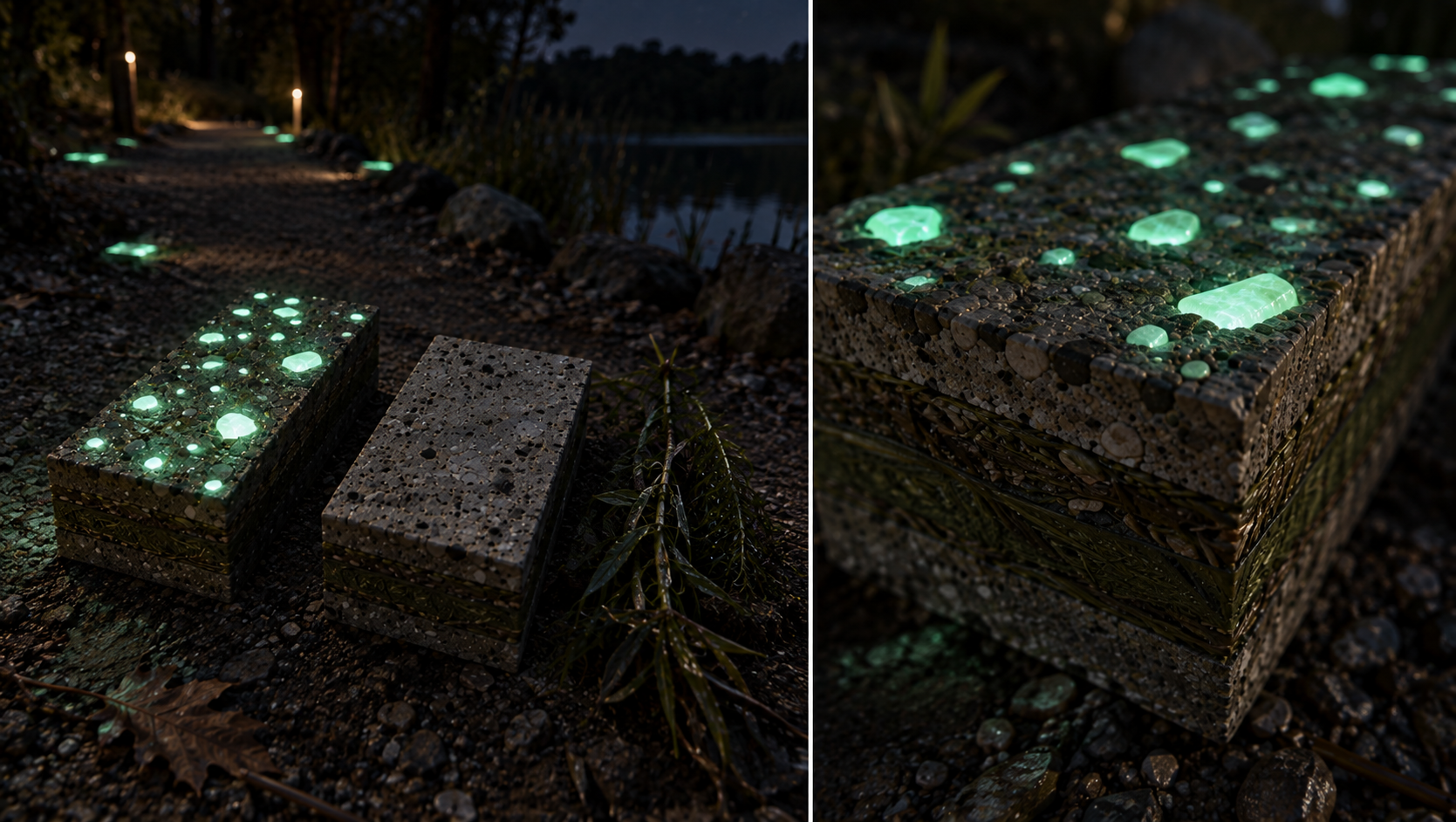
What interests me most about this concept is the potential for the material to address two problems at the same time. Hydrilla is an invasive species that can negatively affect aquatic environments, while visitors can struggle with visibility and navigation after dark. By transforming removed hydrilla into a useful material, the waste from one environmental problem could potentially become part of a solution for another.
There are also several concerns i have before this concept could become a realistic product. The biggest concern is durability. Adding dried plant material to cement could create air pockets or weaken the structure of the brick. Repeated foot traffic, moisture, freezing temperatures, and erosion could cause the material to crack or break down over time. Another major concern is preventing hydrilla from being reintroduced into the environment. Even a small off cut of hydrilla would completely re infect a body of water all over again. The plant would need to be completely dried and processed before being incorporated into the brick.
References
Glow in the Dark Powder & Glow Paint Superstore. Glow in the Dark Powder | Glow in the Dark Paint | Glow Shop. (n.d.). https://www.technoglowproducts.com/
Izumida, Hideo. (2003). Japanese Clay-Walled House; Materials, Artisans and Techniques. 日本の土壁住居:材料、職人、技術. 10.13140/RG.2.1.1331.5284.
Lahoz, U. (2024, July 15). Una visita a Nuenen, El Pueblo de los países bajos en el que van Gogh empezó a ver La Luz. El País. https://elpais.com/elviajero/escapadas/europa/2024-07-15/una-visita-a-nuenen-el-pueblo-de-los-paises-bajos-en-el-que-van-gogh-empezo-a-ver-la-luz.html
O’Neill, D. (2024, January 31). Light-Emitting Cement. Apeiron Construction. https://apeiron-construction.com/light-emitting-cement/
Tom, P. (2026, June 2). Starling glow project - 2025 AGTTM glow commercial project honorable mention. Ambient Glow TechnologyTM. https://ambientglowtechnology.com/blogs/projects/starling-glow-project-2025-agt-glow-commercial-project-honorable-mention



