
How children and families engage with retired social robot

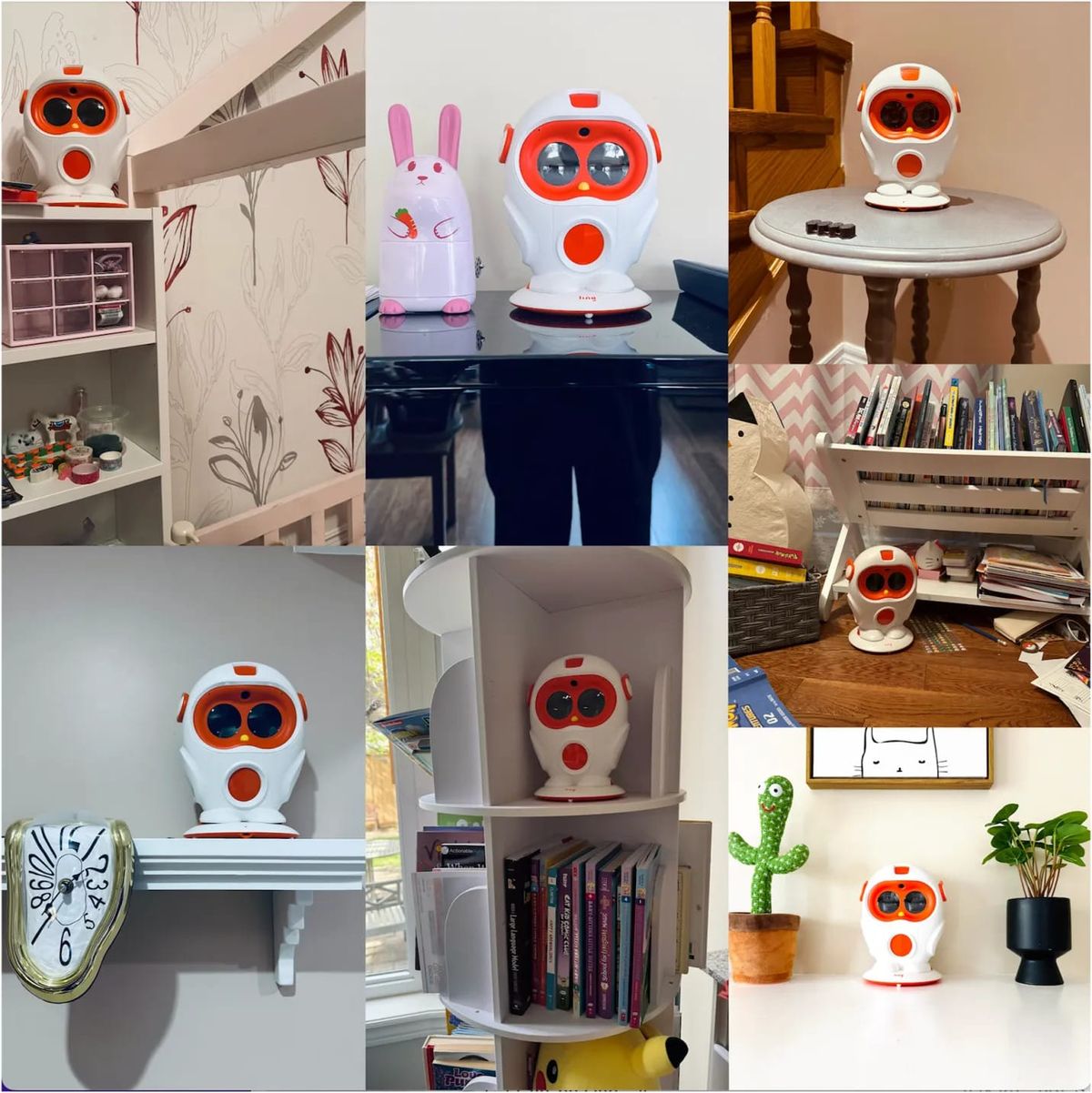
Automated assistants have been present in our lives for a considerable amount of time now and have even had places in our homes for just as long. This study shows the long term effects of a social robot that that for many was maybe removed from it's original use, but now has a new role in the household.
"Social robots are increasingly introduced into homes as short-term educational or entertainment tools for children. However, their physical presence and social roles may persist long after their intended use has ended (p. 1)."
"In the original study (Zhao and McEwen, 2022), 20 families with a 3–6 year-old child hosted a robot reading companion for several months as part of a literacy intervention. That study(conducted in 2021) found strong child engagement and learning gains, consistent with other short-term deployments where children eagerly treated the robot as a friend and tutor. By mid-2025, the original child participants were 7–10 years old–well beyond the target preschool age for the robot’s reading lessons. We conducted follow-up interviews with 19 of these families (one family could not be reached). Surprisingly, 18 of 19 families had kept the robot in their home (p. 2)."
"[...] the robot held significant major theme is that the robot held significant symbolic value for the families–as a keepsake of the child’s early years, a trophy of participation in an innovative study, or a representation of the family’s values and identity (p. 8)."
"Families adapted the robot to new uses(storytelling, music, companion for siblings), maintained it as a powered and present device, and physically included it in their living spaces (p. 10)."
"Robots should be designed with the expectation that their primary role for a user will evolve. Rather than a single use-case, include multiple modes or features that can become relevant at different life stages or to different family members (p. 12)."
The last excerpt there about a product evolving with the user is something not a lot of designers may consider, but in this case when designing something for children to learn and grow with, it makes sense. Designers must consider where tools like these may live and give them the personality that can make them become like another part of the family or a pet maybe.
Something in the car that can evolve or adapt with the users of the back seat, children in this case, could benefit the way they develop and absorb the world around them. I want to look more into the social robot that is the subject of this study and others that may be specifically designed for being with a family and identify how a family benefits from owning such a device.
References
Zhao, Z., & McEwen, R. (2025). The robot that stayed: Understanding how children and Families engage with a retired social robot. Frontiers in Robotics and AI, 12, 1–16. https://doi.org/10.3389/frobt.2025.1628089



