
How Color Affects Light Pollution
The article “Lamp Spectrum and Light Pollution” by Flagstaff Dark Skies Coalition explains that the color of outdoor lighting can change how much light pollution is created. Some colors of light are worse for the night sky than others. The article explains that “The spectrum of outdoor lighting influences many aspects of light pollution, from glare and human health to activities of animals.” This means that choosing a light is not just about making an area bright enough for people to see. Us designers also need to think about how the color of the light affects the sky, wildlife, and the nighttime environment.
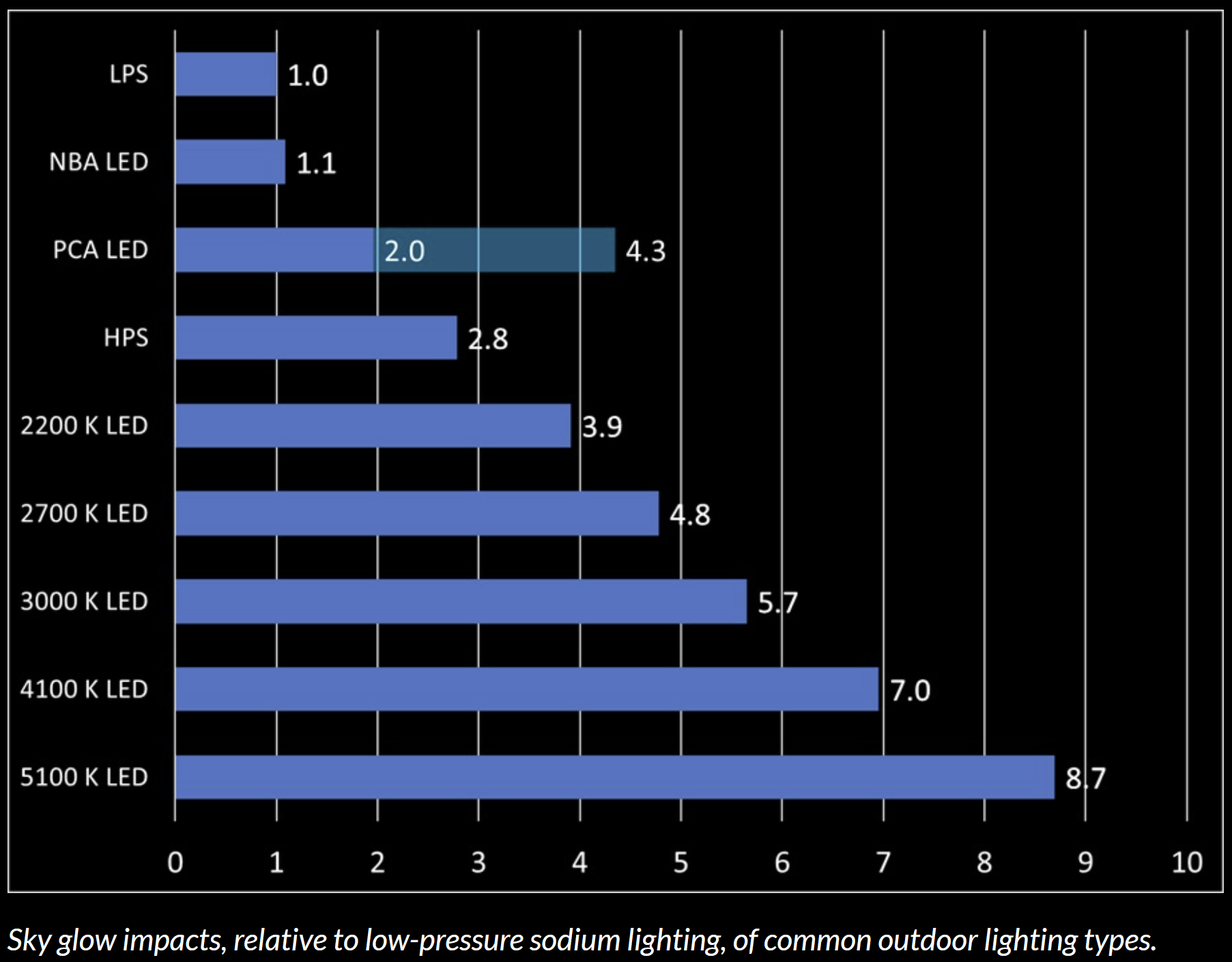
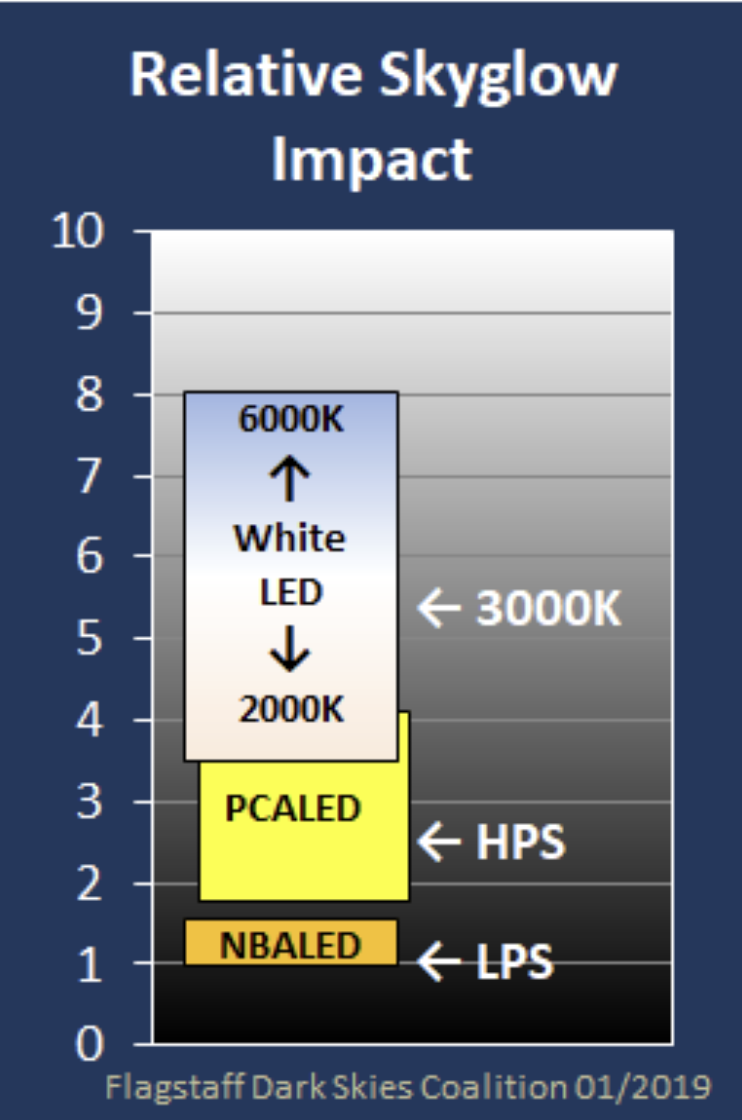
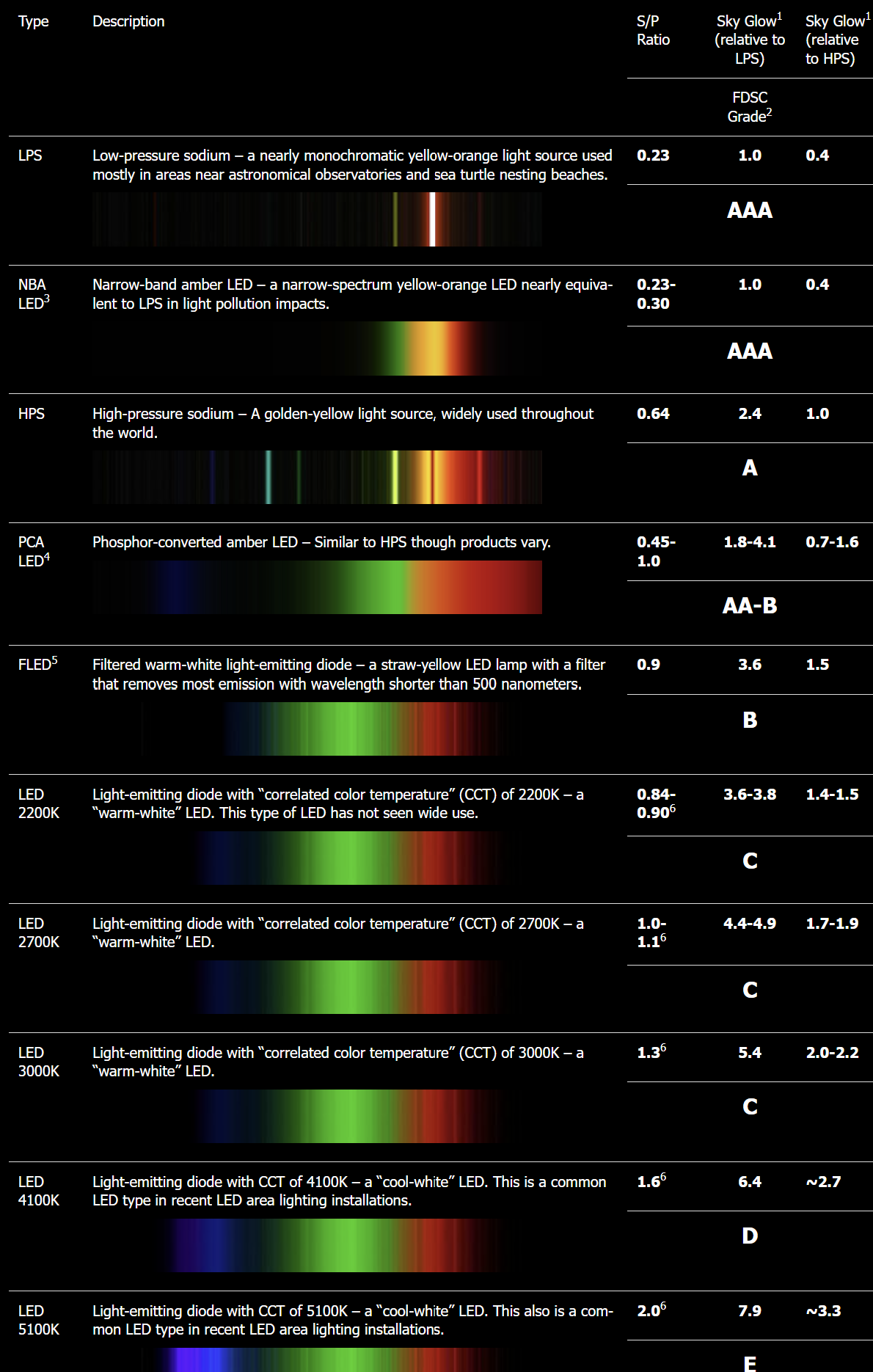
“The bottom line is simple, if unexpected to many: Yellow or amber light sources (such as HPS, PCA LED or, the best, LPS* or NBA LED) cause the least sky glow by far, as little as one half or even one quarter that of the best (lowest color-temperature) white light sources. The other side of the coin is that all white light sources (even “low CCT”) cause greater impact, usually much greater.”
“Though the negative impacts of poorly shielded fixtures and overlighting are widely understood, the impact of lighting color is not widely known, and most lighting codes do not address lamp types. But recent research shows that white lighting (such as LED, fluorescent and metal halide) has a dramatically greater impact – lumen-for-lumen – on sky glow than the currently most common high-pressure sodium (HPS) and especially low-pressure sodium (LPS) and narrow-band amber LED (NBA LED).”
With LPS lighting (a yellow/orange type of light), the example says you could see about 2,700 stars. Then if we are replacing those lights with 4100K LED lights (a cooler, whiter light). You are technically not adding more lights, and you are not making the lights brighter. You are just changing the type/color of the light.
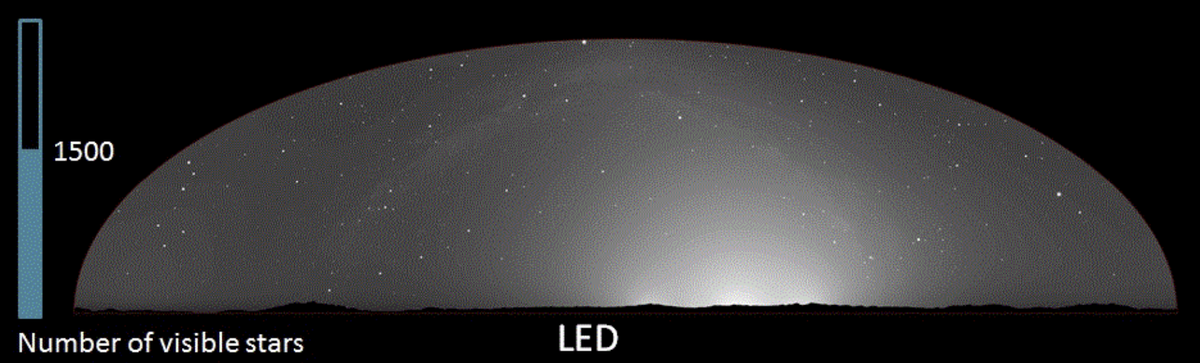
When switching to White LED however it ends up creating more skyglow which is the bright haze that appears in the night sky because artificial light reflects and scatters in the atmosphere. Because the sky becomes brighter, you can only see about 1,500 stars instead of 2,700 that your supposed to be seeing when you look up at the sky. You could have the exact same number of light fixtures producing the exact same amount of light, but changing from a yellow/orange light to a cool white LED can make the night sky much brighter.
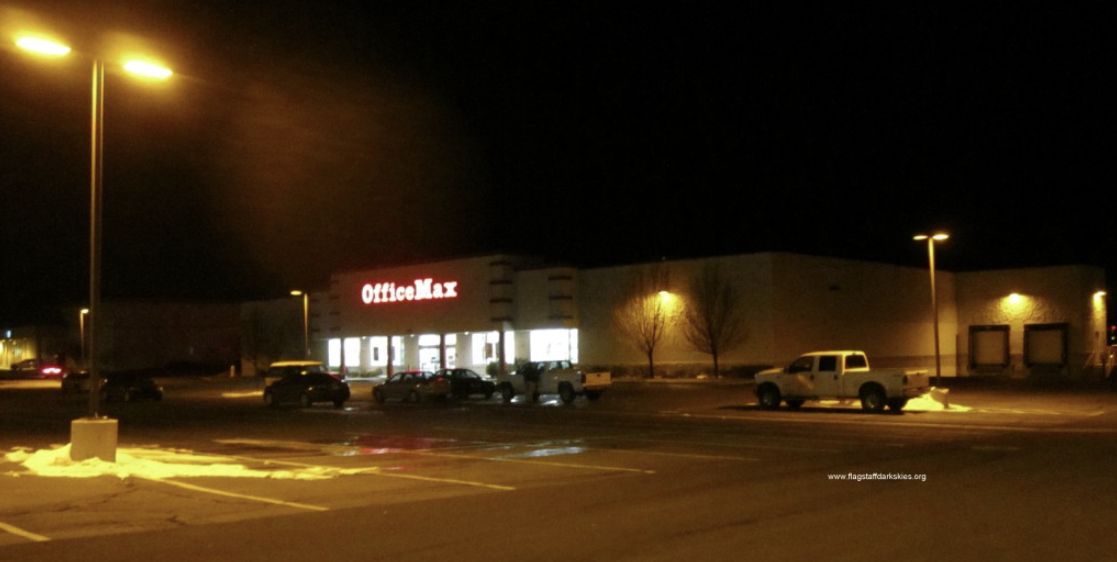
"Simply changing the lighting type to a purportedly "environmentally friendly” LED light – with no increase in the amount of light (in lumens, footcandles or lux) – would obscure almost half of the stars in the night sky."
This article is useful for my ODNR project because it gives us information that can help us think about what kind of lighting should be used in parks and natural areas. ODNR has to balance helping people safely navigate parks at night with protecting the natural environment.
References
Grammarly. (n.d.). https://www.grammarly.com/
Lamp Spectrum and Light Pollution. Flagstaff Dark Skies Coalition. (n.d.). https://flagstaffdarkskies.org/critical-dark-sky-issues/lamp-spectrum-light-pollution/



