
How Do Young Adults Interact with Recycling?
Overview
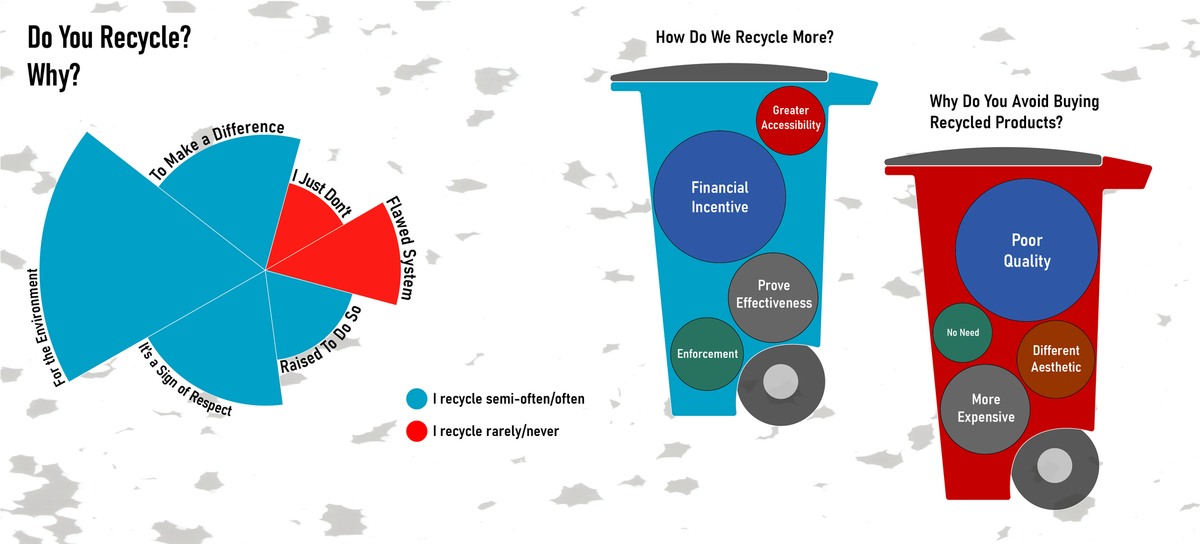
The figure above displays the results of multiple survey questions pertaining to the practice of recycling materials. It summarizes both quantitative and qualitative data to show reasons why the sample may or may not recycle, how to increase recycling participation, and why people don't always purchase items made from recycled materials.
Creation/Sampling Strategy
To create this survey, I utilized a combination of quantitative questions (these took the form of multiple-choice, yes/no, and various scales with options 1-5) as well as short-answer questions, so that I could get a good grasp of how people thought through the process of recycling and how they view recycled products. My sample size was targeted toward people aged 18-25. I chose this demographic because it represents a population who are typically new to the world on their own. In this new freedom that they've found, they now have more choice in:
- Whether they participate in recycling
- How they view the process of recycling
- How they view products that use recycled material
I recruited survey participants by disseminating the survey link throughout multiple online servers that I am a part of. I don't personally know everyone in these servers, so they have no bias or incentive to participate, but I know that everyone falls within my ideal demographic.
Reflection and Key Insights
The total sample size was 54 people, and I received 12 responses, leading to a 22% response rate. I ideally would have liked to get more responses, but the ones that I did receive provided good insight into people's views on recycling as an industry and practice. The key insights I have acquired from these responses are as follows:
- The greatest reason that someone would recycle is that they believe they are making a difference in the environment, in their community, and in the industry.
- People believe that incentives are necessary/would be beneficial to create a more involved recycling community.
- Some people refrain from purchasing recycled products due to what they perceive as poor quality, overvalued items, and the "recycled aesthetic."



