
How Environment Influences Play
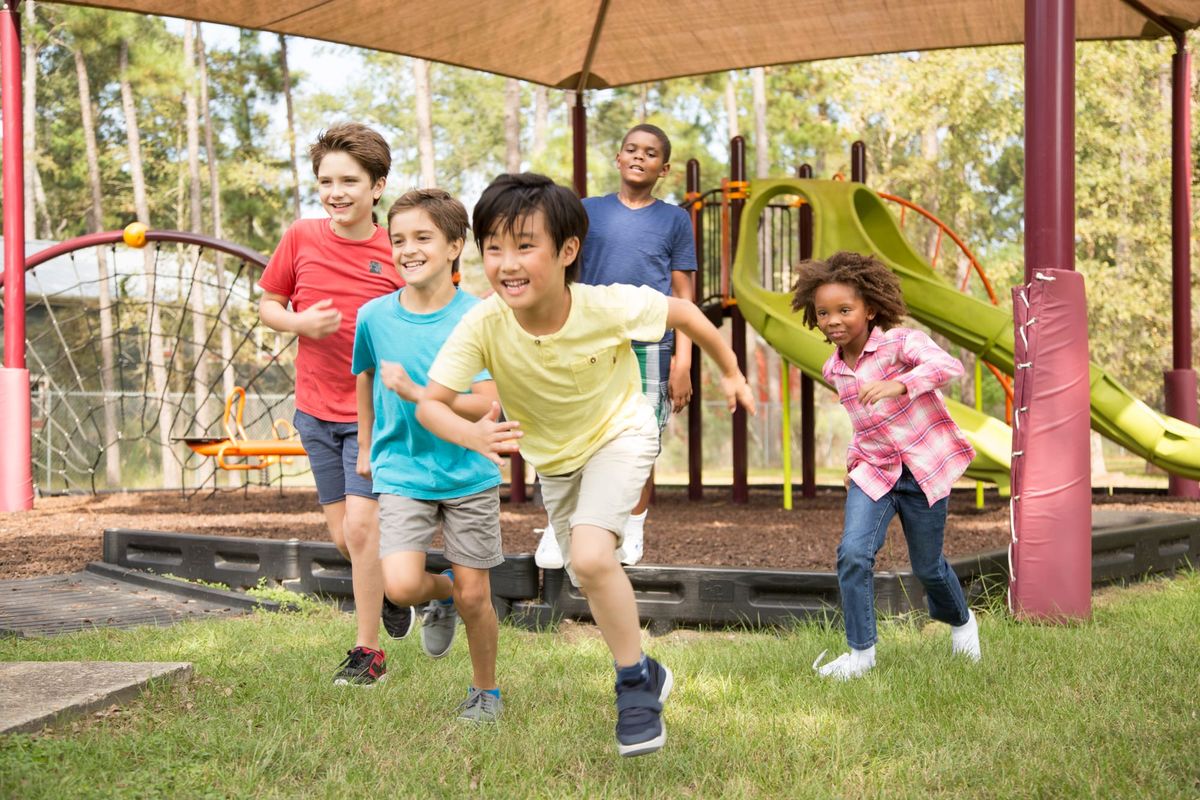
Playgrounds are more than just spaces where children go to have fun. The way a playground is designed can influence how children move, explore, and interact with the environment around them. Different features like climbing structures and open space can encourage different types of movement and play.
Having different opportunities within the environment also gives children more freedom to choose how they want to interact with the space. Instead of being told exactly what to do, the environment itself can encourage curiosity, exploration, and physical activity (Schaefer & Lin, 2025).
We know that plays paces offer children an opportunity for physical activity (Schaefer & Lin, 2025).
one study observed that outdoor environments that include high-quality play equipment (e.g., varied play spaces, paths for wheeled toy use) were positively correlated with motor skills scores in children ages 3 to 5. This implies that environments that encourage diverse forms of movement help children enhance their coordination and physical capabilities (Schaefer & Lin, 2025).
Because physical activity is a key part of healthy development for young children, we offer design recommendations to maximize the physical development benefits of playgrounds:
Incorporate a range of equipment: Include a mix of fixed and portable equipment to encourage a variety of movements to develop different aspects of physical development.
Allow for a variety of movement: Provide opportunities for balancing as well as running and jumping, such as balance beams and hills.
Include natural elements: Integrate creative structures with natural features like grass, trees, and hills to enhance physical activity and provide a richer sensory experience (Schaefer & Lin, 2025).
Reflection
It's so fascinating how much the environment can affect the way children play, move, and behave. I usually think of playgrounds as just places where children go to have fun, but I never really thought about how the design of the space can influence what children choose to do. Different areas and features can encourage them to climb, run, explore, or interact with other children.
I also really like how playgrounds give children the freedom to interact with the environment in their own way instead of telling them exactly what they should do. One child might use a space completely differently from another child, which gives them more opportunities to be curious and creative. This article made me realize that the environment around children can play a big role in their experience and can naturally encourage certain behaviors without forcing them.
Reference
Schaefer, C., & Lin, V.-K. B. (2025b, November 4). Playgrounds represent opportunities for children’s physical development. Child Trends. https://www.childtrends.org/publications/playgrounds-opportunities-childrens-physical-development
Grammarly. (n.d.). https://app.grammarly.com/



