
How Robots are Helping Keep Nature in Balance
An article from ASME sheds light on how drones are not only being used to combat invasive plant life, but also animal life causing harm to ecosystems around the country.
“But now invasive species of all kinds are finding that new predators have arisen, and they’re manmade. In the past few years, researchers all over the world have turned to drones and robots to help them hunt—and often kill—the plants and animals that are wreaking havoc on once carefully balanced ecosystems” (Abrams, 2019)
Burmese Pythons
“To help locate the snakes where humans might not easily roam, python hunters have recently begun using drones equipped with thermal cameras. But the snakes, being reptiles, often take on the temperature of their surroundings. Now the hunters have a new tool for their drones, a spectral resolution camera that uses LED light to identify the pythons by their distinctive reflection” (Abrams, 2019)
Possums
“Now a company called Aeronavics has a drone to find and target the possums more effectively. It’s equipped with an infrared night vision camera as well as sensors to detect possum droppings and pheromones. By locating exactly where the animals are, the drone can drop poison precisely where they’re nesting” (Abrams, 2019)
Rats
“If there’s one ecosystem that naturalists, biologists, and animal lovers would like to keep pristine and free of invaders, it’s the Galapagos. But rats have managed to get on Seymour Island, which had been free of the rodents since 2007. They’ve devoured the eggs and babies of many of the seabirds that nest there, as well as trees and cacti. In the past, helicopters and people have been used to distribute rat poison. The former is expensive—the helicopter and pilot have to come over on a boat and hang around for 21 days for the second dose—and the latter is tedious and dangerous. That makes it the perfect job for a drone” (Abrams, 2019)
Lionfish
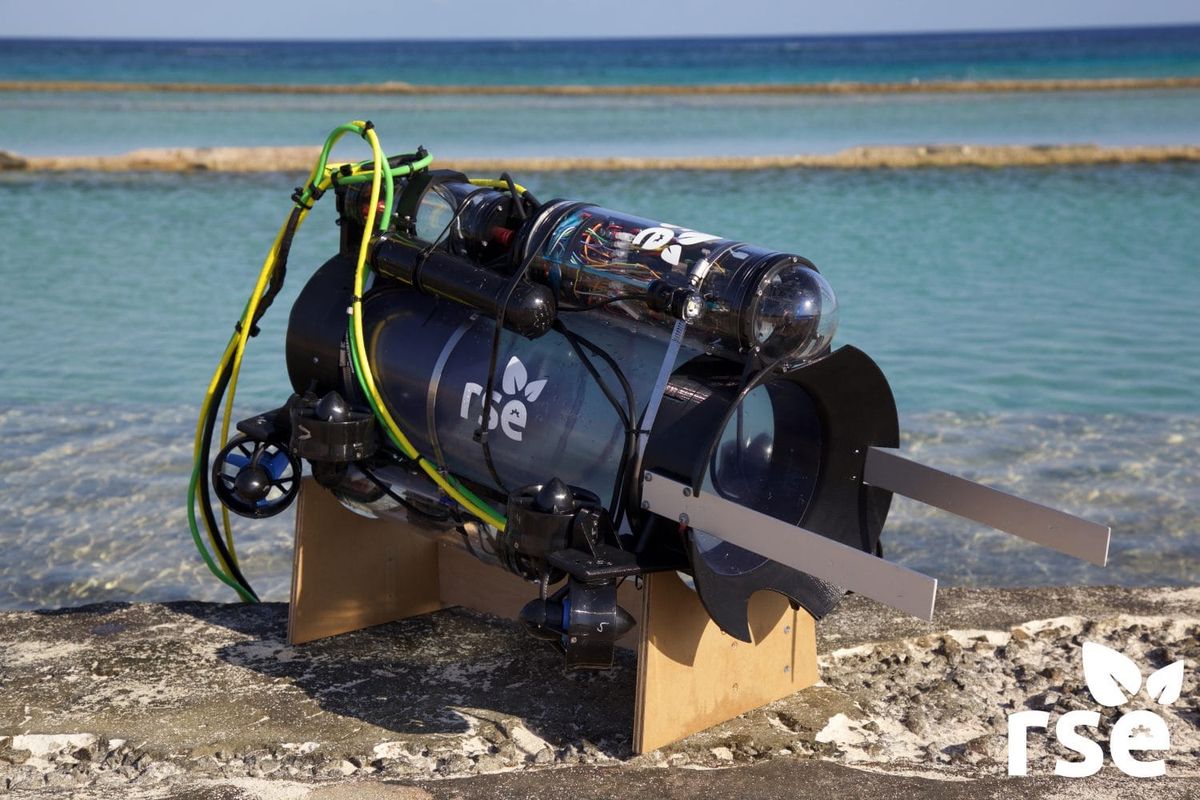
“Lionfish were once denizens of Indonesia, Australia, Japan, and other places in the indo-pacific. Now they’re in the Caribbean—probably thanks to pet owners dumping no-longer wanted to fish into the Atlantic—gobbling some 50 species of other fish along the coral reef… undergraduates at the Worcester Polytechnic Institute have created a harpooning autonomous submarine to hunt the invaders. They fed the AI that controls the robot thousands of pictures of lionfish so that it will know what to aim for” (Abrams, 2019)
Starfish
“The crown-of-thorns starfish is, strictly speaking, native to the Great Barrier Reef. But thanks, probably, to overfishing of its natural predators, the starfish has gotten out of hand and is gobbling up the reef. Roboticists at the Queensland University of Technology have created an underwater drone that can recognize the starfish, then inject them with bile that kills them within 24 hours” (Abrams, 2019)
Review
While agricultural applications for drones have been on the rise over the past decade, technology has struggled to be effective against animals that can move and react to predators and countermeasures. It seems now that tech has finally caught up to a place where we are able to employ these machines to aid in the defense of balanced ecosystems by more effectively tracking invasive animals, more safely administering pest control agents, and accessing areas that are either too hazardous or difficult for normal people to reach. With the rise of AI programs, such as the type used to counter the lionfish population, it is very possible these drones will be able to govern their own actions based on live statistics in order to keep a higher level of ecological balance with far less manpower.
References
Abrams, M. (2019, August 14). 7 invasive species hunting drones. ASME. https://www.asme.org/topics-resources/content/7-invasive-species-hunting-drones



